MESH
Digitizing Global Seafood Trade
Services
Industry
 Two-Sided Marketplace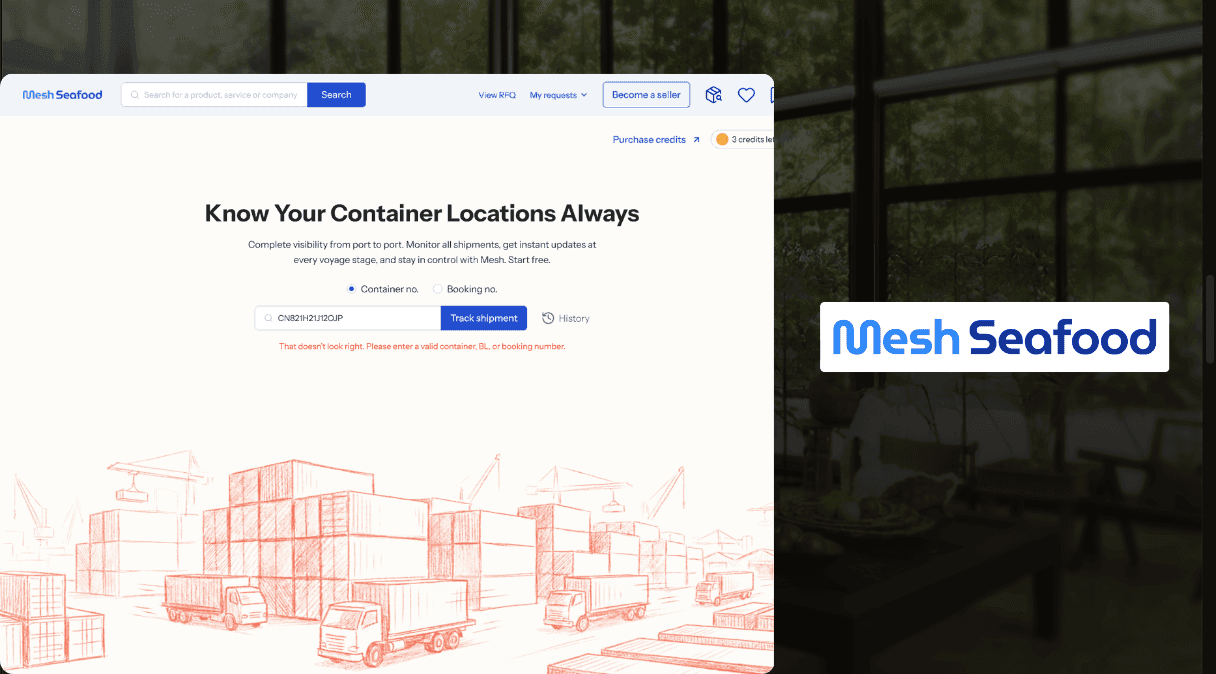
Project Background
MESH operates in the global seafood supply chain and commodity trading industry. The platform was created to address long-standing inefficiencies in international seafood trade, where transactions traditionally rely on fragmented processes such as emails, spreadsheets, informal networks, and intermediaries.
Recognizing that the seafood industry is a multi-billion-dollar global market with limited digital infrastructure, MESH was developed as a cross-border B2B marketplace to connect verified buyers and sellers within a structured digital ecosystem. The platform aims to modernize seafood trading by improving transparency, coordination, and operational efficiency across the global supply chain.
Challenges
The global seafood industry operates largely through fragmented and manual processes. Transactions often rely on informal networks, emails, spreadsheets, and intermediaries. This results in limited price transparency, inefficient cross-border coordination, poor shipment visibility, and increased risk in high-value transactions.
Despite being a multi-billion-dollar industry, the digital infrastructure supporting seafood trade remains significantly underdeveloped. Businesses face operational friction, delayed communication, and limited tools to manage compliance, negotiation, and logistics in a structured way.
Problem solving with design thinking workshop
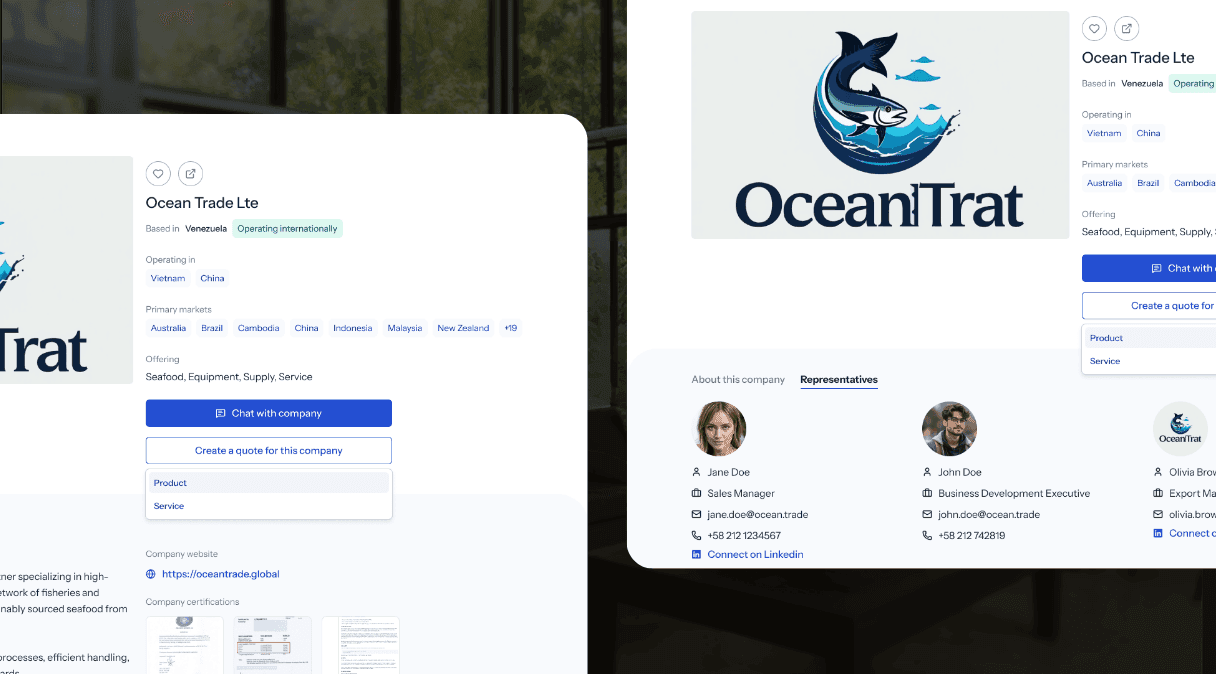
Lizard Global partnered with MESH to design and develop a digital B2B marketplace tailored to the needs of global seafood supply chain participants. The platform was built to centralize key trading processes, allowing verified buyers and sellers to discover products, request quotes, negotiate deals, track shipments, and manage transactions within a structured digital environment.
Lizard Global contributed product strategy, UX research, and full-stack platform development to translate the marketplace concept into a functioning digital product. The team designed and implemented core features such as RFQ workflows, transaction logging, container tracking, price intelligence, and integrated payment infrastructure. By consolidating these capabilities into one platform, Lizard Global helped replace fragmented communication and manual coordination with streamlined digital workflows that improve transparency and reduce operational friction in cross-border seafood trade.
Key features
Product Discovery & Advanced Search
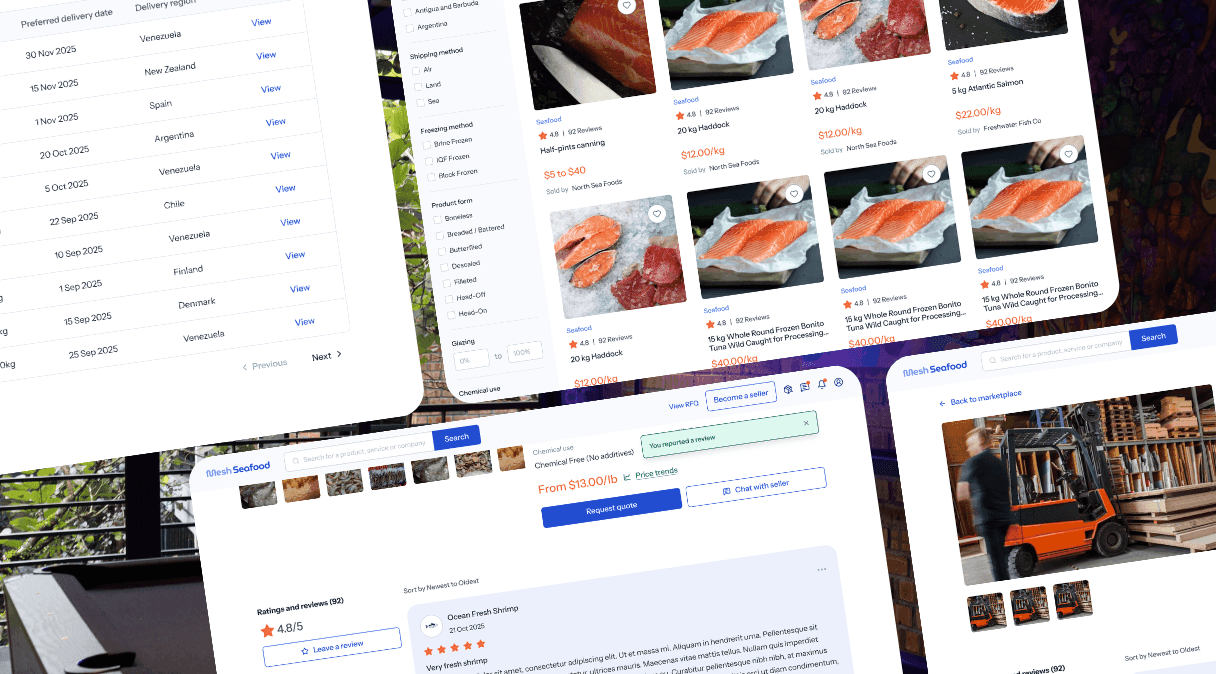
Buyers can find seafood products from verified suppliers through structured listings with details like origin and specifications. Advanced filters help users quickly locate relevant products.
RFQ Workflow & Negotiation Management
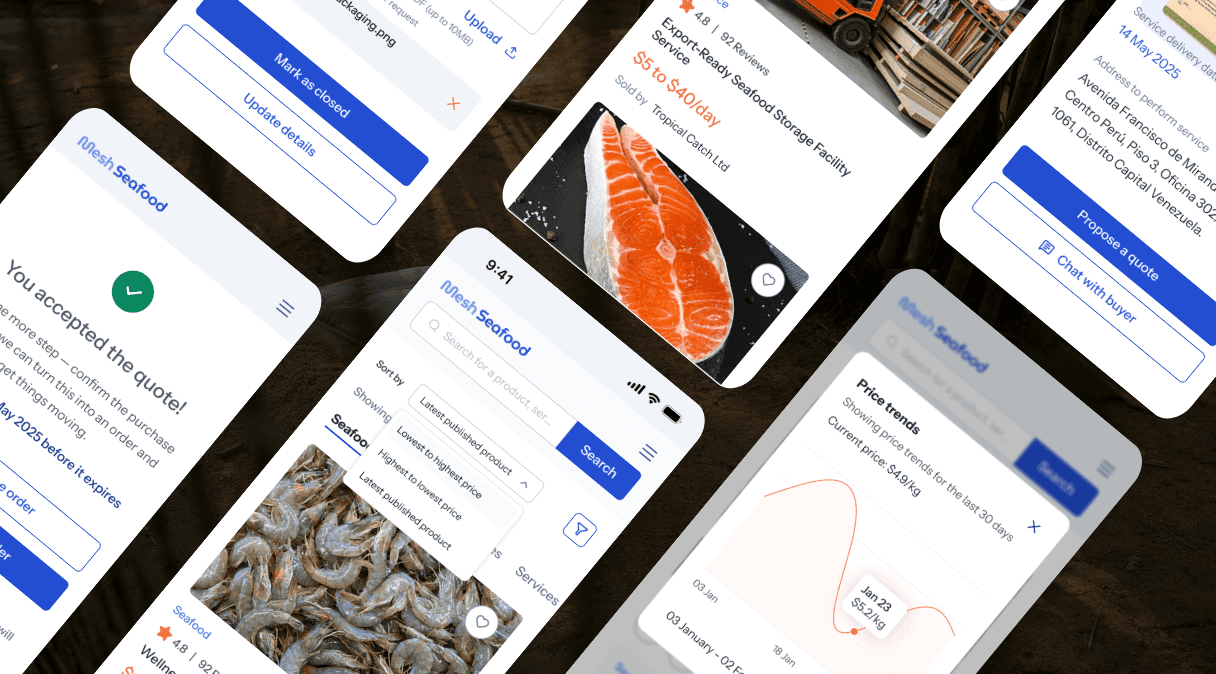
Buyers can request quotes directly from sellers through a structured workflow that keeps negotiations and pricing discussions organized in one place.
Transaction Logging & Order Management
All orders, agreements, and communications are logged within the platform, creating a transparent transaction history for both buyers and sellers.
Container Tracking & Logistics Visibility
Integrated shipment tracking provides real-time visibility into container movements, helping businesses monitor and coordinate international deliveries.
Price Intelligence & Market Insights
The platform provides pricing insights and availability alerts, helping users make more informed trading decisions in a traditionally opaque market.
The impact
Increased Transparency in Global Seafood Trade
By centralizing product listings, negotiations, and transactions, the platform reduces information asymmetry and improves visibility across the supply chain.
Reduced Operational Friction in Cross-Border Transactions
Structured workflows replace manual coordination through emails and spreadsheets, making international seafood trading faster, clearer, and more efficient.
Digital Infrastructure for a Multi-Billion-Dollar Industry
The platform establishes scalable digital infrastructure for the global seafood market, supporting future growth, automation, and data-driven trade operations.
Conclusion
MESH demonstrates how digital infrastructure can transform a traditionally offline commodity market. By centralizing discovery, negotiation, logistics tracking, and payment systems, the platform reduces operational friction and enables more transparent, efficient cross-border seafood trading. The solution lays the groundwork for a more connected and scalable global seafood supply chain.
Visit MESH's website
Similar projects like MESH
Stuck between a great idea and the right team to build it?Let's talk.
We work with corporate innovation teams and ambitious scale-ups across the Netherlands, Singapore, and Australia, and wherever great software needs to be built. Drop us a message and we'll get back to you within one business day.


Markus Monnikendam
Global Commercial Director
hello@lizard.global