Continuous Optimization and Support for AI-Powered Enterprise Systems
06 May 2026
by Team Lizard Global
Editor: Nadiy, Senior Content Writer
06 May 2026
by Team Lizard Global
Editor: Nadiy, Senior Content Writer
Continuous Optimization and Support for AI-Powered Enterprise Systems
Table of contents
Contact us
We will get back to you in the next 48 hours.

AI-powered enterprise systems are no longer static deployments. Modern enterprises require continuous optimization, governance, observability, and support to ensure long-term performance and business impact. This blog explores how Agentic AI for Enterprise, Autonomous AI Agents, and Enterprise AI Orchestration are transforming operations through adaptive intelligence, AI observability, and scalable agentic workflows. It also explains why organizations need a strategic digital transformation partner with expertise in custom software development, UI/UX design services, web app development services, mobile app development, and full-stack digital solutions to maintain sustainable AI success.
key takeaways
Enterprise AI adoption has accelerated dramatically over the past few years. However, many organizations are discovering that launching an AI solution is only the beginning. The real challenge lies in maintaining, improving, governing, and scaling AI-powered enterprise systems over time.
Unlike traditional software, AI systems continuously interact with changing data, evolving user behavior, shifting regulations, and dynamic business environments. As a result, enterprises can no longer treat AI implementation as a one-time project. Instead, they must embrace continuous optimization and long-term AI support strategies.
This shift is especially important as businesses adopt Agentic AI for Enterprise environments powered by Autonomous AI Agents and complex Agentic Workflows. These intelligent systems can automate tasks, coordinate decisions, and operate semi-independently across departments. While this creates enormous efficiency opportunities, it also introduces new operational complexities that require ongoing management.
Organizations that succeed with enterprise AI understand one critical truth: sustainable AI performance depends on continuous orchestration, governance, monitoring, and refinement. Companies that invest in long-term AI optimization unlock stronger ROI, better operational resilience, and faster innovation cycles.
At the same time, businesses increasingly need experienced partners capable of combining AI expertise with custom software development company capabilities, UX/UI product design, enterprise integrations, and scalable digital platforms. This is where strategic digital transformation partners like Lizard Global create long-term value for enterprises seeking future-ready AI ecosystems.
coat_estimator
Why Enterprise AI Systems Require Continuous Optimization
Traditional enterprise software generally follows predictable rules. Once deployed, maintenance primarily involves bug fixes, upgrades, and infrastructure management. AI-powered systems behave differently because they learn, adapt, and depend heavily on data quality and operational context.
As business conditions evolve, AI models can experience performance degradation, inaccurate outputs, or decision inconsistencies. This phenomenon, commonly known as model drift, can significantly impact enterprise operations if left unmanaged.
Continuous optimization helps organizations maintain system accuracy, operational reliability, and business alignment. More importantly, optimization ensures AI continues generating measurable value rather than becoming a costly operational burden.
For example, Autonomous AI Agents operating within customer service, logistics, or financial workflows may initially perform well during deployment. However, customer behavior, compliance requirements, and operational processes constantly evolve. Without optimization, these systems gradually become less effective and potentially introduce operational risks.
This is why Enterprise AI Orchestration, supported by data and architecture design, has become essential. Orchestration ensures AI systems, workflows, integrations, and human oversight remain synchronized across the organization. Additionally, optimization is not limited to backend systems alone. User adoption also depends heavily on intuitive interfaces and seamless interactions. Strong UI/UX design services help enterprises create AI systems employees actually trust and use effectively.
Organizations increasingly recognize that successful AI transformation requires collaboration between AI engineers, product strategists, designers, developers, and operational stakeholders. A full-stack digital solutions agency with multidisciplinary expertise such as full-stack development can bridge these gaps far more effectively than siloed vendors.
The Rise of Agentic AI for Enterprise Operations
The next generation of enterprise AI is moving beyond isolated automation tools. Businesses are now embracing Agentic AI for Enterprise systems capable of autonomous reasoning, contextual decision-making, and workflow coordination. Unlike traditional deterministic automation, agentic systems dynamically adapt to changing conditions. They can analyze information, coordinate multiple systems, and independently execute tasks within defined governance boundaries. This evolution is reshaping enterprise operations across industries.
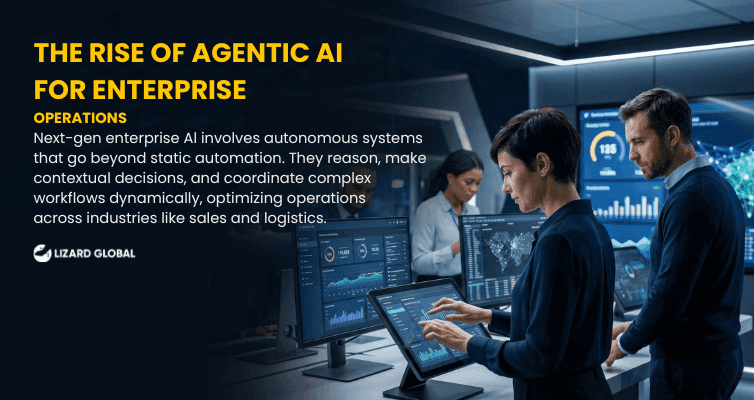
For example, an enterprise sales ecosystem may use Autonomous AI Agents to qualify leads, generate personalized outreach, update CRM systems, schedule follow-ups, and deliver performance analytics automatically.
Real-world implementations like ChatLicense demonstrate how agentic systems can be applied to safety and digital governance scenarios, while My New Behavior shows how AI-driven systems can support behavioral transformation at scale.
However, these intelligent ecosystems introduce additional layers of complexity. Enterprises must manage agent collaboration, workflow orchestration, governance policies, auditability, escalation mechanisms, and integration dependencies.
As a result, AI governance supported by security and ISO compliance becomes a critical priority for enterprise leaders.
Enterprise AI Orchestration Is the Foundation of Scalable AI
As enterprises expand their AI ecosystems, orchestration becomes increasingly important. AI systems rarely operate in isolation. Instead, they interact with APIs, cloud platforms, internal databases, CRM systems, analytics dashboards, and enterprise applications.
Enterprise AI Orchestration connects these moving parts into a cohesive operational framework. Effective orchestration enables organizations to coordinate data flows, AI agents, human approvals, integrations, and workflows efficiently. Without orchestration, AI initiatives often become disconnected experiments that fail to scale across the business.
For example, a global retail organization may deploy multiple AI systems simultaneously, including personalization engines similar to Saleduck, or logistics optimization platforms inspired by Travereel.
Continuous support ensures orchestration frameworks evolve alongside the enterprise through SLA and technical support, ensuring reliability and scalability over time.
AI Observability, Governance, and Enterprise Risk Management
As AI systems become more autonomous, enterprise leaders must address governance, transparency, and accountability more proactively.
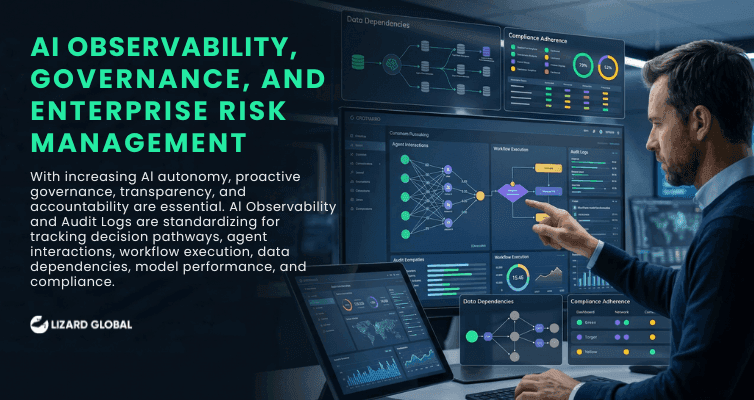
AI Observability & Audit Logs are rapidly becoming standard requirements for enterprise AI environments. Observability enables organizations to track AI decision pathways, agent interactions, workflow execution, data dependencies, model performance, and compliance adherence.
Advanced analytics platforms like product analytics help enterprises continuously refine AI behavior and operational efficiency. Additionally, enterprise systems must balance deterministic and agentic AI approaches while ensuring human oversight remains in critical decision points.
The Importance of Continuous Support Beyond Deployment
Deployment is not the endpoint. In reality, it marks the beginning of an ongoing optimization lifecycle. AI systems require infrastructure monitoring, security updates, performance tuning, workflow refinement, and model retraining.
This is where performance optimization and continuous support frameworks become essential for long-term success.
Platforms such as Heineken Drinkies demonstrate how continuous iteration and optimization directly impact real-world digital product performance at enterprise scale.
Why Strategic AI Partnerships Matter for Enterprise Growth
As enterprise AI ecosystems become more sophisticated, businesses increasingly require long-term strategic partners rather than isolated service providers.
Successful AI transformation demands expertise across AI architecture, product strategy, software engineering, enterprise integrations, UX/UI design, and digital transformation strategy.
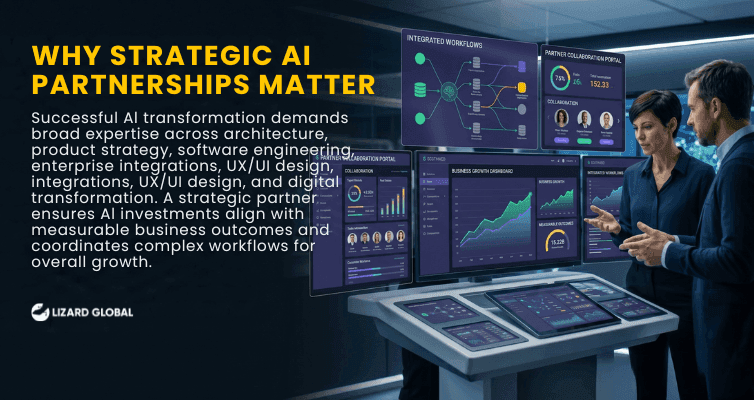
A structured approach like digital strategy and consultancy ensures AI investments are aligned with measurable business outcomes.
Case studies such as Cognify (AvantHealth) and Strivers Hub highlight how strategic partnerships deliver scalable digital ecosystems with real societal and business impact.
Continuous AI Optimization Is Becoming a Competitive Advantage
Enterprise AI is entering a new phase of maturity. Organizations are no longer competing solely on whether they use AI. Instead, they compete on how effectively they optimize, govern, scale, and evolve their AI ecosystems over time.
Businesses that invest in continuous optimization gain faster adaptation, improved efficiency, better customer experience, and stronger ROI.
Meanwhile, platforms like Afflink and Tactlink demonstrate how data-driven ecosystems evolve through continuous iteration and optimization.
Ready to Optimize Your Enterprise AI Systems?
AI implementation is only the first step. Long-term enterprise success depends on continuous optimization, orchestration, governance, and scalable support.
Whether you are building Agentic Workflows, deploying Autonomous AI Agents, modernizing enterprise platforms, or scaling AI-powered customer experiences, the right strategic partner can accelerate measurable business outcomes.
Lizard Global helps enterprises design, build, optimize, and support future-ready AI ecosystems through custom software development, AI integration, UX/UI design services, and end-to-end digital transformation expertise.
👉 Talk to Lizard Global today to discover how your enterprise can build scalable, intelligent systems that continuously evolve with your business.
AI-powered enterprise systems are no longer static deployments. Modern enterprises require continuous optimization, governance, observability, and support to ensure long-term performance and business impact. This blog explores how Agentic AI for Enterprise, Autonomous AI Agents, and Enterprise AI Orchestration are transforming operations through adaptive intelligence, AI observability, and scalable agentic workflows. It also explains why organizations need a strategic digital transformation partner with expertise in custom software development, UI/UX design services, web app development services, mobile app development, and full-stack digital solutions to maintain sustainable AI success.
Enterprise AI adoption has accelerated dramatically over the past few years. However, many organizations are discovering that launching an AI solution is only the beginning. The real challenge lies in maintaining, improving, governing, and scaling AI-powered enterprise systems over time.
Unlike traditional software, AI systems continuously interact with changing data, evolving user behavior, shifting regulations, and dynamic business environments. As a result, enterprises can no longer treat AI implementation as a one-time project. Instead, they must embrace continuous optimization and long-term AI support strategies.
This shift is especially important as businesses adopt Agentic AI for Enterprise environments powered by Autonomous AI Agents and complex Agentic Workflows. These intelligent systems can automate tasks, coordinate decisions, and operate semi-independently across departments. While this creates enormous efficiency opportunities, it also introduces new operational complexities that require ongoing management.
Organizations that succeed with enterprise AI understand one critical truth: sustainable AI performance depends on continuous orchestration, governance, monitoring, and refinement. Companies that invest in long-term AI optimization unlock stronger ROI, better operational resilience, and faster innovation cycles.
At the same time, businesses increasingly need experienced partners capable of combining AI expertise with custom software development company capabilities, UX/UI product design, enterprise integrations, and scalable digital platforms. This is where strategic digital transformation partners like Lizard Global create long-term value for enterprises seeking future-ready AI ecosystems.
coat_estimator
Why Enterprise AI Systems Require Continuous Optimization
Traditional enterprise software generally follows predictable rules. Once deployed, maintenance primarily involves bug fixes, upgrades, and infrastructure management. AI-powered systems behave differently because they learn, adapt, and depend heavily on data quality and operational context.
As business conditions evolve, AI models can experience performance degradation, inaccurate outputs, or decision inconsistencies. This phenomenon, commonly known as model drift, can significantly impact enterprise operations if left unmanaged.
Continuous optimization helps organizations maintain system accuracy, operational reliability, and business alignment. More importantly, optimization ensures AI continues generating measurable value rather than becoming a costly operational burden.
For example, Autonomous AI Agents operating within customer service, logistics, or financial workflows may initially perform well during deployment. However, customer behavior, compliance requirements, and operational processes constantly evolve. Without optimization, these systems gradually become less effective and potentially introduce operational risks.
This is why Enterprise AI Orchestration, supported by data and architecture design, has become essential. Orchestration ensures AI systems, workflows, integrations, and human oversight remain synchronized across the organization. Additionally, optimization is not limited to backend systems alone. User adoption also depends heavily on intuitive interfaces and seamless interactions. Strong UI/UX design services help enterprises create AI systems employees actually trust and use effectively.
Organizations increasingly recognize that successful AI transformation requires collaboration between AI engineers, product strategists, designers, developers, and operational stakeholders. A full-stack digital solutions agency with multidisciplinary expertise such as full-stack development can bridge these gaps far more effectively than siloed vendors.
The Rise of Agentic AI for Enterprise Operations
The next generation of enterprise AI is moving beyond isolated automation tools. Businesses are now embracing Agentic AI for Enterprise systems capable of autonomous reasoning, contextual decision-making, and workflow coordination. Unlike traditional deterministic automation, agentic systems dynamically adapt to changing conditions. They can analyze information, coordinate multiple systems, and independently execute tasks within defined governance boundaries. This evolution is reshaping enterprise operations across industries.
For example, an enterprise sales ecosystem may use Autonomous AI Agents to qualify leads, generate personalized outreach, update CRM systems, schedule follow-ups, and deliver performance analytics automatically.
Real-world implementations like ChatLicense demonstrate how agentic systems can be applied to safety and digital governance scenarios, while My New Behavior shows how AI-driven systems can support behavioral transformation at scale.
However, these intelligent ecosystems introduce additional layers of complexity. Enterprises must manage agent collaboration, workflow orchestration, governance policies, auditability, escalation mechanisms, and integration dependencies.
As a result, AI governance supported by security and ISO compliance becomes a critical priority for enterprise leaders.
Enterprise AI Orchestration Is the Foundation of Scalable AI
As enterprises expand their AI ecosystems, orchestration becomes increasingly important. AI systems rarely operate in isolation. Instead, they interact with APIs, cloud platforms, internal databases, CRM systems, analytics dashboards, and enterprise applications.
Enterprise AI Orchestration connects these moving parts into a cohesive operational framework. Effective orchestration enables organizations to coordinate data flows, AI agents, human approvals, integrations, and workflows efficiently. Without orchestration, AI initiatives often become disconnected experiments that fail to scale across the business.
For example, a global retail organization may deploy multiple AI systems simultaneously, including personalization engines similar to Saleduck, or logistics optimization platforms inspired by Travereel.
Continuous support ensures orchestration frameworks evolve alongside the enterprise through SLA and technical support, ensuring reliability and scalability over time.
AI Observability, Governance, and Enterprise Risk Management
As AI systems become more autonomous, enterprise leaders must address governance, transparency, and accountability more proactively.
AI Observability & Audit Logs are rapidly becoming standard requirements for enterprise AI environments. Observability enables organizations to track AI decision pathways, agent interactions, workflow execution, data dependencies, model performance, and compliance adherence.
Advanced analytics platforms like product analytics help enterprises continuously refine AI behavior and operational efficiency. Additionally, enterprise systems must balance deterministic and agentic AI approaches while ensuring human oversight remains in critical decision points.
The Importance of Continuous Support Beyond Deployment
Deployment is not the endpoint. In reality, it marks the beginning of an ongoing optimization lifecycle. AI systems require infrastructure monitoring, security updates, performance tuning, workflow refinement, and model retraining.
This is where performance optimization and continuous support frameworks become essential for long-term success.
Platforms such as Heineken Drinkies demonstrate how continuous iteration and optimization directly impact real-world digital product performance at enterprise scale.
Why Strategic AI Partnerships Matter for Enterprise Growth
As enterprise AI ecosystems become more sophisticated, businesses increasingly require long-term strategic partners rather than isolated service providers.
Successful AI transformation demands expertise across AI architecture, product strategy, software engineering, enterprise integrations, UX/UI design, and digital transformation strategy.
A structured approach like digital strategy and consultancy ensures AI investments are aligned with measurable business outcomes.
Case studies such as Cognify (AvantHealth) and Strivers Hub highlight how strategic partnerships deliver scalable digital ecosystems with real societal and business impact.
Continuous AI Optimization Is Becoming a Competitive Advantage
Enterprise AI is entering a new phase of maturity. Organizations are no longer competing solely on whether they use AI. Instead, they compete on how effectively they optimize, govern, scale, and evolve their AI ecosystems over time.
Businesses that invest in continuous optimization gain faster adaptation, improved efficiency, better customer experience, and stronger ROI.
Meanwhile, platforms like Afflink and Tactlink demonstrate how data-driven ecosystems evolve through continuous iteration and optimization.
Ready to Optimize Your Enterprise AI Systems?
AI implementation is only the first step. Long-term enterprise success depends on continuous optimization, orchestration, governance, and scalable support.
Whether you are building Agentic Workflows, deploying Autonomous AI Agents, modernizing enterprise platforms, or scaling AI-powered customer experiences, the right strategic partner can accelerate measurable business outcomes.
Lizard Global helps enterprises design, build, optimize, and support future-ready AI ecosystems through custom software development, AI integration, UX/UI design services, and end-to-end digital transformation expertise.
👉 Talk to Lizard Global today to discover how your enterprise can build scalable, intelligent systems that continuously evolve with your business.
FAQs

Why is continuous optimization important for enterprise AI systems?
What is Agentic AI for Enterprise?
How does Enterprise AI Orchestration improve scalability?
What role does Human-in-the-Loop (HITL) play in enterprise AI?
Why do enterprises need AI observability and audit logs?
How can a digital transformation partner support enterprise AI initiatives?
What should enterprises look for in an AI development partner?

Stuck between a great idea and the right team to build it?Let's talk.
We work with corporate innovation teams and ambitious scale-ups across the Netherlands, Singapore, and Australia, and wherever great software needs to be built. Drop us a message and we'll get back to you within one business day.


Markus Monnikendam
Global Commercial Director
hello@lizard.global