
Scaling Two-Sided Platforms: Payments, Matching Logic & Infrastructure Challenges

19 Feb 2026
by Nadiy, Senior Content Writer
19 Feb 2026
by Nadiy, Senior Content Writer
Scaling Two-Sided Platforms: Payments, Matching Logic & Infrastructure Challenges
Table of contents
Understanding the Scaling Challenge in Two-Sided Platforms
How Do Payments Scale Beyond Transactions?
How Does Matching Logic Evolve from Rules to Intelligence?
What Infrastructure Challenges Arise in High-Growth Marketplaces?
How Do Governance, Trust, and Control Shape Platforms?
The Role of Digital Transformation in Scaling Two-Sided Platforms
How Lizard Global Supports Two-Sided Marketplace Growth
Contact us
We will get back to you in the next 48 hours.
Scaling a two-sided platform is where real complexity begins. From payment flows and matching logic to infrastructure limitations, this article breaks down the challenges that emerge as marketplaces grow, and what it takes to solve them without slowing momentum.
key takeaways
Two-sided platforms rarely fail because of a lack of demand. More often, they struggle when growth accelerates faster than the systems designed to support it. What works at launch, manual processes, simple matching rules, and basic payment flows, quickly become a bottleneck once users, transactions, and expectations increase.
Scaling a two-sided platform is not just about handling more users. It requires rethinking how payments flow between parties, how matching logic evolves with complexity, and how infrastructure supports reliability, trust, and performance at scale.
This is where many platforms hit friction, and where strategic digital transformation becomes essential.
Want to find out how much it costs to build your dream app or web app?


Understanding the Scaling Challenge in Two-Sided Platforms
Two-sided platforms operate in an inherently complex environment. They must simultaneously serve two interdependent user groups, each with distinct goals, behaviors, and expectations. As the platform grows, this duality amplifies operational and technical challenges.
Early-stage platforms can often rely on simplified logic and off-the-shelf tools. However, scaling introduces new realities: higher transaction volumes, cross-border payments, algorithmic matching demands, and increased risk exposure. Without deliberate architectural decisions, growth can quickly lead to instability, poor user experiences, and revenue leakage.
Lizard Global addresses this by building scalable apps like BMN Connect for construction procurement, digitizing manual processes to unify contractors and suppliers.
How Do Payments Scale Beyond Transactions?
Payments are one of the first systems to show strain as a two-sided platform grows. What begins as a simple checkout process evolves into a complex financial ecosystem.
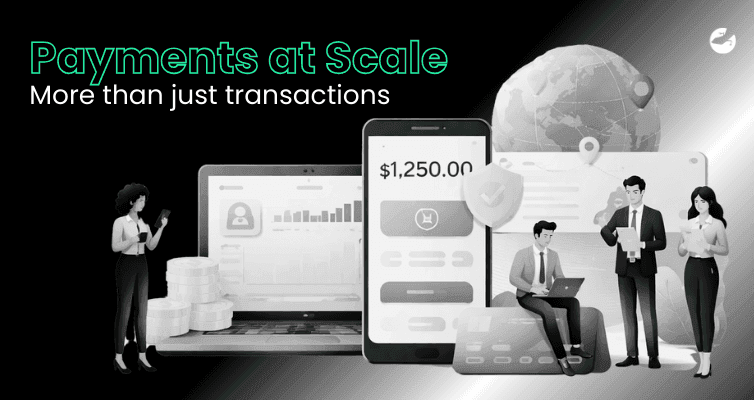
Platforms must manage multiparty flows like split payments, refunds, and fraud detection via tools such as Stripe Connect, avoiding custom financial rebuilds. Cross-border complexities, including Know Your Customer (KYC) / Anti-Money Laundering (AML) checks and varying settlement times, spike risks and costs during expansion; scalable infrastructure supports multi-currency wallets and seamless APIs to boost conversion rates.
Increasing Payment Complexity
Scaling platforms must handle:
- Split payments between multiple parties
- Escrow and delayed payouts
- Refunds, chargebacks, and dispute resolution
- Multi-currency and cross-border transactions
- Compliance with regional tax and financial regulations
Each additional layer adds risk if not designed correctly. Payment failures directly impact trust, which is critical for marketplace sustainability.
This is where an experienced digital partner comes into play, we at Lizard Global build e-commerce solutions, integrating secure, scalable payment flows for seamless buyer-seller exchanges.
Why Payment Architecture Matters
At scale, payment systems must be modular, secure, and adaptable. Platforms that rely on rigid payment setups often struggle to introduce new monetization models or expand into new regions.
Scalable payment infrastructure allows marketplaces to evolve their revenue strategies without disrupting existing users.
How Does Matching Logic Evolve from Rules to Intelligence?
Matching logic sits at the core of any two-sided platform. It determines how value is created and perceived by users. Effective matching drives liquidity by pairing supply and demand efficiently.
Core logic defines atomic interactions like service bookings, while balancing sub-segments via pricing subsidies for the scarcer side and governance rules to curb fraud or congestion.
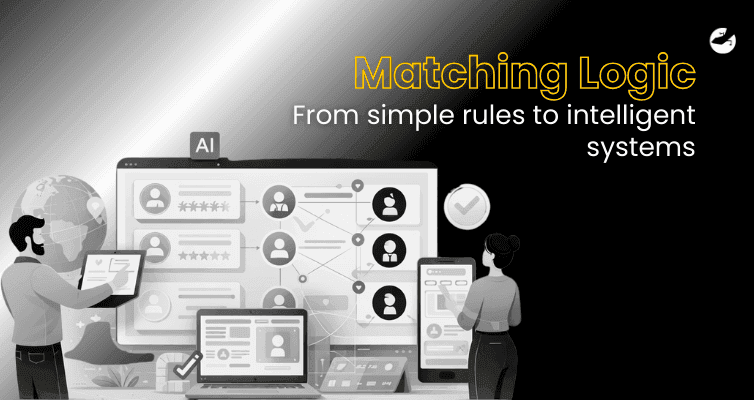
As power users emerge, algorithms evolve to offer analytics and prioritization without alienating casual participants, amplifying cross-side network effects.
The Limits of Basic Matching
Early matching systems often rely on:
- Location proximity
- Availability
- Static filters
While effective initially, these approaches fail to account for quality, preferences, historical behavior, and demand fluctuations as the platform grows.
Lizard Global evolves these into data-driven tools for projects like Isero's mobile webshop, matching products to buyer needs.
Scaling Matching for Better Outcomes
As platforms mature, matching logic must incorporate:
- User behavior and engagement patterns
- Quality and performance signals
- Dynamic pricing or prioritization
- Personalized recommendations
Advanced matching improves conversion rates, satisfaction, and retention on both sides of the platform. However, it requires robust data pipelines, well-defined algorithms, and continuous optimization.
Lizard Global applies this in transport apps like VaxiTaxi, optimizing rider-provider connections.
What Infrastructure Challenges Arise in High-Growth Marketplaces?
Infrastructure is the foundation that supports every interaction on a two-sided platform. Scaling exposes weaknesses that were invisible at smaller volumes like bottlenecks in data reconciliation, reporting, and uptime.
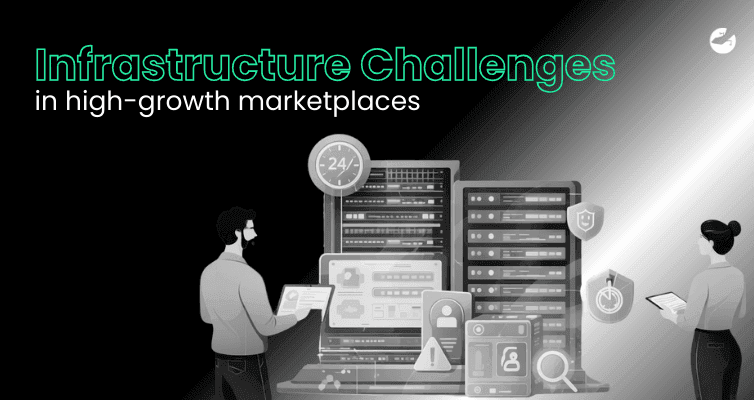
Fragmented Payment Service Providers (PSP) complicate oversight of declines, chargebacks, and fees, necessitating orchestration for global routing and centralized analytics. Platforms achieve efficiency through low marginal costs post-liquidity, escrow floats for cash flow, and modular designs that layer services like logistics or subscriptions atop core take rates.
Performance and Reliability
High-growth platforms must maintain:
- Low latency across regions
- High availability during peak usage
- Consistent performance across web and mobile experiences
Downtime erodes trust; we have experience building high-availability apps, such as the Vehicle Recovery System, handling real-time operations.
Data, Security, and Compliance
As user bases grow, so do data volumes and security risks. Scalable platforms must ensure:
- Secure handling of sensitive user and payment data
- Compliance with regional regulations
- Strong monitoring and incident response systems
Neglecting these areas can result in reputational damage and operational disruption. Rapid growth strains systems, requiring resilient backends.
GDPR, PDPA, and data breaches loom large; Lizard Global ensures secure, compliant infrastructure in cross-border projects.
How Do Governance, Trust, and Control Shape Platforms?
Scaling is not just technical. Governance becomes increasingly important as marketplaces grow. Platforms must manage:
- Fraud prevention and abuse detection: Prioritize BaaS providers early for IBANs, compliance, and integrations to enable frictionless market entry.
- Dispute resolution workflows: Model economics with GMV projections, CAC paybacks, and incident thresholds to sustain growth amid regulatory pressures.
- Platform policies and enforcement mechanisms: Differentiate interfaces for power users while unifying payments across channels, ensuring reliability as transactions multiply.
Strong governance systems protect both users and the platform itself, ensuring long-term viability.
The Role of Digital Transformation in Scaling Two-Sided Platforms
Digital transformation is the process of evolving systems, workflows, and technologies to support sustainable growth. For two-sided platforms, this means aligning business goals with scalable technology decisions.
Successful transformation focuses on:
- Modular, future-ready architecture
- Data-driven decision-making
- Automation of operational processes
- Continuous improvement of user experiences
Rather than reacting to growth challenges, digitally mature platforms anticipate and design for them. Platforms must enforce rules, ratings, and dispute resolution to foster trust. Lizard Global embeds governance in apps, providing live data verification to prevent errors and build reliability.
How Lizard Global Supports Two-Sided Marketplace Growth
Scaling a two-sided platform requires more than technical execution. It demands a deep understanding of marketplace dynamics, user behavior, and long-term business strategy. From designing scalable payment systems and intelligent matching logic to building resilient infrastructure and governance frameworks, every decision impacts growth and trust.
At Lizard Global, we partner with businesses to navigate these complexities. Our teams help clients design, build, and scale two-sided platforms that are secure, performant, and ready for expansion.

Whether you are launching a marketplace or evolving an existing platform, we combine strategic insight with technical expertise to support sustainable growth, without compromising user experience or operational control - get in touch today.
similar reads

Case Studies & Interviews
Lereng Tanah: Developing a Direct Booking Platform Malaysian Boutique Villa
29 January 2026

Case Studies & Interviews
Tactlink: How a Malaysian Entrepreneur Turned Networking Chaos into a Digital Community
22 January 2026

Software Development
Who Are the Top Software Development Vendors in Amsterdam for 2026?
26 August 2026