Mobile App Architecture That Survives Rapid User Growth
16 Mar 2026
by Team Lizard Global
Editor: Nadiy, Senior Content Writer
16 Mar 2026
by Team Lizard Global
Editor: Nadiy, Senior Content Writer
Mobile App Architecture That Survives Rapid User Growth
Table of contents
Contact us
We will get back to you in the next 48 hours.

In an era where user growth can skyrocket overnight, only mobile applications with resilient architecture can sustain performance, reliability, and scalability. This comprehensive post explores key architectural patterns, strategies for rapid scaling, optimization techniques, and real‑world examples from successful projects delivered by a full‑stack digital solutions agency. Whether you’re a CTO, product manager, or tech founder, you’ll walk away with practical insights to build mobile apps capable of surviving, and thriving, through accelerated growth.
key takeaways
In today’s hyper‑connected digital landscape, mobile apps are the front door to your brand, service, or platform. But what happens when your user base grows faster than expected? How do you prevent crashes, lagging experiences, or backend failures?
This blog post explores the art and science of building mobile app architectures that survive rapid user growth, drawing on practical examples, tested principles, and expert insights from a custom software development company experienced in global projects.
Transitioning from an MVP to a scalable product requires intentional planning, thoughtful design, and the right engineering decisions. Together, let’s unpack how to build for growth without sacrificing performance or user experience.
Why Scalable Architecture Matters for Mobile Apps
Scalability isn’t optional, it’s foundational. What separates apps that falter from those that flourish isn’t always the idea, but the underlying architecture that supports it.
When you anticipate rapid user growth, scalability needs to be baked into your app from Day 1. Reactive APIs, distributed systems, stateless servers, and modular codebases aren’t buzzwords, they’re survival mechanisms. Without them, performance bottlenecks emerge quickly; user retention drops; and your reputation as a trusted brand suffers.
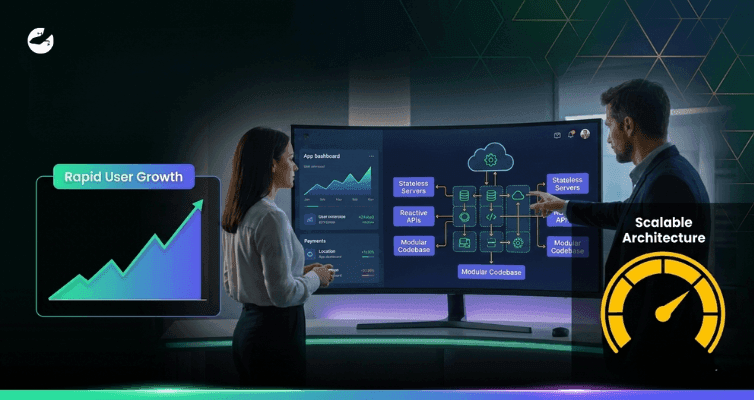
At Lizard Global, our mobile app development agency approach always includes scalability planning early in the project roadmap. From cloud‑ready infrastructure to modular backend services, being proactive rather than reactive makes all the difference.
And it’s not just theory. Consider Drinkies: scalable mobile app built for Heineken Malaysia , originally built as an ecommerce platform, it evolved to support loyalty features as user demand grew. This was possible because its architecture had scalability in mind from the start.

Building Blocks of Scalable Mobile Architecture
Architecting for growth means establishing a foundation that adapts to change, absorbs spikes in traffic, and lets you iterate quickly.
Modular & Microservices Architecture
Traditional monolithic apps are easier at first but struggle under growth because every component is tightly coupled. In contrast, modular architecture , where features are decoupled , enables teams to scale parts of the application independently.
This modular strategy is integral to how top full‑stack digital solutions agencies approach development. For instance, when creating DEXTR: nationwide taxi booking app, modular services allowed independent scaling of real‑time GPS tracking, payment processing, and ride‑matching functions.
Cloud‑Native Infrastructure & Serverless Services
Cloud platforms like AWS, Google Cloud, and Azure let you automatically scale backend services based on load. This means your app can handle sudden surges, such as during flash sales, promotions, or viral growth, without manual intervention.
Client‑Side Efficiency & Hybrid Options
The frontend architecture of a mobile app is just as crucial. Efficient state management, lazy loading, and effective caching ensure a responsive UI even under heavy use. One architectural choice worth considering is hybrid or cross‑platform frameworks.
React Native & Cross‑Platform Development
Cross‑platform frameworks allow simultaneous deployment to iOS and Android, maximizing reach while reducing development effort. This aligns well with the services offered by a seasoned mobile app development agency, especially when paired with strong UI/UX design services that ensure a polished experience regardless of device.
That said, there are cases where native development remains optimal, particularly when hardware integration or extreme performance is required. A balanced architecture might combine cross‑platform UI with native modules for intensive tasks, ensuring flexibility without sacrificing performance.
Data Architecture & Real‑Time Features
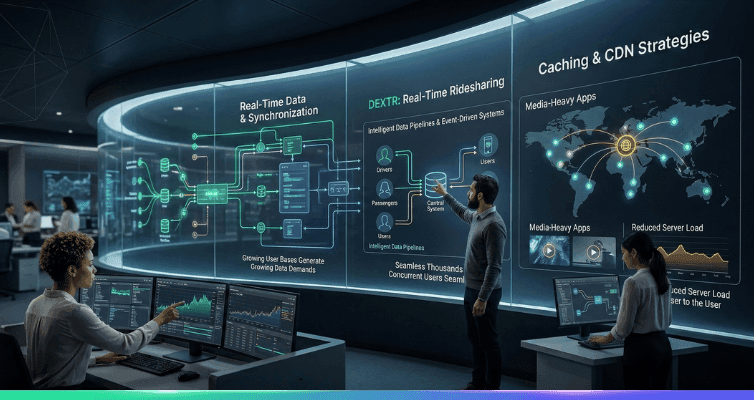
Growing user bases generate growing data demands. How your app handles data storage, retrieval, and synchronization impacts everything from speed to UX.
Real‑Time Data & Synchronization
Apps requiring real‑time updates (like ridesharing or payment platforms) need intelligent data pipelines and event‑driven systems. In the case of DEXTR, real‑time driver arrival estimates and secure payment feedback were all architected to support thousands of concurrent users seamlessly.
Testing Beyond Bugs: Performance & Load
Effective QA isn’t just about finding bugs, it’s about simulating real‑world growth. Load testing, stress tests, and performance profiling allow you to anticipate bottlenecks before they occur.
In our work across industries , from e‑commerce to transport, we always incorporate progressive testing into both mobile and web app development services to validate performance thresholds under projected growth scenarios.
Monitoring, Analytics & Growth Optimization
Surviving rapid growth isn’t only about hitting a high threshold once. It’s about sustained performance as user behavior changes. Growth analytics consulting helps you understand where users drop off and what features drive engagement.

Analytics data also feeds back into architectural decisions; for instance, increasing capacity for high‑traffic endpoints. Lizard Global emphasizes this data‑driven mindset, pairing digital consultancy services with technical execution to ensure growth is both measurable and manageable.
Real‑World Success Stories: Architecture for Growth
Let’s look at a few examples that embody the principles of resilient architecture:
Globiz, Digital Networking at Scale
By creating a customizable digital business card platform for Globiz: virtual business card app, Lizard Global helped streamline professional networking with an app that efficiently manages identity creation across thousands of users.
GrowTribe, HR Growth & Performance Tracking
Beyond pure mobile interfaces, architecture for growth also extends to hybrid mobile and web ecosystems. GrowTribe: mobile and web growth tracker solution integrates individual and organizational performance data in real time, aligning user growth with enterprise goals.
Partner With an Expert Growth‑Ready Mobile App Team
Building an app that survives rapid growth demands more than just brilliant ideas, it requires experience, foresight, and architectural excellence. As a trusted digital transformation partner and custom software development company, Lizard Global brings strategy and execution together to create mobile apps that scale.

Whether you need end‑to‑end web app development services, digital consultancy services, or expert UI/UX design services, we’re here to help you thrive in a high‑growth world.
In an era where user growth can skyrocket overnight, only mobile applications with resilient architecture can sustain performance, reliability, and scalability. This comprehensive post explores key architectural patterns, strategies for rapid scaling, optimization techniques, and real‑world examples from successful projects delivered by a full‑stack digital solutions agency. Whether you’re a CTO, product manager, or tech founder, you’ll walk away with practical insights to build mobile apps capable of surviving, and thriving, through accelerated growth.
In today’s hyper‑connected digital landscape, mobile apps are the front door to your brand, service, or platform. But what happens when your user base grows faster than expected? How do you prevent crashes, lagging experiences, or backend failures?
This blog post explores the art and science of building mobile app architectures that survive rapid user growth, drawing on practical examples, tested principles, and expert insights from a custom software development company experienced in global projects.
Transitioning from an MVP to a scalable product requires intentional planning, thoughtful design, and the right engineering decisions. Together, let’s unpack how to build for growth without sacrificing performance or user experience.
Why Scalable Architecture Matters for Mobile Apps
Scalability isn’t optional, it’s foundational. What separates apps that falter from those that flourish isn’t always the idea, but the underlying architecture that supports it.
When you anticipate rapid user growth, scalability needs to be baked into your app from Day 1. Reactive APIs, distributed systems, stateless servers, and modular codebases aren’t buzzwords, they’re survival mechanisms. Without them, performance bottlenecks emerge quickly; user retention drops; and your reputation as a trusted brand suffers.
At Lizard Global, our mobile app development agency approach always includes scalability planning early in the project roadmap. From cloud‑ready infrastructure to modular backend services, being proactive rather than reactive makes all the difference.
And it’s not just theory. Consider Drinkies: scalable mobile app built for Heineken Malaysia , originally built as an ecommerce platform, it evolved to support loyalty features as user demand grew. This was possible because its architecture had scalability in mind from the start.
Building Blocks of Scalable Mobile Architecture
Architecting for growth means establishing a foundation that adapts to change, absorbs spikes in traffic, and lets you iterate quickly.
Modular & Microservices Architecture
Traditional monolithic apps are easier at first but struggle under growth because every component is tightly coupled. In contrast, modular architecture , where features are decoupled , enables teams to scale parts of the application independently.
This modular strategy is integral to how top full‑stack digital solutions agencies approach development. For instance, when creating DEXTR: nationwide taxi booking app, modular services allowed independent scaling of real‑time GPS tracking, payment processing, and ride‑matching functions.
Cloud‑Native Infrastructure & Serverless Services
Cloud platforms like AWS, Google Cloud, and Azure let you automatically scale backend services based on load. This means your app can handle sudden surges, such as during flash sales, promotions, or viral growth, without manual intervention.
Client‑Side Efficiency & Hybrid Options
The frontend architecture of a mobile app is just as crucial. Efficient state management, lazy loading, and effective caching ensure a responsive UI even under heavy use. One architectural choice worth considering is hybrid or cross‑platform frameworks.
React Native & Cross‑Platform Development
Cross‑platform frameworks allow simultaneous deployment to iOS and Android, maximizing reach while reducing development effort. This aligns well with the services offered by a seasoned mobile app development agency, especially when paired with strong UI/UX design services that ensure a polished experience regardless of device.
That said, there are cases where native development remains optimal, particularly when hardware integration or extreme performance is required. A balanced architecture might combine cross‑platform UI with native modules for intensive tasks, ensuring flexibility without sacrificing performance.
Data Architecture & Real‑Time Features
Growing user bases generate growing data demands. How your app handles data storage, retrieval, and synchronization impacts everything from speed to UX.
Real‑Time Data & Synchronization
Apps requiring real‑time updates (like ridesharing or payment platforms) need intelligent data pipelines and event‑driven systems. In the case of DEXTR, real‑time driver arrival estimates and secure payment feedback were all architected to support thousands of concurrent users seamlessly.
Testing Beyond Bugs: Performance & Load
Effective QA isn’t just about finding bugs, it’s about simulating real‑world growth. Load testing, stress tests, and performance profiling allow you to anticipate bottlenecks before they occur.
In our work across industries , from e‑commerce to transport, we always incorporate progressive testing into both mobile and web app development services to validate performance thresholds under projected growth scenarios.
Monitoring, Analytics & Growth Optimization
Surviving rapid growth isn’t only about hitting a high threshold once. It’s about sustained performance as user behavior changes. Growth analytics consulting helps you understand where users drop off and what features drive engagement.
Analytics data also feeds back into architectural decisions; for instance, increasing capacity for high‑traffic endpoints. Lizard Global emphasizes this data‑driven mindset, pairing digital consultancy services with technical execution to ensure growth is both measurable and manageable.
Real‑World Success Stories: Architecture for Growth
Let’s look at a few examples that embody the principles of resilient architecture:
Globiz, Digital Networking at Scale
By creating a customizable digital business card platform for Globiz: virtual business card app, Lizard Global helped streamline professional networking with an app that efficiently manages identity creation across thousands of users.
GrowTribe, HR Growth & Performance Tracking
Beyond pure mobile interfaces, architecture for growth also extends to hybrid mobile and web ecosystems. GrowTribe: mobile and web growth tracker solution integrates individual and organizational performance data in real time, aligning user growth with enterprise goals.
Partner With an Expert Growth‑Ready Mobile App Team
Building an app that survives rapid growth demands more than just brilliant ideas, it requires experience, foresight, and architectural excellence. As a trusted digital transformation partner and custom software development company, Lizard Global brings strategy and execution together to create mobile apps that scale.
Whether you need end‑to‑end web app development services, digital consultancy services, or expert UI/UX design services, we’re here to help you thrive in a high‑growth world.
FAQs

What architectural factors should enterprises consider for rapid user growth?
How does scalable architecture improve user retention?
Can hybrid app development support rapid growth?
What role does analytics play in growth‑oriented mobile apps?
How do custom software development companies handle unpredictable spikes?
Is native development better for scaling than cross‑platform?
Why partner with a full‑stack digital solutions agency for scaling?
similar reads

Case Studies & Interviews
Lereng Tanah: Developing a Direct Booking Platform Malaysian Boutique Villa
29 January 2026

Case Studies & Interviews
Tactlink: How a Malaysian Entrepreneur Turned Networking Chaos into a Digital Community
22 January 2026

Software Development
Best Practices for Developing Secure and Scalable eCommerce Platforms
10 June 2025
Stuck between a great idea and the right team to build it?Let's talk.
We work with corporate innovation teams and ambitious scale-ups across the Netherlands, Singapore, and Australia, and wherever great software needs to be built. Drop us a message and we'll get back to you within one business day.


Markus Monnikendam
Global Commercial Director
hello@lizard.global