Using Behavioral Analytics to Drive Business Outcomes in Legacy Systems

26 Feb 2026
by Team Lizard Global
Editor: Nadiy, Senior Content Writer
26 Feb 2026
by Team Lizard Global
Editor: Nadiy, Senior Content Writer
Using Behavioral Analytics to Drive Business Outcomes in Legacy Systems
Table of contents
Why Legacy Systems Struggle to Deliver Modern Business Outcomes
What Behavioral Analytics Really Means for Enterprise Systems
From Transactional Data to Predictive Insights: Real Portfolio Examples
Modernizing Legacy Platforms Through UI/UX and Progressive Architecture
Embedding Growth Analytics into Digital Transformation Strategy
Integrating Behavioral Intelligence Without Disrupting Operations
The Business Outcomes: Revenue, Efficiency, and Strategic Agility
Turning Legacy into Leverage
Ready to Unlock Behavioral Intelligence in Your Legacy Systems?
Contact us
We will get back to you in the next 48 hours.
Legacy systems often limit visibility into user behavior, restrict innovation, and slow down growth. However, with the right behavioral analytics strategy, even outdated infrastructures can become powerful engines for measurable business outcomes. This blog explores how enterprises can unlock value from legacy platforms by integrating growth analytics consulting, CRM integration services, UI/UX product design, and scalable web and mobile app development. Through real examples from Lizard Global’s portfolio — including Heineken’s Drinkies, Brunott’s CRM transformation, RiA’s risk analytics platform, and Lumira Circle’s data-driven learning experience — this blog demonstrates how behavioral insights drive retention, personalization, and operational efficiency. If you are navigating digital transformation, this guide will help you leverage analytics to modernize without disruption and create scalable, future-ready systems.
key takeaways
Legacy systems were built for reliability — not agility. They process transactions, store records, and keep operations running. However, they rarely provide clear insight into how users actually behave. As markets become more competitive and customer expectations rise, organizations can no longer rely on static reports and outdated dashboards.
They need behavioral intelligence. By layering behavioral analytics onto existing infrastructures, enterprises can uncover friction points, predict churn, personalize experiences, and optimize workflows — all without replacing their core systems.
In other words, legacy technology does not have to limit growth. With the right digital transformation partner, it can become the foundation for measurable business outcomes.
Why Legacy Systems Struggle to Deliver Modern Business Outcomes
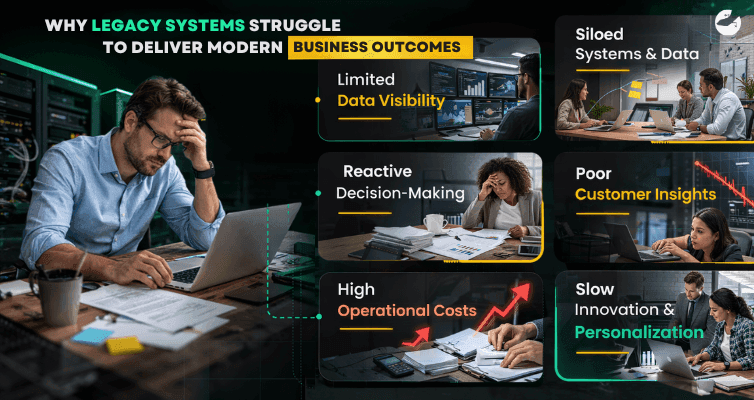
Many enterprises still rely on legacy systems built for operational stability rather than user insight. These systems process transactions, store data, and support workflows. However, they rarely capture meaningful behavioral signals. As a result, leadership teams struggle to understand how users actually interact with their products and services.
Consequently, growth becomes reactive instead of proactive. Decision-makers rely on static reports instead of real-time engagement data. Marketing teams lack behavioral triggers. Product teams cannot optimize user journeys. And operations departments operate with limited predictive intelligence.
However, legacy does not mean obsolete. With the right digital consultancy services and a structured analytics strategy, companies can layer behavioral intelligence on top of existing infrastructures. A custom software development company can integrate modern analytics frameworks without forcing a full system replacement. That approach reduces risk while accelerating impact.
In fact, behavioral analytics often becomes the bridge between stability and innovation. It transforms static systems into adaptive platforms capable of supporting sustainable digital transformation.
What Behavioral Analytics Really Means for Enterprise Systems
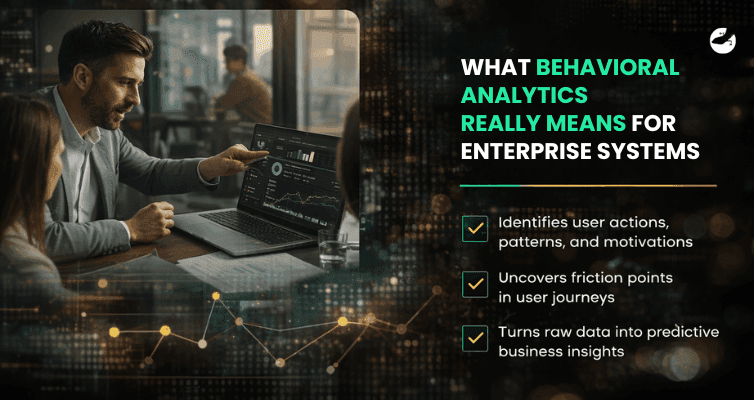
Behavioral analytics goes beyond dashboards and vanity metrics. It focuses on understanding actions, patterns, motivations, and friction points across digital ecosystems. Instead of asking “How many users logged in?”, organizations start asking, “Why do users drop off at this stage?”
For example, consider the CRM transformation project for Brunott. The challenge was not simply storing customer data. The goal was to centralize purchasing behavior, preferences, and engagement signals. Through CRM integration services and data science, the business gained insight into buying patterns without compromising privacy.
As a result, managers could track performance more effectively. Retail staff accessed consolidated client insights, personalized recommendations improved satisfaction. Most importantly, decisions shifted from intuition to data-backed strategy.
This illustrates a key principle: behavioral analytics does not replace legacy systems. Instead, it augments them with intelligence. When combined with UX/UI product design and growth analytics consulting, the outcome becomes measurable revenue growth and improved retention.
From Transactional Data to Predictive Insights: Real Portfolio Examples
Behavioral analytics becomes most powerful when applied to real-world ecosystems. Several projects demonstrate how modern analytics layers drive tangible outcomes.
Heineken Drinkies: Loyalty-Driven Behavioral Data
The Drinkies platform, developed with Heineken Malaysia, began as an on-demand delivery app. However, its real growth engine emerged from behavioral analytics embedded in its loyalty and rewards structure.
By tracking ordering frequency, delivery timing preferences, and reward redemption patterns, the system identified high-value customer segments. Behavioral triggers encouraged repeat purchases. Points-based incentives increased engagement.
This was not just iOS app development or Android app development. It was strategic behavioral modeling inside a commerce environment. A mobile app development agency can build features. But a full-stack digital solutions agency ensures those features generate measurable outcomes.
RiA: Risk Analytics in Complex Regulatory Environments
Similarly, the RiA platform, developed for Human Capital Services, turned complex social security risk assessments into structured behavioral workflows. Instead of static questionnaires, the system generated categorized risk analytics overviews based on user inputs.
This approach reduced analysis time from six hours to one and a half hours. That improvement directly impacted operational efficiency and cost savings. Behavioral analytics here did not focus on marketing. It optimized internal processes — proving its versatility across domains.
Modernizing Legacy Platforms Through UI/UX and Progressive Architecture
Behavioral analytics cannot succeed without proper UX foundations. If users struggle with navigation, data becomes distorted. Therefore, UI/UX design services play a critical role in ensuring clean behavioral signals.
Take Lumira Circle as an example. The platform delivers bite-sized micro-learning content with milestone tracking. Because the experience was designed responsively across devices, behavioral insights became consistent and reliable.
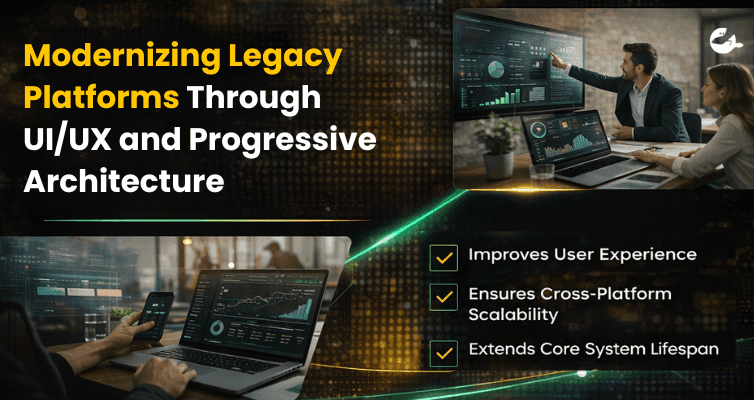
Through progressive web app development, the system ensured accessibility across devices without heavy infrastructure changes. Behavioral tracking measured lesson completion, engagement cycles, and content preferences. That data fed into personalized recommendations and milestone triggers. When modern architecture integrates with legacy backends through APIs and CRM integration services, companies avoid full replatforming. Instead, they create an analytics-enabled wrapper around core systems.
This is where a digital transformation partner adds strategic value — not by replacing everything, but by evolving intelligently.
Embedding Growth Analytics into Digital Transformation Strategy
Behavioral analytics should not be treated as a side project. It must align with broader digital marketing strategy services and product roadmaps. Otherwise, data remains unused.
Consider how loyalty systems, such as in Drinkies, align with acquisition campaigns. Behavioral segmentation allows targeted push notifications. Predictive models forecast churn risk. Growth analytics consulting identifies high-conversion cohorts. These insights inform campaign spend and retention strategies.
Similarly, in platforms like Reach Software (ROMS) , real-time insights enhanced reseller satisfaction. Behavioral dashboards allowed customizable parameters. As a result, user-centered decision-making improved system adoption.
Digital transformation becomes sustainable only when analytics informs iteration cycles. A web app development services provider might deliver infrastructure. However, a custom software development company with embedded data science ensures the product evolves with user behavior.
Integrating Behavioral Intelligence Without Disrupting Operations
One common fear surrounding modernization is operational disruption. Enterprises worry about downtime, compliance risk, and user resistance. However, behavioral analytics integration does not require radical change.
For example, CRM integration services can connect legacy databases with modern analytics layers through middleware, hybrid app development can extend internal systems to mobile environments without touching core infrastructure.
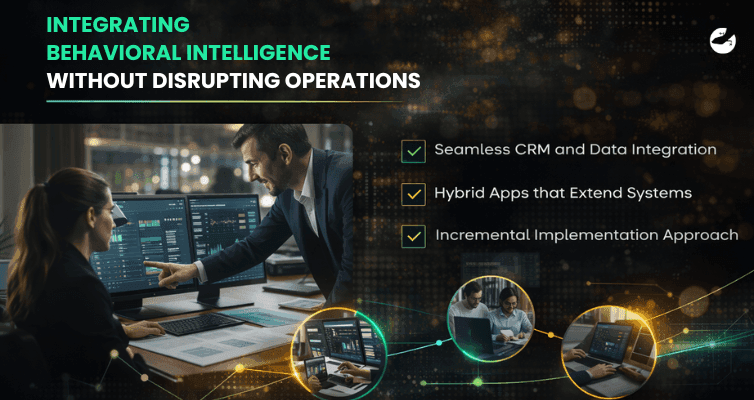
Furthermore, data science frameworks can process behavioral events in parallel, ensuring compliance and performance remain intact. This layered approach minimizes risk while delivering quick wins.
A full-stack digital solutions agency understands how to phase implementation. First, define behavioral KPIs. Next, implement tracking mechanisms. Then, align insights with UX/UI product design improvements. Finally, optimize continuously.
Digital transformation partner relationships thrive when collaboration replaces disruption.
The Business Outcomes: Revenue, Efficiency, and Strategic Agility
Ultimately, behavioral analytics must translate into measurable business outcomes. These typically fall into three categories:
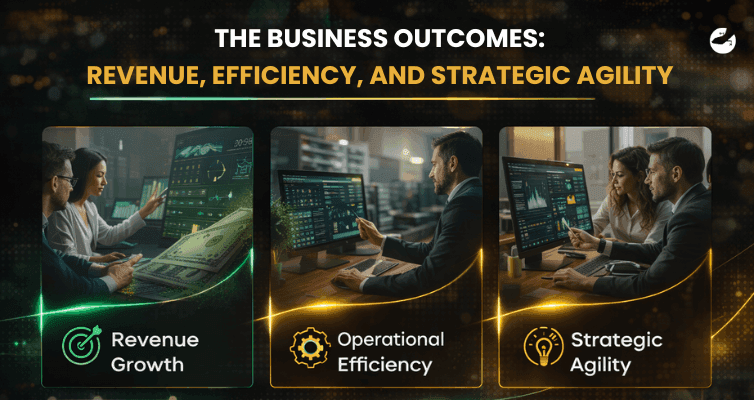
Revenue Growth:
Through personalized offers, loyalty segmentation, and optimized funnels.
Operational Efficiency:
Through reduced manual analysis time, centralized dashboards, and automated decision-making.
Strategic Agility:
Through predictive insights that allow proactive product iteration.
Projects like Brunott’s centralized CRM, RiA’s risk analytics optimization, and Drinkies’ loyalty-driven segmentation demonstrate these outcomes clearly. They show how legacy systems, when enhanced by analytics, become competitive advantages rather than constraints.
Moreover, enterprises gain clarity. They stop guessing. They start experimenting. And they scale with confidence.
Turning Legacy into Leverage
Legacy systems are not the enemy. Stagnation is. Behavioral analytics offers a practical path forward — one that balances stability with innovation.
When a custom software development company integrates analytics into existing infrastructures, organizations gain clarity without chaos. When a mobile app development agency embeds loyalty mechanics and predictive triggers, engagement increases. When web app development services align with UX/UI product design and digital marketing strategy services, growth becomes systematic.
The future belongs to enterprises that understand behavior — not just transactions.
Ready to Unlock Behavioral Intelligence in Your Legacy Systems?
If your organization operates on legacy infrastructure but aims to accelerate growth, now is the time to act.
Partner with a digital transformation partner that combines full-stack digital solutions agency capabilities, CRM integration services, UI/UX design services, and growth analytics consulting under one strategic framework.

Let’s transform your data into measurable outcomes — without disrupting your operations.
Contact us today to explore how behavioral analytics can redefine your enterprise performance - get your FREE consult today.
FAQs

What is behavioral analytics in legacy systems?
Can legacy systems support modern analytics tools?
How does behavioral analytics improve revenue?
Is full system replacement required for digital transformation?
How do UI/UX design services support analytics?
What industries benefit most from behavioral analytics?
How long does it take to see results?
similar reads

Case Studies & Interviews
Lereng Tanah: Developing a Direct Booking Platform Malaysian Boutique Villa
29 January 2026

Case Studies & Interviews
Tactlink: How a Malaysian Entrepreneur Turned Networking Chaos into a Digital Community
22 January 2026

Software Development
Who Are the Top Software Development Vendors in Amsterdam for 2026?
26 August 2026
Stuck between a great idea and the right team to build it?Let's talk.
We work with corporate innovation teams and ambitious scale-ups across the Netherlands, Singapore, and Australia, and wherever great software needs to be built. Drop us a message and we'll get back to you within one business day.


Markus Monnikendam
Global Commercial Director
hello@lizard.global