
Integrating Autonomous AI Agents into Enterprise Mobile Applications An Architectural Blueprint

06 Jul 2026
by Nadiy, Senior Content Writer
Contributor: Jeremy Raes, CEO & Co-Founder
06 Jul 2026
by Nadiy, Senior Content Writer
Contributor: Jeremy Raes, CEO & Co-Founder
Integrating Autonomous AI Agents into Enterprise Mobile Applications An Architectural Blueprint
Table of contents
Contact us
We will get back to you in the next 48 hours.
The era of basic AI chatbots and simple wrappers is officially over. Today, forward-thinking enterprises are shifting toward Agentic AI for Enterprise, embedding stateful, autonomous AI agents deep into their core mobile and web software architecture. This comprehensive blog post explores how Lizard Global, a premier full-stack digital solutions agency, designs and deploys production-grade agentic workflows. By analyzing real-world systems like Aposto, Zeno, and LikiFin, we break down the exact technical frameworks required to build background-driven AI digital labor. You will learn how to overcome the latency-utility paradox on mobile devices, establish robust AI guardrails, and transition your users from manual executors into high-level strategic directors.
key takeaways
The hype of AI as a novel side-panel feature that we saw in 2023/2024 is now behind us. We've seen, from 2025 to date, the transition of AI from experimental chatbots into the primary backbone of enterprise software logic.
With most applications using simple, stateless wrapper LLMs which are essentially glorified search engines predicting the next token over a standard POST request, the real paradigm shift happens when you move from a chatbot to a stateful, autonomous system where the LLM serves as a reasoning engine that transforms the user from an executor of manual tasks into a director who reviews and approves automated workflows.
We sat down with our CEO & Co-Founder, Jeremy Raes to get firsthand insight into how we at Lizard Global integrate autonomous AI Agents into enterprise mobile applications.
The Blueprint of an Autonomous Agent
Question: How is our AI Agent doing actual work behind the scenes instead of just chatting with the user?
Answer: Most people use AI/LLMs (such as ChatGPT, Gemini, or Grok) as simple chat windows or basic wrappers doing text prediction to summarize information or draft a reply. By itself, a raw LLM call is just a stateless POST request predicting the next token. It has no memory, no plan, and no inherent capability.
Rather than a simple chatbot, the LLM becomes a completely new type of interface and way to interact with your data. They are autonomous agents capable of executing complex tasks across structured and unstructured data sources on your behalf.
To do this, we need to take the model beyond the "standard" LLM and create an agent loop. The model acts as a reasoning engine within a larger, stateful system:
Agent = Model + Persona + Memory + Tools + Loop This loop continuously drives a cycle of Observe ➔ Plan ➔ Act ➔ Repeat.
Architecture in Action: Industry Implementations
Question: Explain how the AI Agents in Lizard Global’s projects are making decisions, routing data, or executing tasks automatically.
Answer: We actively deploy this Agent = Model + Persona + Memory + Tools + Loop protocol-first framework to drive stateful, domain-specific intelligence across vastly different industries.
Here is what "doing actual work" looks like behind the scenes:
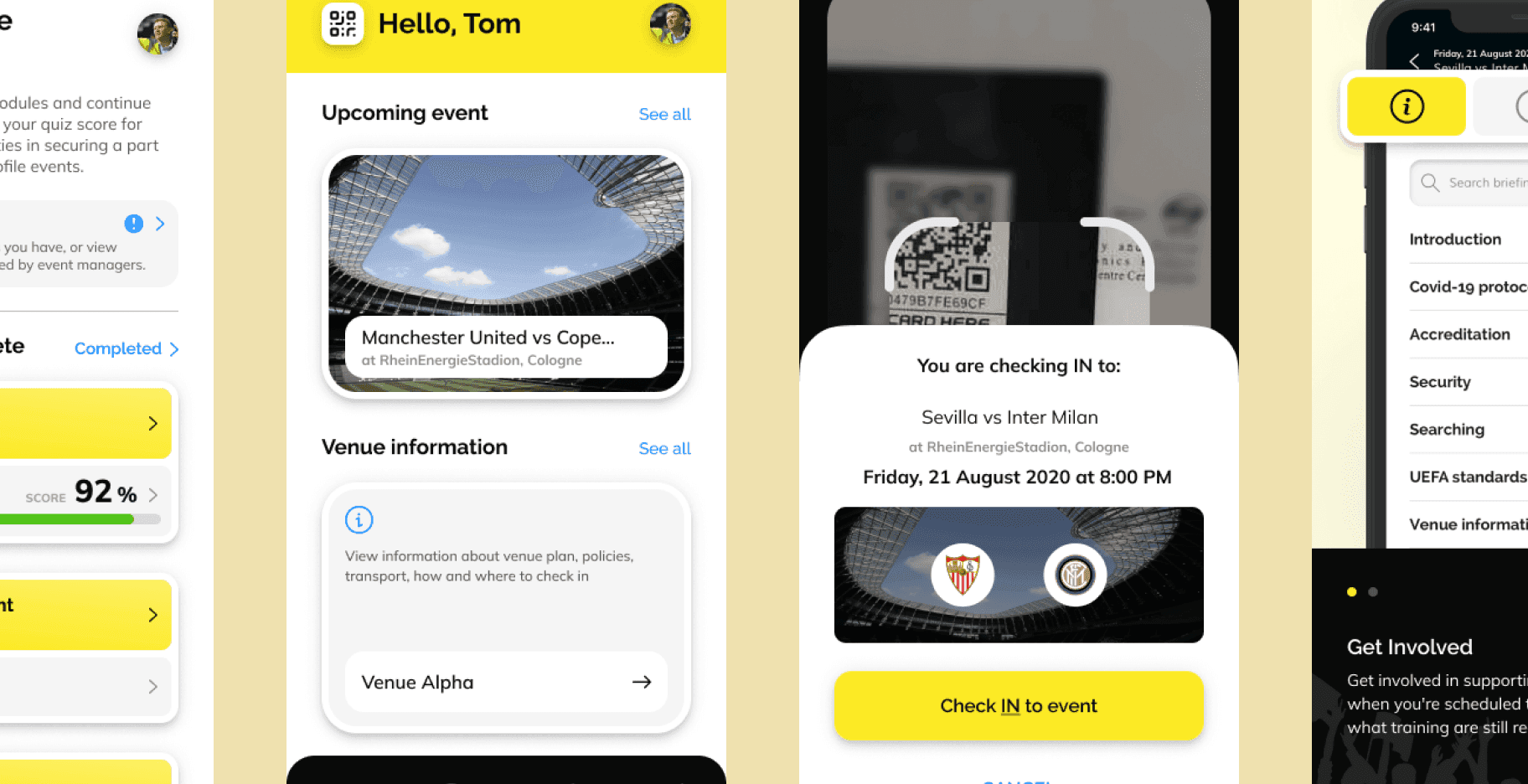
Case Study 1. Aposto | Staffing, Scheduling & Safety Compliance
Instead of a manager clicking through complex venue maps, Aposto uses an autonomous Staffing & Compliance Agent. It automatically coordinates worker rosters, dynamically matches and schedules staff, drafts and verifies shift-safety briefings, and builds instant audit trails to ensure 100% training compliance.
Case Study 2. Zeno | AI-Driven Personal Growth
Zenorelies on a Predictive Mental Fitness Agent. Utilizing multi-agent predictive psychology and a stateful, four-layer memory architecture, it anticipates user stressors before they peak. The agent dynamically queues up timely cognitive exercises and tailors evidence-based CBT sessions in real-time based on historical context.
![[Key Features] Zeno.png](/_next/image?url=https%3A%2F%2Fres.cloudinary.com%2Flizardwebsite%2Fimage%2Fupload%2Fv1781579580%2Flizard_website2025%2FKey_Features_Zeno_5785e46abf.png&w=3840&q=75&dpl=dpl_CMBWL4YmGYCra87mbBfRhHeMfagv)
Checkout another great example of our work in the fitness and behavioral field can be seen with My New Behavior, where we developed customized tracking systems to drive lasting habit modification.
Case Study 3. LikiFin | Fintech Debt-Collection & Credit Management
Moving away from cold, standardized enforcement, LikiFin’s Ethical Credit & Collection Agent analyzes a debtor’s unique financial story. It dynamically proposes tailored payment plans, schedules personalized reminders, and automates thousands of daily system actions—all while adhering strictly to socially responsible debt collection (SVI) standards.
This platform orchestration mirrors our experience developing secure, high-transaction financial tech architectures like ContractChain.
Confronting the Latency-Utility Paradox
Question: AI is famously slow to process, and mobile apps need to be fast. How did you deal with the app lagging while the AI was "thinking"?
Answer: One of the biggest technical challenges was balancing deep multi-step agent workflows with mobile responsiveness. Large prompts and long reasoning chains quickly increase token latency, making AI systems feel slow and unpredictable on mobile devices.
We solved this problem by focusing on decomposed workflows and UX Fix:
The Engineering Fix: Modular Sequential Tasks
Instead of feeding a massive, all-encompassing prompt to the LLM, we decomposed complex workflows into micro-tasks. Our orchestrator injects only the active task context into the model at any given millisecond.
This drastically reduces token load, slashes latency, sharpens the model's reasoning focus, and completely eliminates context drift.
The UX Fix: Perceived Latency Transparency
We discovered that perceived latency matters just as much as actual latency. Traditional, passive loading spinners make an app feel broken.
Instead, our interface exposes exactly what the AI is doing in real-time. The UI explicitly states which agent is actively working on which sub-task (e.g., "Staffing Agent is verifying compliance metrics...").
This transparency transforms a boring wait time into an engaging experience, building user trust while the heavy orchestration cycles run in the background. This stems from a core focus on highly optimized UX Design to keep the user experience seamless during complex system processing.
Client Testimony
"The team is truly invested in this app. My idea is great, but the openness and input from the Lizard Global team have taken it to being an incredible product. It wouldn’t be what it is without them. That depth of expertise across multiple disciplines adds real value and reduces delivery risk on a complex project."
~ Monty Balfour-Paul, Founder, ZENO AI
The New Enterprise Standard
To wrap up what was shared by Jeremy, integrating autonomous agents into enterprise mobile apps requires moving past simple chat windows into complex orchestration, state management, and strict modular design. The future of enterprise mobile design isn't about giving users better tools to do the work; it's about building agents that do the work for them, shifting the human role to strategic oversight.
We not only understand this, but we put everything we’ve learnt along the way into practice and have built a system that beautifully integrates software engineering, strategic UI Design product frameworks, and artificial intelligence into a unit.
Ready to Transform Your Enterprise with Autonomous AI Labor?
Contact the experts
at Lizard Global today to schedule a comprehensive digital consultancy session. Let's design, build, and deploy the custom mobile solutions your enterprise needs to automate complex workflows, lower operational overhead, and dominate the digital landscape.
FAQs

What is the main difference between Agentic AI for Enterprise and standard AI chat wrappers?
How does a custom software development company handle AI latency on mobile apps?
Why is Human-in-the-Loop (HITL) critical for enterprise autonomous workflows?
Can your mobile app development agency integrate autonomous agents into existing CRM ecosystems?
How do AI Guardrails ensure data security and prevent hallucinations in enterprise applications?
What role does UI/UX product design play when launching complex agentic workflows?
Does your full-stack digital solutions agency support both iOS and Android app development for AI?
similar reads

AI & Machine Learning
Agentic AI for Enterprise Transformation: Choosing the Right Delivery Partner
7 May 2026

Case Studies & Interviews
Integrating Autonomous AI Agents into Enterprise Mobile Applications An Architectural Blueprint
7 July 2026

Case Studies & Interviews
Zeno AI: Building a Privacy-First AI Mental Health Companion for Personal Growth
7 July 2026
Stuck between a great idea and the right team to build it?Let's talk.
We work with corporate innovation teams and ambitious scale-ups across the Netherlands, Singapore, and Australia, and wherever great software needs to be built. Drop us a message and we'll get back to you within one business day.


Markus Monnikendam
Global Commercial Director
hello@lizard.global