Why Long-Term Operating Costs Define Successful Enterprise Digital Transformation
24 Feb 2026
by Team Lizard Global
24 Feb 2026
by Team Lizard Global
Why Long-Term Operating Costs Define Successful Enterprise Digital Transformation
Table of contents
Contact us
We will get back to you in the next 48 hours.

Enterprise leaders often focus on launch speed and upfront investment when planning digital transformation. However, the real determinant of success lies in long-term operating costs. Architecture decisions, UX quality, integrations, analytics infrastructure, and scalability planning directly impact total cost of ownership (TCO). This article explores how enterprises can reduce operational complexity, avoid technical debt, and build sustainable digital ecosystems. Drawing on real business cases from Lizard Global’s portfolio — including large-scale marketplaces, enterprise SaaS platforms, and mobile ecosystems — this guide explains how the right custom software development company or digital transformation partner can dramatically improve long-term ROI.
key takeaways
Enterprise digital transformation is not a project. It is a long-term commitment. Too often, organizations focus on the initial build cost of a platform, mobile app, or digital ecosystem. They compare proposals, negotiate budgets, and prioritize short-term savings.
However, the real financial impact emerges years later. Maintenance, scalability, performance optimization, infrastructure, integrations, and user adoption all determine whether a digital investment becomes an asset—or a liability.
In reality, the enterprises that succeed treat operating costs as a strategic lever, not an afterthought. Let’s explore why.
Want to find out how much it costs to build your dream app or web app?


1. The Real Cost of Digital Transformation Is Measured Over Time
When enterprises begin working with a custom software development company, the first question usually concerns the build budget. Yet, the build phase often represents only a fraction of the total cost of ownership.
Operating costs include:
- Cloud infrastructure and hosting
- Ongoing maintenance and updates
- Security patches and compliance
- CRM integration services
- Performance optimization
- Analytics and reporting tools
- UX improvements
- Feature expansion
- Customer support infrastructure
If architecture decisions are rushed or poorly aligned with long-term goals, these recurring costs increase dramatically. Technical debt compounds. Performance degrades. Teams struggle with scalability. Eventually, organizations spend more fixing problems than they would have spent building correctly from the start.
For example, in Lizard Global’s work on complex marketplace ecosystems such as Skoon’s energy storage sharing platform, architectural decisions were critical. The platform required scalable asset management, booking logic, financial workflows, and cross-border compliance.
If built without modularity, each feature iteration would have required exponential engineering effort. Instead, structured architecture reduced long-term maintenance and upgrade complexity.
That is the difference between hiring a generic vendor and a digital transformation partner. They evaluate long-term cost efficiency, not only initial delivery speed.
2. Architecture Decisions Determine Long-Term Scalability and Cost
Enterprises often underestimate how infrastructure choices impact future costs. Monolithic systems become rigid. Poorly structured databases inflate hosting expenses. Tight coupling between frontend and backend slows innovation.
Let’s look at Skoon again. Skoon operates a clean energy sharing platform that connects energy storage providers with renters. The challenge wasn’t just building a marketplace.
It required:
- Complex asset management logic
- Real-time availability
- Cross-border scalability
- Secure transaction handling
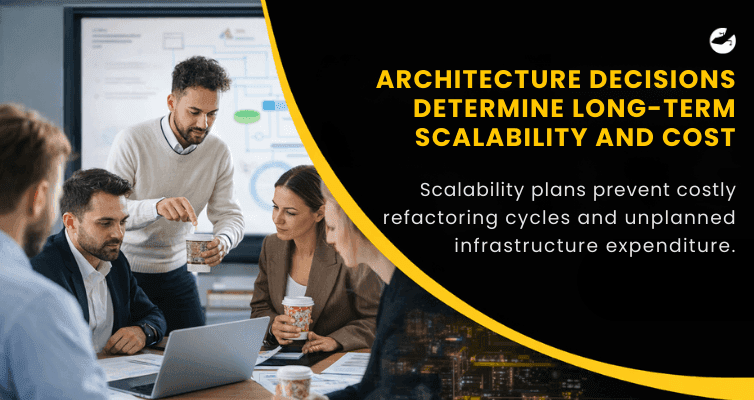
Instead of building a rigid system that would require rebuilding once transaction volume increased, the architecture was designed to scale modularly. This reduced the risk of future redevelopment costs — a common hidden expense in enterprise digital transformation.
That decision directly protects long-term operating budgets. Without scalable backend logic, a growing marketplace quickly becomes a maintenance burden rather than a growth engine.
Meanwhile, enterprises that skip architectural strategy often pay later through:
- Costly migrations
- Downtime during scaling
- Security rework
- Integration overhauls
3. UX/UI Product Design Directly Impacts Operating Costs
Poor UX is not just a usability issue. It creates support tickets, onboarding friction, and manual workarounds — all of which quietly increase long-term operating expenses. A clear example is IGGI, a digital product focused on structured user interaction and platform scalability. The challenge was not simply to make the interface visually appealing, but to design flows that minimized friction, reduced user confusion, and supported scalable growth without increasing support dependency.
Instead of adding complexity, the UX/UI design emphasized:
- Structured and intuitive user journeys
- Clear navigation logic to reduce cognitive load
- Streamlined onboarding flows
- Interface decisions aligned with long-term platform scalability
That translates directly into:
- Faster user adoption
- Reduced onboarding and training effort
- Lower support overhead
- More efficient internal and external workflows
When UI/UX design services are handled strategically rather than cosmetically, cost reduction becomes embedded into the product architecture itself.
Strong UI/UX design does more than improve aesthetics. It:
- Reduces user errors
- Increases task completion rates
- Lowers customer support dependency
- Improves internal workflow efficiency In enterprise and scale-up environments, those effects compound over time — making UX/UI one of the most underestimated levers for long-term operating cost control.
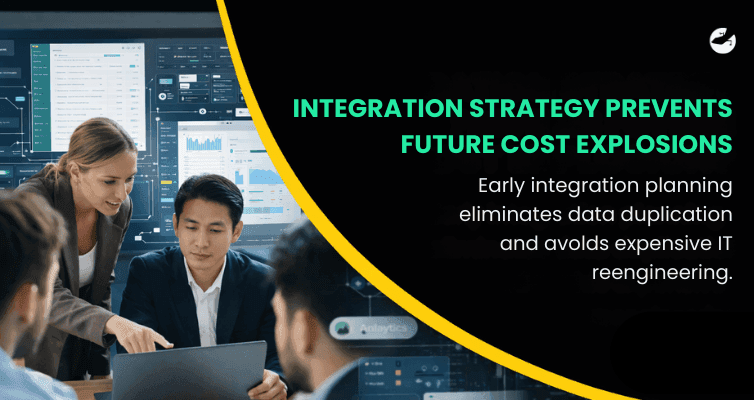
4. Integration Strategy Prevents Future Cost Explosions
Enterprise digital ecosystems rarely operate in isolation. They depend on CRM integration services, ERP systems, marketing automation tools, analytics platforms, and internal databases.
When integration planning is delayed, costs rise exponentially. Teams begin creating manual workarounds. Data silos appear. Reporting becomes unreliable. Eventually, leadership lacks visibility into performance metrics.
Strategic digital consultancy services ensure integration readiness from day one. Instead of patching systems together later, enterprises design platforms with API compatibility and scalable data pipelines in mind.
A strong example is Nationale-Nederlanden’s Brickler.
These platforms required:
- Financial service integration
- CRM integration services
- Regulatory compliance considerations
- Multi-stakeholder access logic
Instead of building disconnected systems, the solution architecture ensured API-first integration and scalable backend structuring. Why does this matter for operating cost?
Because poorly integrated enterprise systems require:
- Manual reconciliation
- Shadow IT solutions
- Continuous patch development
- Costly middleware fixes
When integration is planned from day one — something a true digital transformation partner prioritizes — long-term enterprise operating costs remain predictable and manageable.
5. Maintenance Is Not a Cost Center—It’s a Growth Driver
Many enterprises treat maintenance as a reactive necessity. However, maintenance can become a proactive growth engine when approached strategically.
Regular updates improve security and performance. Continuous UX improvements increase conversion rates. Feature expansion supports new revenue streams. Performance optimization reduces infrastructure waste.
Working with a full-stack digital solutions agency allows enterprises to establish structured roadmaps instead of unpredictable firefighting cycles. For instance, iterative development sprints enable controlled investment while continuously improving the platform.
Through digital marketing strategy services combined with product evolution, enterprises can align marketing campaigns with platform capabilities. This synergy reduces operational friction and maximizes ROI.
Maintenance, when structured strategically, protects margins and fuels innovation simultaneously.
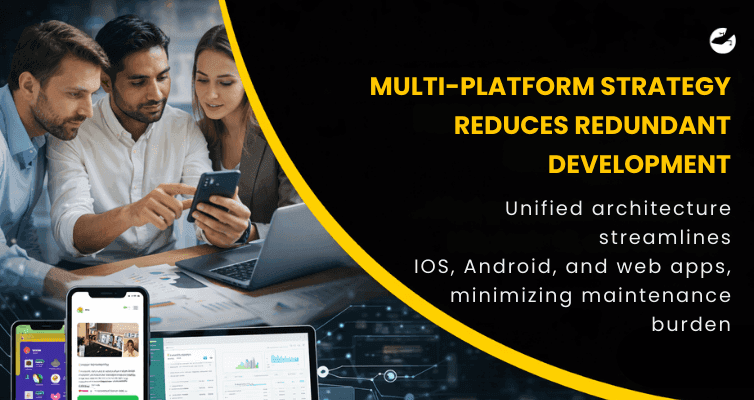
6. Multi-Platform Strategy Reduces Redundant Development
Enterprises often make one expensive mistake: duplicating systems across platforms. Looking at MRT Corp, a large-scale infrastructure organization, digital platforms required internal communication and structured information flows.
Instead of fragmented tools, the system design supported structured digital environments optimized for long-term use. Similarly, in marketplace and SaaS contexts, choosing between:
Is not a technical preference decision. It’s a long-term cost decision.
A strategic mobile app development agency evaluates:
- Maintenance overhead
- Deployment cycles
- Device ecosystem needs
- Performance requirements A poorly chosen stack doubles maintenance costs. A well-chosen stack compounds efficiency.
7. Data and Analytics Reduce Wasteful Operating Spend
Operating costs rise when decisions are made without data. Growth analytics consulting allows enterprises to identify:
- Underused features
- Bottlenecks in user journeys
- Infrastructure inefficiencies
- Revenue leakage points
- Customer drop-off patterns
Instead of investing blindly in new features, enterprises prioritize high-impact improvements. They refine UI/UX design services based on behavioral insights. They optimize marketing allocation through data-driven digital marketing strategy services.
Analytics also supports internal efficiency. For example, enterprise dashboards can track productivity metrics and identify process gaps. By aligning development investments with measurable outcomes, enterprises control long-term operating expenses more effectively.
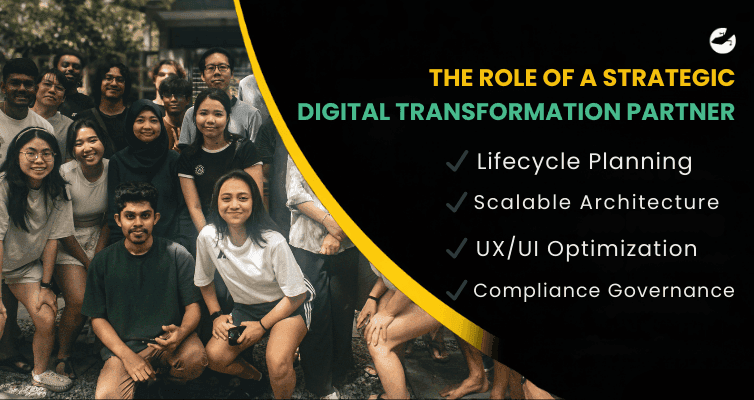
8. The Role of a Strategic Digital Transformation Partner
Digital transformation is complex. It spans strategy, technology, UX, integration, and growth. Enterprises that collaborate with a strategic digital transformation partner gain more than development support. They gain a long-term perspective.
As a custom software development company and full-stack digital solutions agency, Lizard Global works across industries to design scalable ecosystems rather than isolated tools. From enterprise web platforms to advanced mobile ecosystems, successful projects share a common trait: long-term architectural clarity.
By combining web app development services, mobile expertise, UX/UI product design, and digital consultancy services, enterprises reduce fragmentation. Instead of juggling multiple vendors, they align strategy and execution under one coordinated roadmap.
This alignment dramatically reduces operating inefficiencies.
9. Long-Term Cost Thinking Creates Competitive Advantage
Finally, operating cost optimization is not merely defensive. It is strategic.
When enterprises manage total cost of ownership effectively, they:
- Reinvest savings into innovation
- Accelerate feature expansion
- Enter new markets faster
- Improve customer experience continuously
- Strengthen competitive positioning
In contrast, organizations burdened by technical debt struggle to adapt. They delay innovation because resources are consumed by maintenance crises. Therefore, digital transformation success depends less on flashy launches and more on disciplined long-term planning.
The question is no longer, “How much will it cost to build?”
The real question is, “How much will it cost to sustain—and grow?”
Lizard Global Builds for Longevity, Not Just Launch
Enterprise digital transformation is a long-term investment. If you’re evaluating a new platform, mobile ecosystem, or enterprise system, don’t focus solely on launch budgets.
Partner with a team that understands architecture, UX, integration, analytics, and long-term growth strategy.
Let’s design a scalable, cost-efficient digital ecosystem that reduces operating waste and accelerates sustainable ROI.
Contact us via WhatsApp today to explore how we can future-proof your enterprise digital transformation.
Enterprise leaders often focus on launch speed and upfront investment when planning digital transformation. However, the real determinant of success lies in long-term operating costs. Architecture decisions, UX quality, integrations, analytics infrastructure, and scalability planning directly impact total cost of ownership (TCO). This article explores how enterprises can reduce operational complexity, avoid technical debt, and build sustainable digital ecosystems. Drawing on real business cases from Lizard Global’s portfolio — including large-scale marketplaces, enterprise SaaS platforms, and mobile ecosystems — this guide explains how the right custom software development company or digital transformation partner can dramatically improve long-term ROI.
Enterprise digital transformation is not a project. It is a long-term commitment. Too often, organizations focus on the initial build cost of a platform, mobile app, or digital ecosystem. They compare proposals, negotiate budgets, and prioritize short-term savings.
However, the real financial impact emerges years later. Maintenance, scalability, performance optimization, infrastructure, integrations, and user adoption all determine whether a digital investment becomes an asset—or a liability.
In reality, the enterprises that succeed treat operating costs as a strategic lever, not an afterthought. Let’s explore why.
Want to find out how much it costs to build your dream app or web app?
1. The Real Cost of Digital Transformation Is Measured Over Time
When enterprises begin working with a custom software development company, the first question usually concerns the build budget. Yet, the build phase often represents only a fraction of the total cost of ownership.
Operating costs include:
- Cloud infrastructure and hosting
- Ongoing maintenance and updates
- Security patches and compliance
- CRM integration services
- Performance optimization
- Analytics and reporting tools
- UX improvements
- Feature expansion
- Customer support infrastructure
If architecture decisions are rushed or poorly aligned with long-term goals, these recurring costs increase dramatically. Technical debt compounds. Performance degrades. Teams struggle with scalability. Eventually, organizations spend more fixing problems than they would have spent building correctly from the start.
For example, in Lizard Global’s work on complex marketplace ecosystems such as Skoon’s energy storage sharing platform, architectural decisions were critical. The platform required scalable asset management, booking logic, financial workflows, and cross-border compliance.
If built without modularity, each feature iteration would have required exponential engineering effort. Instead, structured architecture reduced long-term maintenance and upgrade complexity.
That is the difference between hiring a generic vendor and a digital transformation partner. They evaluate long-term cost efficiency, not only initial delivery speed.
2. Architecture Decisions Determine Long-Term Scalability and Cost
Enterprises often underestimate how infrastructure choices impact future costs. Monolithic systems become rigid. Poorly structured databases inflate hosting expenses. Tight coupling between frontend and backend slows innovation.
Let’s look at Skoon again. Skoon operates a clean energy sharing platform that connects energy storage providers with renters. The challenge wasn’t just building a marketplace.
It required:
- Complex asset management logic
- Real-time availability
- Cross-border scalability
- Secure transaction handling
Instead of building a rigid system that would require rebuilding once transaction volume increased, the architecture was designed to scale modularly. This reduced the risk of future redevelopment costs — a common hidden expense in enterprise digital transformation.
That decision directly protects long-term operating budgets. Without scalable backend logic, a growing marketplace quickly becomes a maintenance burden rather than a growth engine.
Meanwhile, enterprises that skip architectural strategy often pay later through:
- Costly migrations
- Downtime during scaling
- Security rework
- Integration overhauls
3. UX/UI Product Design Directly Impacts Operating Costs
Poor UX is not just a usability issue. It creates support tickets, onboarding friction, and manual workarounds — all of which quietly increase long-term operating expenses. A clear example is IGGI, a digital product focused on structured user interaction and platform scalability. The challenge was not simply to make the interface visually appealing, but to design flows that minimized friction, reduced user confusion, and supported scalable growth without increasing support dependency.
Instead of adding complexity, the UX/UI design emphasized:
- Structured and intuitive user journeys
- Clear navigation logic to reduce cognitive load
- Streamlined onboarding flows
- Interface decisions aligned with long-term platform scalability
That translates directly into:
- Faster user adoption
- Reduced onboarding and training effort
- Lower support overhead
- More efficient internal and external workflows
When UI/UX design services are handled strategically rather than cosmetically, cost reduction becomes embedded into the product architecture itself.
Strong UI/UX design does more than improve aesthetics. It:
- Reduces user errors
- Increases task completion rates
- Lowers customer support dependency
- Improves internal workflow efficiency In enterprise and scale-up environments, those effects compound over time — making UX/UI one of the most underestimated levers for long-term operating cost control.
4. Integration Strategy Prevents Future Cost Explosions
Enterprise digital ecosystems rarely operate in isolation. They depend on CRM integration services, ERP systems, marketing automation tools, analytics platforms, and internal databases.
When integration planning is delayed, costs rise exponentially. Teams begin creating manual workarounds. Data silos appear. Reporting becomes unreliable. Eventually, leadership lacks visibility into performance metrics.
Strategic digital consultancy services ensure integration readiness from day one. Instead of patching systems together later, enterprises design platforms with API compatibility and scalable data pipelines in mind.
A strong example is Nationale-Nederlanden’s Brickler.
These platforms required:
- Financial service integration
- CRM integration services
- Regulatory compliance considerations
- Multi-stakeholder access logic
Instead of building disconnected systems, the solution architecture ensured API-first integration and scalable backend structuring. Why does this matter for operating cost?
Because poorly integrated enterprise systems require:
- Manual reconciliation
- Shadow IT solutions
- Continuous patch development
- Costly middleware fixes
When integration is planned from day one — something a true digital transformation partner prioritizes — long-term enterprise operating costs remain predictable and manageable.
5. Maintenance Is Not a Cost Center—It’s a Growth Driver
Many enterprises treat maintenance as a reactive necessity. However, maintenance can become a proactive growth engine when approached strategically.
Regular updates improve security and performance. Continuous UX improvements increase conversion rates. Feature expansion supports new revenue streams. Performance optimization reduces infrastructure waste.
Working with a full-stack digital solutions agency allows enterprises to establish structured roadmaps instead of unpredictable firefighting cycles. For instance, iterative development sprints enable controlled investment while continuously improving the platform.
Through digital marketing strategy services combined with product evolution, enterprises can align marketing campaigns with platform capabilities. This synergy reduces operational friction and maximizes ROI.
Maintenance, when structured strategically, protects margins and fuels innovation simultaneously.
6. Multi-Platform Strategy Reduces Redundant Development
Enterprises often make one expensive mistake: duplicating systems across platforms. Looking at MRT Corp, a large-scale infrastructure organization, digital platforms required internal communication and structured information flows.
Instead of fragmented tools, the system design supported structured digital environments optimized for long-term use. Similarly, in marketplace and SaaS contexts, choosing between:
Is not a technical preference decision. It’s a long-term cost decision.
A strategic mobile app development agency evaluates:
- Maintenance overhead
- Deployment cycles
- Device ecosystem needs
- Performance requirements A poorly chosen stack doubles maintenance costs. A well-chosen stack compounds efficiency.
7. Data and Analytics Reduce Wasteful Operating Spend
Operating costs rise when decisions are made without data. Growth analytics consulting allows enterprises to identify:
- Underused features
- Bottlenecks in user journeys
- Infrastructure inefficiencies
- Revenue leakage points
- Customer drop-off patterns
Instead of investing blindly in new features, enterprises prioritize high-impact improvements. They refine UI/UX design services based on behavioral insights. They optimize marketing allocation through data-driven digital marketing strategy services.
Analytics also supports internal efficiency. For example, enterprise dashboards can track productivity metrics and identify process gaps. By aligning development investments with measurable outcomes, enterprises control long-term operating expenses more effectively.
8. The Role of a Strategic Digital Transformation Partner
Digital transformation is complex. It spans strategy, technology, UX, integration, and growth. Enterprises that collaborate with a strategic digital transformation partner gain more than development support. They gain a long-term perspective.
As a custom software development company and full-stack digital solutions agency, Lizard Global works across industries to design scalable ecosystems rather than isolated tools. From enterprise web platforms to advanced mobile ecosystems, successful projects share a common trait: long-term architectural clarity.
By combining web app development services, mobile expertise, UX/UI product design, and digital consultancy services, enterprises reduce fragmentation. Instead of juggling multiple vendors, they align strategy and execution under one coordinated roadmap.
This alignment dramatically reduces operating inefficiencies.
9. Long-Term Cost Thinking Creates Competitive Advantage
Finally, operating cost optimization is not merely defensive. It is strategic.
When enterprises manage total cost of ownership effectively, they:
- Reinvest savings into innovation
- Accelerate feature expansion
- Enter new markets faster
- Improve customer experience continuously
- Strengthen competitive positioning
In contrast, organizations burdened by technical debt struggle to adapt. They delay innovation because resources are consumed by maintenance crises. Therefore, digital transformation success depends less on flashy launches and more on disciplined long-term planning.
The question is no longer, “How much will it cost to build?”
The real question is, “How much will it cost to sustain—and grow?”
Lizard Global Builds for Longevity, Not Just Launch
Enterprise digital transformation is a long-term investment. If you’re evaluating a new platform, mobile ecosystem, or enterprise system, don’t focus solely on launch budgets.
Partner with a team that understands architecture, UX, integration, analytics, and long-term growth strategy.
Let’s design a scalable, cost-efficient digital ecosystem that reduces operating waste and accelerates sustainable ROI.
Contact us via WhatsApp today to explore how we can future-proof your enterprise digital transformation.
FAQs

Why are long-term operating costs more important than initial development costs?
How can a custom software development company reduce operating expenses?
What role does UX/UI design play in reducing enterprise costs?
Should enterprises choose native or hybrid mobile development to reduce costs?
How does CRM integration impact digital transformation costs?
What is the benefit of working with a full-stack digital solutions agency?
How can analytics reduce ongoing digital expenses?
similar reads

Case Studies & Interviews
Client Review: Building A Custom Engagement App For MRT Corp
20 August 2026

Case Studies & Interviews
Lereng Tanah: Developing a Direct Booking Platform Malaysian Boutique Villa
29 January 2026

Case Studies & Interviews
Tactlink: How a Malaysian Entrepreneur Turned Networking Chaos into a Digital Community
22 January 2026
Stuck between a great idea and the right team to build it?Let's talk.
We work with corporate innovation teams and ambitious scale-ups across the Netherlands, Singapore, and Australia, and wherever great software needs to be built. Drop us a message and we'll get back to you within one business day.


Markus Monnikendam
Global Commercial Director
hello@lizard.global