Prototyping
Workflow Validation
+ 3 more ...
Reducing Enterprise Product Risk Through Strategic Prototyping and Workflow Validation
24 Feb 2026
by Team Lizard Global
Editor: Nadiy, Senior Content Writer
24 Feb 2026
by Team Lizard Global
Editor: Nadiy, Senior Content Writer
Prototyping
Workflow Validation
UI/UX Design
Mobile App Development
Custom Software Development
Reducing Enterprise Product Risk Through Strategic Prototyping and Workflow Validation
Table of contents
Contact us
We will get back to you in the next 48 hours.

This blog explores how enterprises can reduce product risk through strategic prototyping and workflow validation. It outlines proven risk mitigation strategies, including iterative testing, early failure detection, and workflow optimization. By validating ideas early and aligning processes with real-world use, organizations can accelerate innovation while minimizing costly failures. The article also highlights how expert partners like Lizard Global support enterprises in building scalable, user-centered digital products with confidence.
key takeaways
Enterprise product risk is one of the most expensive challenges modern organizations face. A single flawed product launch can drain budgets, erode customer trust, and derail long-term growth.
However, risk doesn’t have to be an unavoidable cost of innovation. With the right approach—especially through strategic prototyping and workflow validation—organizations can significantly reduce uncertainty while accelerating time to market.
In this blog, we’ll explore how enterprises can apply proven risk mitigation strategies through product development prototyping, iterative testing enterprise processes, and early failure detection, sharing how experienced digital product partners like Lizard Global subtly support organizations in building resilient, scalable solutions. Let’s dive in.
Want to find out how much it costs to build your dream app or web app?


1. Understanding Enterprise Product Risk in Modern Development
Enterprise product risk refers to the likelihood that a product will fail to meet business objectives, user needs, or technical expectations. This risk can emerge at any stage—from ideation and design to development and deployment. Often, organizations underestimate how early decisions compound into costly failures later.
For example, unclear requirements, misaligned stakeholder expectations, or poorly validated workflows can all introduce hidden risks. Without structured validation, teams may invest heavily in building features that customers never use. As a result, enterprise product risk grows quietly until it becomes impossible or extremely expensive to fix.
However, risk doesn’t stem solely from poor execution. It also arises from uncertainty. Markets change, customer needs evolve, and technology advances rapidly. Therefore, product leaders must adopt proactive approaches that emphasize continuous learning and validation. This is where strategic prototyping and workflow validation become essential tools for product risk reduction.
By embedding risk mitigation strategies into the product lifecycle, enterprises can transform uncertainty into informed decision-making. Instead of guessing, teams can test. Instead of assuming, they can validate. And instead of reacting to failure, they can detect it early—before it becomes a business liability.
2. Strategic Prototyping: A Foundation for Product Risk Reduction
Strategic prototyping is more than just creating mockups or wireframes. It is a structured approach to learning, validating assumptions, and reducing enterprise product risk through intentional experimentation. Unlike traditional prototyping, which often focuses solely on design, strategic prototyping evaluates business value, technical feasibility, and user desirability simultaneously.
When organizations adopt strategic prototyping for NPD (New Product Development), they shift from building first and learning later to learning first and building smarter. This shift significantly reduces the cost of mistakes. Instead of discovering flaws after months of development, teams identify issues within days or weeks.
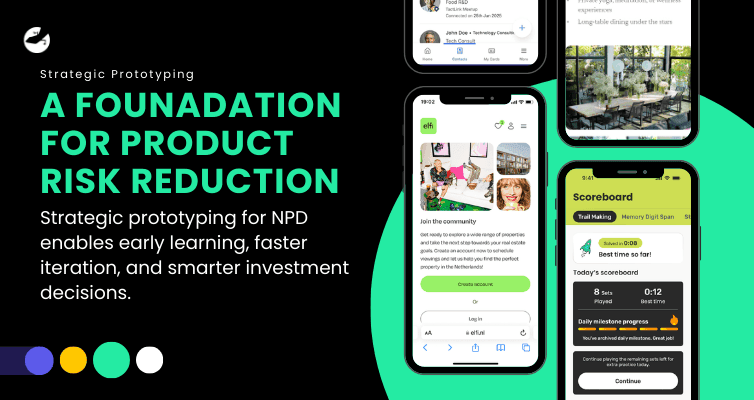
Furthermore, product development prototyping enables cross-functional collaboration. Designers, developers, product managers, and business stakeholders can align early around a shared vision. This alignment reduces miscommunication and prevents costly rework. As a result, enterprises can move forward with confidence, knowing their product direction is supported by validated insights.
A clear example of strategic prototyping for NPD (New Product Development) can be seen in the collaboration with Narrates.ai.
Before full development, Lizard Global designed and created validated prototypes of the platform’s core user journeys. Rather than jumping into full-scale production, they used product development prototyping and MVP user validation to confirm feasibility, usability, and market appeal.
This early validation served two strategic purposes. First, it enabled early failure detection before heavy engineering investment. Second, it strengthened funding readiness by demonstrating validated concept-market alignment.
This is reducing product risk prototyping in practice — de-risking before scaling.
3. Workflow Validation: Ensuring Processes Align with Real-World Use
While prototyping validates product concepts, workflow validation ensures that the underlying processes work seamlessly in real-world conditions. Enterprise workflow validation techniques focus on testing how users, systems, and data interact across the entire product ecosystem.
Many product failures occur not because the product itself is flawed, but because the workflows surrounding it are inefficient, confusing, or incompatible with existing systems. For example, a powerful enterprise dashboard may fail if it disrupts daily operations or requires excessive training. Therefore, validating workflows early is critical for minimizing enterprise product failure.
Workflow validation involves mapping user journeys, simulating real-world scenarios, and stress-testing system integrations. By doing so, teams uncover bottlenecks, inefficiencies, and usability issues before they reach production. This proactive approach supports early failure detection and reduces operational risk.
Moreover, workflow validation strengthens stakeholder buy-in. When business leaders see validated workflows that align with organizational goals, they gain confidence in the product’s viability. This confidence accelerates decision-making and fosters organizational alignment—both essential for successful enterprise innovation.
Enterprise workflow validation techniques were central in the development of Reach Software’s Order Management System (ROMS).
The existing OMS lacked flexibility and real-time insights. Instead of rebuilding blindly, workflow validation sessions ensured that new system logic aligned with reseller, provider, and consumer needs. The new platform needed to move beyond static data into real-time operational visibility.
Through iterative testing enterprise scenarios, system usability and decision-support functionality were validated before final deployment. As a result, the redesigned ROMS exceeded user expectations and improved customer satisfaction .
This demonstrates product risk reduction through structured workflow validation rather than assumption-driven rebuilding.
4. Iterative Testing in Enterprise Environments: Learning Fast, Failing Smart
Iterative testing enterprise environments thrive on continuous feedback loops. Rather than waiting for a “perfect” version, teams release prototypes, test assumptions, and refine solutions in short cycles. This approach enables organizations to learn faster and fail smarter.
One of the most powerful benefits of iterative testing is early failure detection. By exposing concepts to real users early, teams identify flawed assumptions before they escalate into systemic risks. This not only reduces enterprise product risk but also preserves resources and protects brand reputation.
Additionally, iterative testing encourages a culture of experimentation. Teams become more comfortable with uncertainty because they know they can adapt quickly. Instead of fearing failure, they embrace learning. This mindset shift is essential for innovation at scale, especially in large organizations where risk aversion often stifles progress.
At Lizard Global, iterative testing is embedded into the development lifecycle. Through agile methodologies, rapid prototyping, and continuous validation, they help enterprises maintain momentum while ensuring product quality and alignment with business objectives.
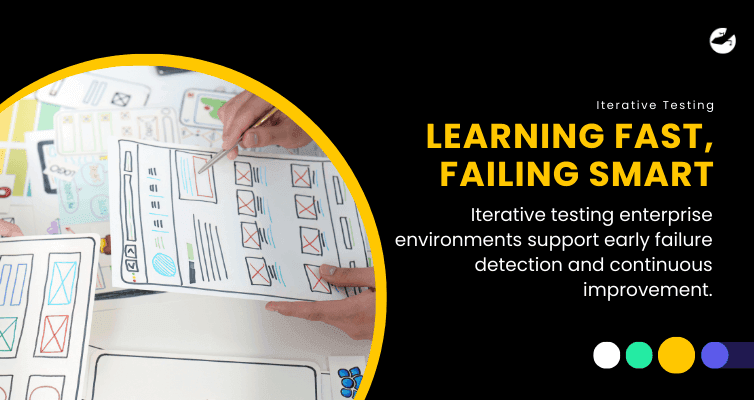
The development of Drinkies with Heineken Malaysia provides a strong example of enterprise product risk mitigation through iterative validation .
Drinkies introduced on-demand ordering, loyalty rewards, GPS tracking, and secure payment functionality. Each of these features carries operational and integration risk if not validated properly.
By validating user flows, payment experiences, and reward mechanics before scaling functionality, risk mitigation strategies were embedded into the development process. This approach minimized enterprise product failure by ensuring technical feasibility and user adoption readiness before expansion.
Strategic prototyping in this case did not just shape UX, it protected brand equity.
5. Risk Mitigation Strategies Through Prototyping and Validation
Reducing product risk prototyping efforts are most effective when integrated into a broader risk mitigation strategy. Rather than treating prototyping and validation as isolated activities, enterprises should view them as core components of their governance framework.
First, strategic prototyping enables hypothesis-driven development. Teams define assumptions, design experiments, and measure outcomes. This structured approach transforms uncertainty into actionable insights. As a result, decisions become evidence-based rather than intuition-driven.
Second, workflow validation strengthens operational resilience. By validating end-to-end processes, organizations reduce the likelihood of post-launch disruptions. This proactive approach supports compliance, scalability, and long-term sustainability, which are key priorities for enterprise environments.
Finally, combining prototyping and validation creates a virtuous cycle of learning. Each iteration informs the next, continuously reducing enterprise product risk while improving product-market fit. Over time, this cycle becomes a competitive advantage, enabling faster innovation with lower risk.
6. From Risk Reduction to Competitive Advantage: The Business Impact
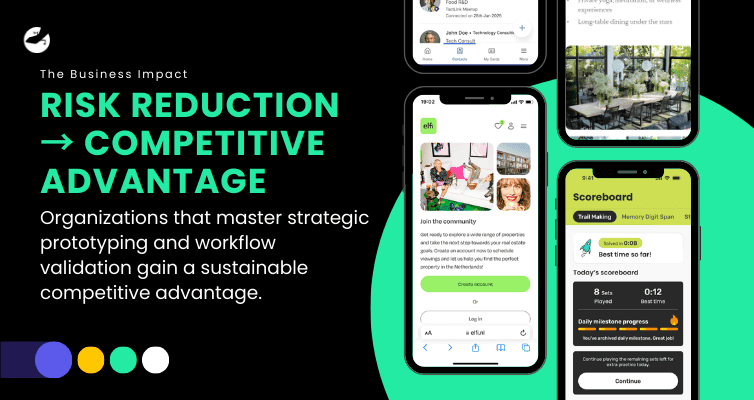
While the primary goal of strategic prototyping and workflow validation is product risk reduction, the long-term impact extends far beyond risk management. Organizations that master these practices gain a sustainable competitive advantage.
First, they reduce time to market. By validating early and iterating quickly, teams avoid costly delays caused by rework or post-launch fixes. Faster delivery enables organizations to capture market opportunities ahead of competitors.
Second, they improve customer satisfaction. Products that are validated with real users and aligned with real workflows deliver superior experiences. This leads to higher adoption, stronger retention, and increased lifetime value.
Third, they optimize resource allocation. By minimizing enterprise product failure, organizations protect budgets and reinvest savings into future innovation. This creates a positive feedback loop of growth, learning, and continuous improvement.
Ultimately, reducing enterprise product risk is not just about avoiding failure—it’s about enabling success. And with the right frameworks, tools, and partners, success becomes both predictable and scalable.
The RiA platform, developed with Human Capital Services (HCS), provides another example of minimizing enterprise product failure .
The system needed to handle sensitive legal frameworks, risk analysis workflows, and multi-stakeholder access in a highly regulated environment. In such contexts, enterprise product risk includes regulatory misalignment, data inaccuracies, and workflow breakdowns.
Through MVP delivery, business research, and pilot-phase facilitation, early validation cycles reduced compliance risk and ensured workflow integrity before broader deployment.
Here, strategic prototyping functioned as a structured risk mitigation strategy — not just a design step, but a governance safeguard.
7. Building a Culture of Validation and Learning
Tools and methodologies alone cannot reduce enterprise product risk. Sustainable impact requires a cultural shift toward validation, experimentation, and continuous learning. Leaders must champion this mindset and embed it into organizational DNA.
First, organizations should reward learning—not just outcomes. When teams are encouraged to test assumptions and share insights, they become more proactive and resilient. This cultural shift supports early failure detection and accelerates innovation.
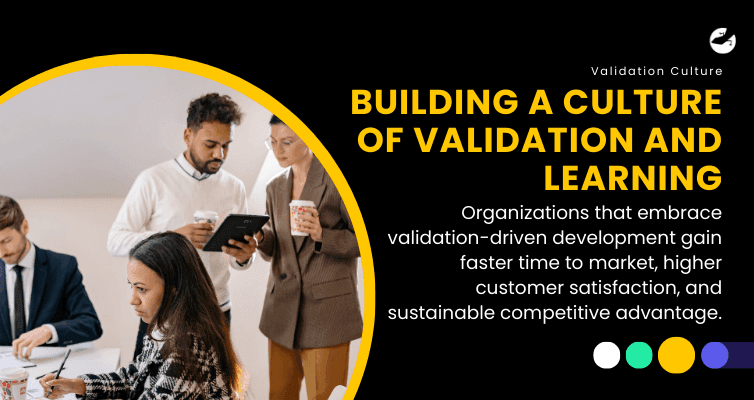
Second, cross-functional collaboration must be prioritized. Strategic prototyping and workflow validation require input from design, development, operations, compliance, and business leadership. When these perspectives converge early, risk decreases and alignment increases.
Third, enterprises should invest in long-term partnerships with experienced digital product teams. Organizations like Lizard Global bring not only technical expertise but also strategic insight, user-centered design, and proven validation frameworks. These partnerships amplify internal capabilities and accelerate transformation.
Lizard Global Turns Assumptions Into Evidence Before You Invest Millions
Through strategic prototyping, enterprise workflow validation, and structured risk mitigation strategies, our team helps organizations reduce enterprise product risk before full-scale development begins. We combine business research, technical expertise, and iterative testing enterprise methods to ensure every investment decision is backed by validated insight and not assumption.
Ready to minimize enterprise product failure and accelerate innovation with confidence? Partner with Lizard Global to transform your ideas into validated, scalable, and market-ready solutions. Let’s reduce risk, increase impact, and build products your users truly need.
👉 Contact us now to schedule a strategic consultation and take the first step toward smarter product development.
This blog explores how enterprises can reduce product risk through strategic prototyping and workflow validation. It outlines proven risk mitigation strategies, including iterative testing, early failure detection, and workflow optimization. By validating ideas early and aligning processes with real-world use, organizations can accelerate innovation while minimizing costly failures. The article also highlights how expert partners like Lizard Global support enterprises in building scalable, user-centered digital products with confidence.
Enterprise product risk is one of the most expensive challenges modern organizations face. A single flawed product launch can drain budgets, erode customer trust, and derail long-term growth.
However, risk doesn’t have to be an unavoidable cost of innovation. With the right approach—especially through strategic prototyping and workflow validation—organizations can significantly reduce uncertainty while accelerating time to market.
In this blog, we’ll explore how enterprises can apply proven risk mitigation strategies through product development prototyping, iterative testing enterprise processes, and early failure detection, sharing how experienced digital product partners like Lizard Global subtly support organizations in building resilient, scalable solutions. Let’s dive in.
Want to find out how much it costs to build your dream app or web app?
1. Understanding Enterprise Product Risk in Modern Development
Enterprise product risk refers to the likelihood that a product will fail to meet business objectives, user needs, or technical expectations. This risk can emerge at any stage—from ideation and design to development and deployment. Often, organizations underestimate how early decisions compound into costly failures later.
For example, unclear requirements, misaligned stakeholder expectations, or poorly validated workflows can all introduce hidden risks. Without structured validation, teams may invest heavily in building features that customers never use. As a result, enterprise product risk grows quietly until it becomes impossible or extremely expensive to fix.
However, risk doesn’t stem solely from poor execution. It also arises from uncertainty. Markets change, customer needs evolve, and technology advances rapidly. Therefore, product leaders must adopt proactive approaches that emphasize continuous learning and validation. This is where strategic prototyping and workflow validation become essential tools for product risk reduction.
By embedding risk mitigation strategies into the product lifecycle, enterprises can transform uncertainty into informed decision-making. Instead of guessing, teams can test. Instead of assuming, they can validate. And instead of reacting to failure, they can detect it early—before it becomes a business liability.
2. Strategic Prototyping: A Foundation for Product Risk Reduction
Strategic prototyping is more than just creating mockups or wireframes. It is a structured approach to learning, validating assumptions, and reducing enterprise product risk through intentional experimentation. Unlike traditional prototyping, which often focuses solely on design, strategic prototyping evaluates business value, technical feasibility, and user desirability simultaneously.
When organizations adopt strategic prototyping for NPD (New Product Development), they shift from building first and learning later to learning first and building smarter. This shift significantly reduces the cost of mistakes. Instead of discovering flaws after months of development, teams identify issues within days or weeks.
Furthermore, product development prototyping enables cross-functional collaboration. Designers, developers, product managers, and business stakeholders can align early around a shared vision. This alignment reduces miscommunication and prevents costly rework. As a result, enterprises can move forward with confidence, knowing their product direction is supported by validated insights.
A clear example of strategic prototyping for NPD (New Product Development) can be seen in the collaboration with Narrates.ai.
Before full development, Lizard Global designed and created validated prototypes of the platform’s core user journeys. Rather than jumping into full-scale production, they used product development prototyping and MVP user validation to confirm feasibility, usability, and market appeal.
This early validation served two strategic purposes. First, it enabled early failure detection before heavy engineering investment. Second, it strengthened funding readiness by demonstrating validated concept-market alignment.
This is reducing product risk prototyping in practice — de-risking before scaling.
3. Workflow Validation: Ensuring Processes Align with Real-World Use
While prototyping validates product concepts, workflow validation ensures that the underlying processes work seamlessly in real-world conditions. Enterprise workflow validation techniques focus on testing how users, systems, and data interact across the entire product ecosystem.
Many product failures occur not because the product itself is flawed, but because the workflows surrounding it are inefficient, confusing, or incompatible with existing systems. For example, a powerful enterprise dashboard may fail if it disrupts daily operations or requires excessive training. Therefore, validating workflows early is critical for minimizing enterprise product failure.
Workflow validation involves mapping user journeys, simulating real-world scenarios, and stress-testing system integrations. By doing so, teams uncover bottlenecks, inefficiencies, and usability issues before they reach production. This proactive approach supports early failure detection and reduces operational risk.
Moreover, workflow validation strengthens stakeholder buy-in. When business leaders see validated workflows that align with organizational goals, they gain confidence in the product’s viability. This confidence accelerates decision-making and fosters organizational alignment—both essential for successful enterprise innovation.
Enterprise workflow validation techniques were central in the development of Reach Software’s Order Management System (ROMS).
The existing OMS lacked flexibility and real-time insights. Instead of rebuilding blindly, workflow validation sessions ensured that new system logic aligned with reseller, provider, and consumer needs. The new platform needed to move beyond static data into real-time operational visibility.
Through iterative testing enterprise scenarios, system usability and decision-support functionality were validated before final deployment. As a result, the redesigned ROMS exceeded user expectations and improved customer satisfaction .
This demonstrates product risk reduction through structured workflow validation rather than assumption-driven rebuilding.
4. Iterative Testing in Enterprise Environments: Learning Fast, Failing Smart
Iterative testing enterprise environments thrive on continuous feedback loops. Rather than waiting for a “perfect” version, teams release prototypes, test assumptions, and refine solutions in short cycles. This approach enables organizations to learn faster and fail smarter.
One of the most powerful benefits of iterative testing is early failure detection. By exposing concepts to real users early, teams identify flawed assumptions before they escalate into systemic risks. This not only reduces enterprise product risk but also preserves resources and protects brand reputation.
Additionally, iterative testing encourages a culture of experimentation. Teams become more comfortable with uncertainty because they know they can adapt quickly. Instead of fearing failure, they embrace learning. This mindset shift is essential for innovation at scale, especially in large organizations where risk aversion often stifles progress.
At Lizard Global, iterative testing is embedded into the development lifecycle. Through agile methodologies, rapid prototyping, and continuous validation, they help enterprises maintain momentum while ensuring product quality and alignment with business objectives.
The development of Drinkies with Heineken Malaysia provides a strong example of enterprise product risk mitigation through iterative validation .
Drinkies introduced on-demand ordering, loyalty rewards, GPS tracking, and secure payment functionality. Each of these features carries operational and integration risk if not validated properly.
By validating user flows, payment experiences, and reward mechanics before scaling functionality, risk mitigation strategies were embedded into the development process. This approach minimized enterprise product failure by ensuring technical feasibility and user adoption readiness before expansion.
Strategic prototyping in this case did not just shape UX, it protected brand equity.
5. Risk Mitigation Strategies Through Prototyping and Validation
Reducing product risk prototyping efforts are most effective when integrated into a broader risk mitigation strategy. Rather than treating prototyping and validation as isolated activities, enterprises should view them as core components of their governance framework.
First, strategic prototyping enables hypothesis-driven development. Teams define assumptions, design experiments, and measure outcomes. This structured approach transforms uncertainty into actionable insights. As a result, decisions become evidence-based rather than intuition-driven.
Second, workflow validation strengthens operational resilience. By validating end-to-end processes, organizations reduce the likelihood of post-launch disruptions. This proactive approach supports compliance, scalability, and long-term sustainability, which are key priorities for enterprise environments.
Finally, combining prototyping and validation creates a virtuous cycle of learning. Each iteration informs the next, continuously reducing enterprise product risk while improving product-market fit. Over time, this cycle becomes a competitive advantage, enabling faster innovation with lower risk.
6. From Risk Reduction to Competitive Advantage: The Business Impact
While the primary goal of strategic prototyping and workflow validation is product risk reduction, the long-term impact extends far beyond risk management. Organizations that master these practices gain a sustainable competitive advantage.
First, they reduce time to market. By validating early and iterating quickly, teams avoid costly delays caused by rework or post-launch fixes. Faster delivery enables organizations to capture market opportunities ahead of competitors.
Second, they improve customer satisfaction. Products that are validated with real users and aligned with real workflows deliver superior experiences. This leads to higher adoption, stronger retention, and increased lifetime value.
Third, they optimize resource allocation. By minimizing enterprise product failure, organizations protect budgets and reinvest savings into future innovation. This creates a positive feedback loop of growth, learning, and continuous improvement.
Ultimately, reducing enterprise product risk is not just about avoiding failure—it’s about enabling success. And with the right frameworks, tools, and partners, success becomes both predictable and scalable.
The RiA platform, developed with Human Capital Services (HCS), provides another example of minimizing enterprise product failure .
The system needed to handle sensitive legal frameworks, risk analysis workflows, and multi-stakeholder access in a highly regulated environment. In such contexts, enterprise product risk includes regulatory misalignment, data inaccuracies, and workflow breakdowns.
Through MVP delivery, business research, and pilot-phase facilitation, early validation cycles reduced compliance risk and ensured workflow integrity before broader deployment.
Here, strategic prototyping functioned as a structured risk mitigation strategy — not just a design step, but a governance safeguard.
7. Building a Culture of Validation and Learning
Tools and methodologies alone cannot reduce enterprise product risk. Sustainable impact requires a cultural shift toward validation, experimentation, and continuous learning. Leaders must champion this mindset and embed it into organizational DNA.
First, organizations should reward learning—not just outcomes. When teams are encouraged to test assumptions and share insights, they become more proactive and resilient. This cultural shift supports early failure detection and accelerates innovation.
Second, cross-functional collaboration must be prioritized. Strategic prototyping and workflow validation require input from design, development, operations, compliance, and business leadership. When these perspectives converge early, risk decreases and alignment increases.
Third, enterprises should invest in long-term partnerships with experienced digital product teams. Organizations like Lizard Global bring not only technical expertise but also strategic insight, user-centered design, and proven validation frameworks. These partnerships amplify internal capabilities and accelerate transformation.
Lizard Global Turns Assumptions Into Evidence Before You Invest Millions
Through strategic prototyping, enterprise workflow validation, and structured risk mitigation strategies, our team helps organizations reduce enterprise product risk before full-scale development begins. We combine business research, technical expertise, and iterative testing enterprise methods to ensure every investment decision is backed by validated insight and not assumption.
Ready to minimize enterprise product failure and accelerate innovation with confidence? Partner with Lizard Global to transform your ideas into validated, scalable, and market-ready solutions. Let’s reduce risk, increase impact, and build products your users truly need.
👉 Contact us now to schedule a strategic consultation and take the first step toward smarter product development.
FAQs
What is enterprise product risk?
How does strategic prototyping reduce product risk?
What is workflow validation in enterprise environments?
What are the best risk mitigation strategies for enterprise product development?
Why is early failure detection important?
How can enterprises minimize product failure during NPD?
What is the difference between traditional and strategic prototyping?
similar reads