
How Much Does EdTech & E-Learning Platform Development Cost?

23 Oct 2026
by Nadiy, Senior Content Writer
23 Oct 2026
by Nadiy, Senior Content Writer
How Much Does EdTech & E-Learning Platform Development Cost?
Table of contents
What Tiered Costs Can You Expect Across E-Learning Platform Types?
Which Technical Features Exert the Greatest Influence on Your Budget?
How Does UI and UX Design Impact Total Development Investment?
What Are the Ongoing Expenses Beyond Initial Platform Launch?
How Can You Optimize Your EdTech Development Budget to Maximize Value?
Ready to Build a High-Impact, Scalable EdTech Platform?
Contact us
We will get back to you in the next 48 hours.
Building a custom EdTech or e-learning platform in 2026 typically costs between $45,000 for a basic Minimum Viable Product (MVP) and $320,000+ for a feature-rich enterprise platform. Costs vary based on system complexity, interactive features, AI-driven adaptive learning capabilities, video streaming infrastructure, and third-party integrations. Selecting the right architecture, user experience design, and scalable technology stack plays a pivotal role in keeping budget overruns at bay while maximizing return on investment.
key takeaways
The cost to develop a custom EdTech or e-learning platform typically ranges from $45,000 for a streamlined Minimum Viable Product (MVP) to over $320,000 for an advanced, enterprise-grade learning system. Standard mid-scale platforms with custom dashboards, interactive assessments, and seamless payment gateways generally fall between $90,000 and $160,000. Total investment varies directly with functional scope, UI/UX complexity, video streaming requirements, system integrations, and AI implementation depth.
Navigating digital transformation in education requires balancing rich, engaging feature sets with predictable development expenditure. When we partner with visionary educational institutions, corporate training providers, and ambitious EdTech startups at Lizard Global, we observe that transparent cost structures and strategic product roadmaps make the difference between project delays and rapid market success. We designed this guide to outline the exact factors driving EdTech pricing, detail real-world cost benchmarks, and help you maximize your ROI.
Before we get into the numbers and breakdown, let’s have a look at some of the EdTech apps we’ve created. This will give you an idea of the types of expertise we possess and that these numbers shared, are from 14 years of experience in custom software development.
1. ChatLicense:
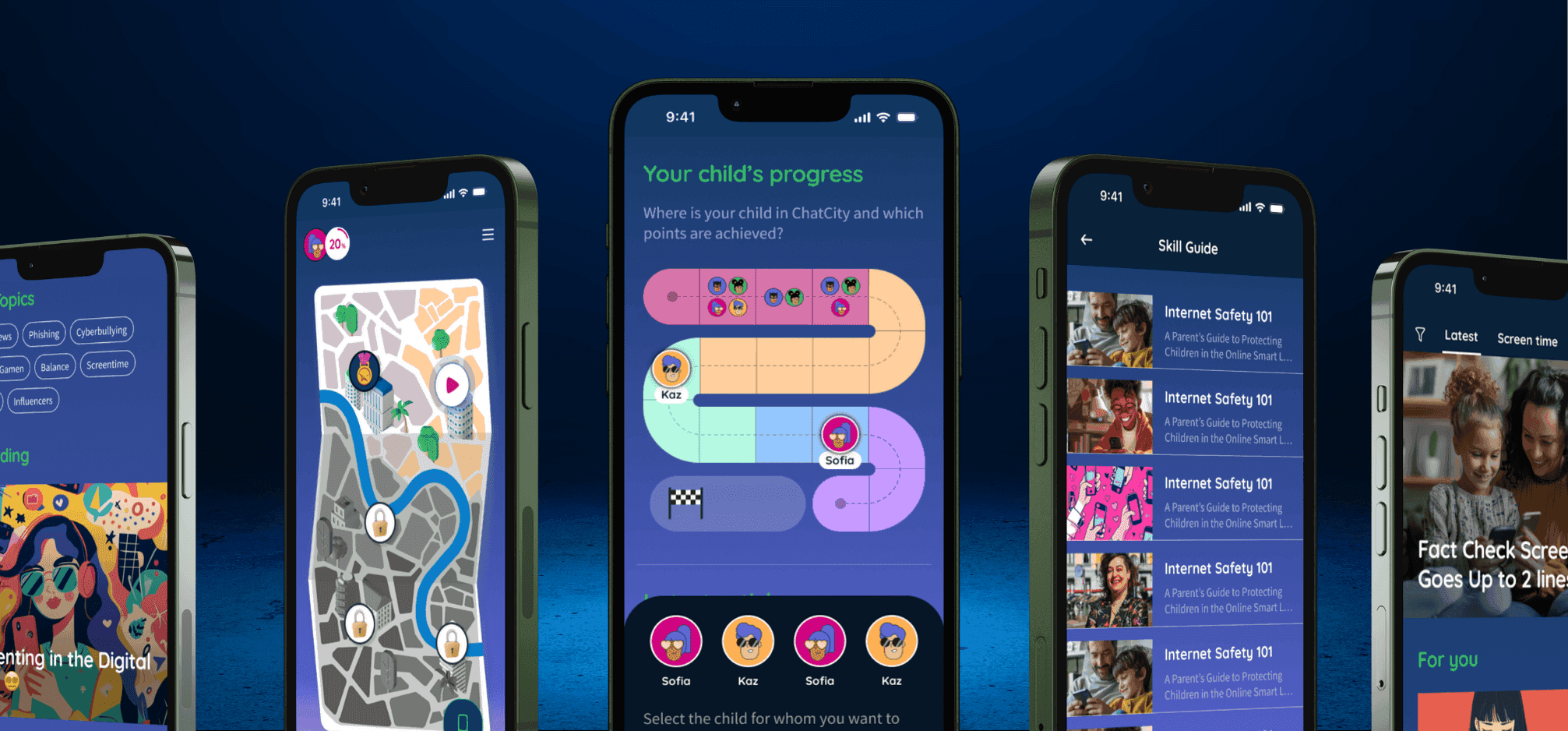
An interactive digital safety education platform that teaches children responsible online behavior. As its user base grew, the platform faced scalability limitations and usability challenges, creating a need for a modernized, intuitive learning experience that could support international expansion.
Lizard Global's solution: Lizard Global modernized the platform by rebuilding the application on a new technology stack and introducing a more intuitive design system. The team redesigned onboarding based on user data, streamlined account registration and login, and supported a connected learning ecosystem comprising a child-facing application, parent application, and administrative portal. This provided a stronger technical foundation for future expansion while making digital safety education more accessible and engaging.
2. Compeasy.ai:
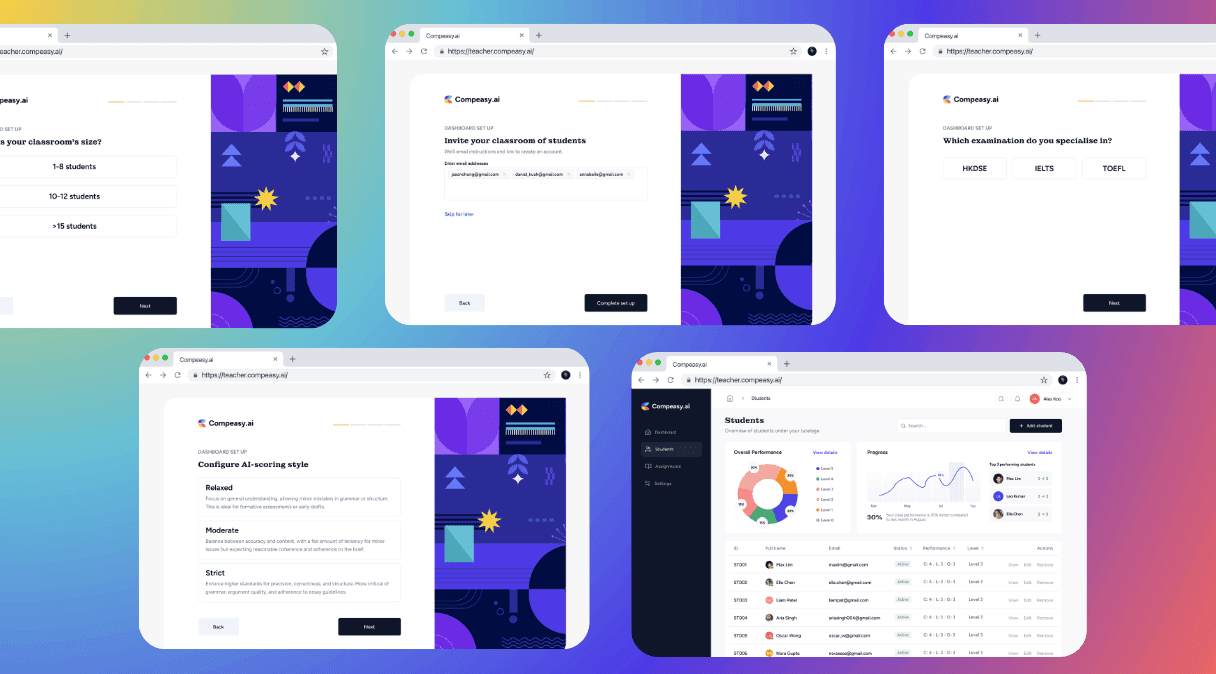
An AI-powered educational assessment platform designed to simplify English essay grading. Traditional manual assessments are time-consuming and often delay student feedback, creating a need for automated, consistent evaluations and personalized learning insights.
Lizard Global's solution: Lizard Global developed a specialized web prototype integrating an AI-driven essay scoring engine tailored to K–12 education.Beyond automated scoring, the solution generates personalized feedback identifying students' strengths and areas for improvement. Teacher dashboards and progress analytics provide visibility into individual performance and classroom-wide learning trends. The architecture was also designed to support multiple schools and classrooms, creating a foundation for broader adoption.
3. Tracker Apps:

A digital learning management solution for International Baccalaureate (IB) schools. The challenge was to simplify student progress tracking, skill development, and learning reflections while providing educators with actionable insights to improve teaching outcomes.
Lizard Global's solution:
Lizard Global collaborated with Tracker Apps to develop two complementary digital applications:
- Skill Tracker: A gamified platform that enables students to monitor and improve their Approaches to Teaching and Learning (ATL) skills.
- Service Tracker: A digital reflection journal where students document their activities, experiences, and learning outcomes.
Together, these applications give teachers clearer insights into student progress, helping them adapt their teaching approaches and improve curriculum delivery.
4. SHFT:
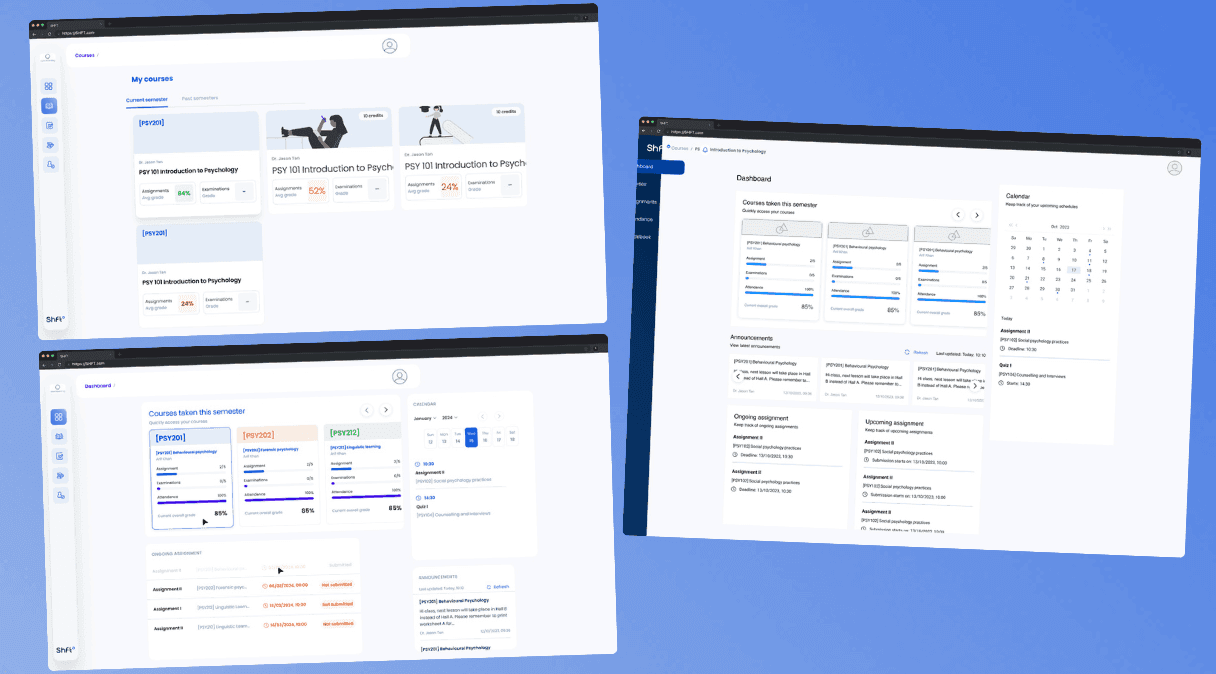
A career-focused e-learning platform designed to bridge the gap between academic education and workplace expectations. With many graduates lacking industry-relevant practical skills, SHFT aimed to make professional training, industry expertise, and career development opportunities more accessible.
Lizard Global's solution: Lizard Global designed SHFT as an industry-focused e-learning platform that combines dynamic learning materials with knowledge contributed by industry partners. The platform concept emphasizes practical skill development and applicable certifications, helping graduates acquire competencies relevant to real-world professional environments.
5. My New Behavior:

A digital behavior-change platform designed to support personal development. After years of unsuccessful development, the organization needed a reliable technology partner to deliver a functional, accessible platform, particularly for visually impaired users.
Lizard Global's solution: Lizard Global took a user-centered approach to developing the platform, prioritizing accessibility from the beginning. The team researched the needs of visually impaired users, applied Web Content Accessibility Guidelines (WCAG), and tested the interface using assistive technologies such as JAWS and VoiceOver. Through iterative development, real-user testing, accessible navigation, and continuous feedback, Lizard Global delivered a functional platform designed to work with screen readers and keyboard navigation.
6. RE2 International Computer School:
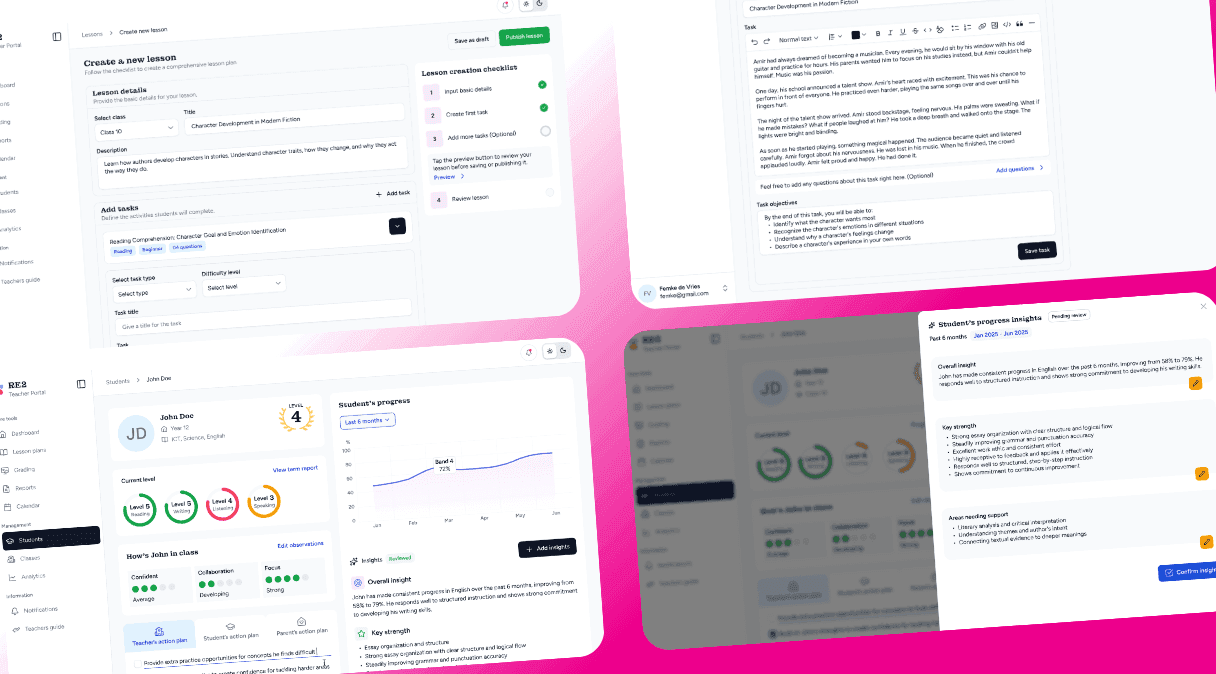
An institution that provides ICT education for primary and secondary students. The institution sought to streamline manual assessments, improve student performance tracking, and explore AI-driven solutions to deliver personalized learning insights and strengthen parent-teacher communication.
Lizard Global's solution: Lizard Global collaborated with RE2 to conceptualize and design a web-based AI-powered student assessment and development platform. The proposed solution combines automated, rubric-based grading with teacher oversight, allowing educators to review and adjust AI-generated assessments. It also incorporates student performance analytics, customizable progress reports, behavioral observations, and evidence-based improvement plans. These capabilities are designed to help teachers identify learning gaps earlier and provide parents with clearer insights into their children's development.
7. Elite X Mentor:

A celebrity-led digital learning platform designed to connect audiences with educational masterclasses. The challenge was to create an engaging online learning experience that makes expert knowledge accessible and encourages user participation.
Lizard Global's solution: Lizard Global's portfolio identifies Elite X Mentor as a digital solution for engaging, celebrity-led masterclasses. The concept demonstrates how educational content and recognizable personalities can be brought together through a digital platform.
What Tiered Costs Can You Expect Across E-Learning Platform Types?
Understanding the overall financial commitment begins with categorizing the scope and technical complexity of the target platform. Lower-tier platforms focus on fundamental content delivery, whereas higher-tier platforms incorporate real-time collaboration, predictive analytics, and automated administrative management.
For a basic Minimum Viable Product (MVP), budgets generally hover between $45,000 and $75,000. This scope includes fundamental capabilities such as secure user authentication, basic course publishing, file management, static quizzes, and integrated payment gateways like Stripe or PayPal. MVPs allow startups to quickly validate business models with actual users while minimizing upfront exposure.
Mid-scale e-learning platforms usually require investments ranging from $90,000 to $160,000. At this level, platforms offer interactive learning paths, custom analytics dashboards for instructors, automated grading engines, live web conferencing SDK integrations, and discussion forums. Organizations transitioning from third-party course hosting to custom-branded ecosystem ownership frequently choose this tier.
Advanced enterprise solutions and custom Learning Management Systems (LMS) command budgets starting at $180,000 and running past $320,000. These platforms feature AI-driven adaptive learning algorithms, multi-tenant architectures, gamified reward networks, complex role-based access control, and seamless integrations with enterprise ERPs or HR software.
EDTECH DEVELOPMENT COST BREAKDOWN
- Basic MVP (Core Features): $45,000 - $75,000, 2 - 4 Months
- Mid-Scale Platform (Interactive): $90,000 - $160,000, 4 - 7 Months
- Advanced Enterprise / Custom LMS: $180,000 - $320k+, 7 - 12+ Months
Which Technical Features Exert the Greatest Influence on Your Budget?
Feature selections directly determine developer hours, engineering specialization, and overall project duration. Identifying core functionality early prevents scope creep and keeps financial targets aligned with platform goals.
High-definition video streaming and interactive live classrooms represent major cost levers. Incorporating web real-time communication protocols, adaptive bitrate streaming, or third-party video SDKs like Lessonspace or ZegoCloud requires dedicated cloud backend architecture. Implementing live video infrastructure, interactive whiteboards, and breakout rooms adds between $15,000 and $35,000 to initial development budgets.
Gamification modulesand interactive elements also affect total expenditure. Standard text and video lessons are straightforward to build, but adding interactive quizzes, branching decision trees, digital badges, leaderboard mechanisms, and streak tracking introduces substantial logic. Basic gamification adds approximately $8,000 to $18,000, while custom simulation engines and game-based learning environments push engineering costs up by $35,000 to $70,000+.
Artificial Intelligence and personalized learning paths require sophisticated data pipelines. Integrating AI-powered chat tutors, automated essay grading, or dynamic course recommendation engines demands custom machine learning algorithms or refined API configurations. Implementing foundational AI components adds roughly $20,000 to $50,000, which pays dividends in user engagement and reduced administrative overhead.
At Lizard Global, we analyze your product vision during early discovery phases to map each requested feature against actual user value. By helping you distinguish must-have capabilities from secondary enhancements, we ensure your development budget targets the features that deliver maximum learner engagement.
How Does UI and UX Design Impact Total Development Investment?
User Experience (UX) and User Interface (UI) design are fundamental factors driving both development effort and platform adoption rates. A poorly designed learning interface creates cognitive overload, directly reducing course completion rates and user retention.
Investing in human-centered UI/UX design for a basic e-learning application typically ranges from $5,000 to $10,000. This tier covers standard component libraries, clean layout templates, and essential user journeys for students and teachers. It provides a functional foundation suitable for early-stage proof-of-concept testing.
Medium to complex UI/UX designs cost between $10,000 and $50,000. This scope encompasses custom design systems, multi-persona user journeys, accessibility compliance (WCAG 2.1 standards), interactive wireframes, and clickable prototypes. Custom interfaces cater to diverse user roles, including young learners, instructors, administrators, and enterprise HR managers.
Designing intuitive dashboards across multi-device ecosystems requires extensive user testing and iterative prototyping. Crafting seamless mobile-responsive interfaces or native mobile experiences demands precision to maintain layout consistency across diverse screen sizes. Skimping on early design research often leads to expensive post-launch code refactoring.
What Are the Ongoing Expenses Beyond Initial Platform Launch?
Building the software is only the first part of the platform lifecycle; maintaining, hosting, and scaling an active digital ecosystem requires predictable ongoing operational capital. Failing to budget for post-launch operational expenses can compromise application performance and user satisfaction.
Cloud hostingand server infrastructure represent recurring monthly investments. As active learner numbers grow, media storage, video streaming bandwidth, and database queries scale accordingly. Standard cloud hosting on platforms like AWS or Google Cloud ranges from $150 to $1,500 per month for growing platforms, scaling to $50,000 to $200,000 annually for high-volume enterprise operations.
Continuous software maintenance, security patching, and bug fixes generally require 15% to 20% of the original development cost annually. E-learning platforms handle sensitive user data, payment transactions, and intellectual property, making routine security audits, SSL management, and database backups imperative.
Third-party API subscriptions and service licenses introduce additional operational costs. Using external services for SMS notifications, email marketing engines, video transcoding, or premium AI endpoints incurs usage-based charges. Planning for these recurring operational fees guarantees continuous software updates without unexpected budget interruptions.
How Can You Optimize Your EdTech Development Budget to Maximize Value?
Optimizing development costs does not mean sacrificing software quality or user experience. Strategic planning and agile execution keep budgets disciplined while maintaining high delivery standards.
Starting with a cross-platform mobile framework like Flutter or React Native cuts engineering costs compared to maintaining separate native iOS and Android codebases. Cross-platform development allows software engineers to share up to 80% of the underlying codebase, reducing time to market and post-launch maintenance effort without sacrificing native-grade UI performance.
Phasing platform releases through a structured Product Discovery and MVP methodology protects capital reserves. Launching core features first allows you to collect direct user feedback, gather behavioral data, and generate early revenue. You can then channel actual user insights into funding secondary features like advanced analytics or complex gamification engines.
Partnering with an experienced full-stack digital agency like Lizard Global streamlines the entire software lifecycle. We apply cross-industry digital experience, agile co-sourcing models, and modern software architectures to eliminate unnecessary development overhead. Our end-to-end approach ensures your EdTech solution scales smoothly, securely, and cost-effectively from day one.
Ready to Build a High-Impact, Scalable EdTech Platform?
Transforming educational delivery requires a technical partner who understands modern software engineering, learner engagement, and cost efficiency. Whether you are building an enterprise LMS, an interactive learning application, or a disruptive EdTech marketplace, Lizard Global brings end-to-end expertise in custom software development, UI/UX design, and AI integration.

Contact our digital product experts
at Lizard Global today to schedule a consultation and receive a tailored cost breakdown for your e-learning platform.
FAQs

What is the average overall cost to develop an e-learning platform in 2026?
How long does it take to design and build a custom EdTech platform?
Why build a custom LMS instead of using off-the-shelf software like Moodle or Teachable?
What primary factors drive up the total cost of EdTech software development?
How much should we budget for ongoing hosting and platform maintenance?
Can cross-platform mobile development help lower overall project costs?
How does Lizard Global ensure our EdTech development project stays on budget?
similar reads

Case Studies & Interviews
Lereng Tanah: Developing a Direct Booking Platform Malaysian Boutique Villa
29 January 2026

Software Development
How Far Can Vibe Coding Really Scale? The Multi-Million Line Codebase Bottleneck
22 October 2026

Software Development/Salesforce CRM
Integrating CRM Systems With Lizard Global
22 February 2023
Stuck between a great idea and the right team to build it?Let's talk.
We work with corporate innovation teams and ambitious scale-ups across the Netherlands, Singapore, and Australia, and wherever great software needs to be built. Drop us a message and we'll get back to you within one business day.


Markus Monnikendam
Global Commercial Director
hello@lizard.global