The Hidden Cost of Empathy: How We Instrument ZENO’s AI Mental Health Companion to Scale

05 Aug 2026
by Titi Hartinah, Product Growth Specialist
Editor, Nadiy, Senior Content Writer
05 Aug 2026
by Titi Hartinah, Product Growth Specialist
Editor, Nadiy, Senior Content Writer
The Hidden Cost of Empathy: How We Instrument ZENO’s AI Mental Health Companion to Scale
Table of contents
Contact us
We will get back to you in the next 48 hours.
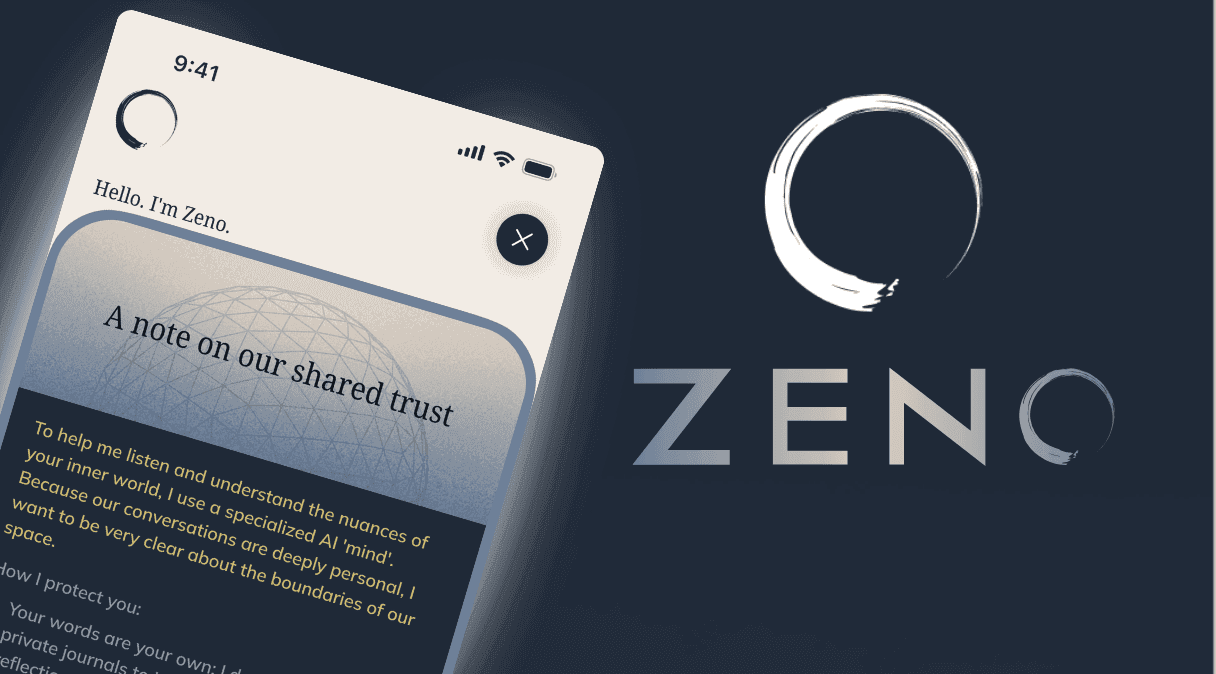
This case study explores how Lizard Global partnered with ZENO, an AI-powered emotional self-exploration app, to build a data-driven, cost-aware foundation from day one. Instead of relying on vanity metrics or waiting months to analyze performance, Lizard Global instrumented event-level tracking at launch. This approach revealed critical early insights: the AI chat served as the primary engagement driver, while daily check-ins and journaling lagged behind. More importantly, granular tracking enabled ZENO to differentiate between low-cost app opens and expensive LLM API calls, protecting the startup from scaling into unsustainable infrastructure costs. By monitoring user session intensity, safety layers, and consumption patterns in real time, ZENO established an evidence-based subscription model and clear product roadmap, proving that early data instrumentation is essential for building scalable, financially viable AI applications.
key takeaways
Most agencies launch an app and wait a quarter before they tell you anything useful. By then the budget is half spent and the roadmap is already built on a guess.
We at Lizard Global do it differently, and ZENO is a good example of this. Six weeks in, we already knew what is working, what is barely being touched, and where the real risk sits. Here is how we read it, and why reading it this early is the entire point of working with a data-driven partner.
What ZENO Is
ZENO is an always-available AI companion for emotional self-exploration. It launched on 19 May 2026 with the goal of giving people a judgment-free place to process emotions between the moments when human support is available, with a clear bridge back to professional care when it is needed.
The product was built on three core interactions: an AI emotional-resilience chat, journaling, and daily check-ins (mood, sleep, energy, and so on). The thesis was that low-friction, consistent engagement across all three would build emotional resilience over time, and that retention (the metric that mental health apps almost always fail to hold) would follow.
That is the hypothesis. Our job was to instrument the product so that, six weeks in, we could tell the founder whether reality agreed.
![[Workshop] Zeno.png](/_next/image?url=https%3A%2F%2Fres.cloudinary.com%2Flizardwebsite%2Fimage%2Fupload%2Fv1781579581%2Flizard_website2025%2FWorkshop_Zeno_e03c4bbfb4.png&w=3840&q=75&dpl=dpl_6vhYPGCiXL4L4UxNdwfVdWPSVz6N)
Integrating AI into a mental health product
When the user on the other side of the conversation is anxious, isolated, or in distress, an AI integration carries weight that a chatbot on an e-commerce site never will. So before ZENO sent a single message, we built each part of the product around the engineering decision it actually demanded, and wired every one of those parts to data we could read from day one. Here is what ZENO is, and the thinking behind how each piece was built and measured.
The AI Chat: A Safety Layer, Not Just A Model
The chat is the heart of ZENO, an always-available, judgment-free space to talk through what someone is feeling. But connecting a language model is the easy part. The integration opens with a disclaimer step that sets expectations, and the system is designed to recognise when a conversation needs more than an AI can responsibly give and to point toward human care.
That bridge back to a professional is not marketing copy; it is part of the architecture. Applying lean analytics, we track when a chat is opened, when a message is actually sent, and when a user returns. The distinction between opening and sending turns out to be the single most important thing we measure, for reasons the cost section will make plain. For a mental health product, this is the integration. Everything else is secondary to getting it right.
Journaling And Check-ins With Context, Not Just Prompts
Alongside the chat, ZENO lets users write longer reflections and log quick daily signals such as mood, sleep, energy, motivation etc. On their own these look like simple features. Their real job is to give the AI something to remember, because a companion that forgets who it is talking to is not a companion.
So the integration is built so that what a user journals and how they have been feeling can inform the conversation with continuity and warmth, a design problem (how much history to carry, how to keep responses grounded) long before it is a model-selection problem.
Our lean analytics measure these closely too: whether a journal entry is started versus saved tells us if the feature is inviting or intimidating, and each daily check-in is a small tap that together becomes the raw material for showing a user how they are changing over time.
The Insights Layer: Turning Data Into Something The User Can Feel
Those scattered entries and conversations are meant to pay off as trends a person can look back on and learn from. We treat reaching that payoff as a measurable outcome in its own right, because an insight no one opens is a feature that does not yet exist.
The Subscription Flow: Where Usage And Survival Meet.
ZENO also has to work as a business, and in an AI product that question is inseparable from how the product is used, every conversation has a cost behind it. So the paywall and subscription steps are instrumented as carefully as the features themselves, a thread we pick up later.
Instrumentation From The First Message.
Underneath all of it, every meaningful action a user can take is mapped to an event we can measure: chat opened, message sent, entry journaled, check-in logged, insight reached, paywall met. Not for vanity dashboards, because in an AI product, the things you cannot see are also the things that cost money and the things that put a user at risk.
That last decision is the one that makes everything below possible. The most valuable data is the data from your first cohort, and you only get one. A founder who instruments late is reconstructing the story from memory; a founder who instruments from day one is reading it as it happens. ZENO, of course, chose the second.
![[Key Features] Zeno.png](/_next/image?url=https%3A%2F%2Fres.cloudinary.com%2Flizardwebsite%2Fimage%2Fupload%2Fv1781579580%2Flizard_website2025%2FKey_Features_Zeno_5785e46abf.png&w=3840&q=75&dpl=dpl_6vhYPGCiXL4L4UxNdwfVdWPSVz6N)
What The Data Actually Says
These are early numbers, and we treat them as early numbers. The user base is small enough that we read it the way you read a first cohort: not for statistical proof, but for shape. And the shape, six weeks in, is already clear enough to steer the next sprint. That is the whole advantage of instrumenting properly from day one. You see the signal while it is still cheap to act on.
ZENO has found its wedge, and it found it fast. When we look at engagement across the three core interactions, one stands out sharply: the AI chat draws roughly twice the active users of journaling, and several times more than daily check-ins. In a product built on three pillars, that is not a problem; it is a discovery. Most apps in this category spend months looking for the one interaction that pulls users back. ZENO already knows which one it is. The work ahead is sequencing the other two behind that strength, and that is a far cheaper question to answer now than after a redesign that assumed all three carried equal weight.
The early users don't dip in. They lean in. The most striking pattern isn't how many people use the chat, it's how intensely the ones who do. Active users return to the chat on the order of dozens of times each over the period, far beyond what a casual trial looks like. For an emotional companion, that depth of return is a more meaningful early signal than a large install count would ever be. It tells us ZENO is becoming something people reach for, not something they sampled once. We read that intensity carefully rather than romantically, the next layer of session analysis tells us exactly what is drawing them back, but the direction is unmistakable: this product earns repeat visits.
And we already know which question decides the next phase. For any companion app, the metric that matters most over time is sustained return, the habit that outlasts the novelty. It is also the hardest one in this category to win. Six weeks is too early to call it, and we would not pretend otherwise. What we can do, and have done, is identify it as the priority now, while there is still a full runway to design for it, rather than discovering it as a gap two quarters from now. Naming the decisive question early is not a caveat. It is the point of working this way.
So in short:
- Early Cohort Signal: Six-week metrics reflect small sample sizes used for qualitative direction rather than statistical proof, validating the strategy of early instrumentation to enable low-cost product pivots.
- Core Product Wedge: AI chat has emerged as ZENO's primary engagement driver, attracting twice as many active users as journaling and significantly outperforming daily check-ins.
- Sequencing Strategy: Rather than treating all three feature pillars equally, future product development will focus on leveraging the AI chat's pull to sequence engagement into journaling and check-ins.
- High User Intensity: Active users exhibit deep engagement patterns, returning to the AI chat dozens of times each, indicating high product utility over passive trial.
- Focus on Retention: Sustained long-term habit formation is identified as the critical metric for the next phase, prioritizing retention design early while runway remains.
![[Impact Image] Zeno.png](/_next/image?url=https%3A%2F%2Fres.cloudinary.com%2Flizardwebsite%2Fimage%2Fupload%2Fv1781579581%2Flizard_website2025%2FImpact_Image_Zeno_1c8843208c.png&w=3840&q=75&dpl=dpl_6vhYPGCiXL4L4UxNdwfVdWPSVz6N)
The Part Most Agencies Skip: The AI Bill
Here is something founders rarely hear from a development partner until it is too late: an word of choiceAI feature is not a fixed cost. Every chat message is a call to a language model, and every call has a price. For a normal app, more usage is unambiguously good. For an AI app, more usage is also a larger invoice. A startup can ship a product users love and still be quietly bankrupted by its own success.
This is exactly why we instrumented ZENO's chat the way we did. We are not only tracking whether people use the AI; we are tracking how they use it. How often they open it. How many messages they send per session. How that behaviour distributes across users (a handful of heavy users versus a broad, light base produces very different bills).
So far the pattern shows: 12 people opened the chat constantly, but only 8 sent messages, and those who did sent roughly 3 each. Opens are cheap. Messages are what cost money. Knowing the difference between the two is the difference between guessing at your infrastructure budget and forecasting it.
This is where a development partner earns its place. We use that behavioural data to do two things for the client:
Anticipate AI Cost Before It Balloons
By understanding the real distribution of message volume per user, we can model what the AI bill looks like at 100 users, at 1,000, at 10,000, before those users arrive. An enterprise should never be surprised by its own infrastructure invoice. Lizard Global, as a digital partner, makes sure they are not.
Find The Subscription Sweet Spot
Pricing an AI product is not guesswork. If you price too low, heavy users cost more than they pay and growth becomes a liability. If you price too high or cap usage too aggressively, you protect the margin by frustrating the very users who love the product most. The right number sits between those two, and you can only find it if you know how much your users actually consume. That is what the data we collect is for: a subscription model that lets the app make money without making it at the expense of the user's experience.
For ZENO, that means the conversation about pricing is grounded in evidence from day one, not improvised after the first scary bill.
Why We Work This Way
None of this required waiting a quarter. It came from instrumenting ZENO, from launch, to separate events from people and opens from messages, and to treat the AI not just as a feature but as a cost centre that has to be understood as carefully as it is built.
Most agencies do not do this. The honest reason is that it is more work, and it means telling a client uncomfortable things early (your loop is one feature, not three; your retention is unproven; your AI bill will scale faster than you think). The clients who are actually building something that matters do not want to be flattered. They want to know, while there is still time and budget to act on it.
ZENO is six weeks old. It has a real wedge, a clear retention question, and an AI cost model we are already shaping around real behaviour. That is not a launch to spin. It is a launch to build on, deliberately, with a partner who tells you the truth about your own numbers.
Ready to Scale Your AI Product Without Infrastructure Cost Surprises?
Most agencies will tell you your AI works. We will tell you what it costs, where it is fragile, and whether your users actually come back. If that is the partner you want, let's talk.
This case study explores how Lizard Global partnered with ZENO, an AI-powered emotional self-exploration app, to build a data-driven, cost-aware foundation from day one. Instead of relying on vanity metrics or waiting months to analyze performance, Lizard Global instrumented event-level tracking at launch. This approach revealed critical early insights: the AI chat served as the primary engagement driver, while daily check-ins and journaling lagged behind. More importantly, granular tracking enabled ZENO to differentiate between low-cost app opens and expensive LLM API calls, protecting the startup from scaling into unsustainable infrastructure costs. By monitoring user session intensity, safety layers, and consumption patterns in real time, ZENO established an evidence-based subscription model and clear product roadmap, proving that early data instrumentation is essential for building scalable, financially viable AI applications.
Most agencies launch an app and wait a quarter before they tell you anything useful. By then the budget is half spent and the roadmap is already built on a guess.
We at Lizard Global do it differently, and ZENO is a good example of this. Six weeks in, we already knew what is working, what is barely being touched, and where the real risk sits. Here is how we read it, and why reading it this early is the entire point of working with a data-driven partner.
What ZENO Is
ZENO is an always-available AI companion for emotional self-exploration. It launched on 19 May 2026 with the goal of giving people a judgment-free place to process emotions between the moments when human support is available, with a clear bridge back to professional care when it is needed.
The product was built on three core interactions: an AI emotional-resilience chat, journaling, and daily check-ins (mood, sleep, energy, and so on). The thesis was that low-friction, consistent engagement across all three would build emotional resilience over time, and that retention (the metric that mental health apps almost always fail to hold) would follow.
That is the hypothesis. Our job was to instrument the product so that, six weeks in, we could tell the founder whether reality agreed.
Integrating AI into a mental health product
When the user on the other side of the conversation is anxious, isolated, or in distress, an AI integration carries weight that a chatbot on an e-commerce site never will. So before ZENO sent a single message, we built each part of the product around the engineering decision it actually demanded, and wired every one of those parts to data we could read from day one. Here is what ZENO is, and the thinking behind how each piece was built and measured.
The AI Chat: A Safety Layer, Not Just A Model
The chat is the heart of ZENO, an always-available, judgment-free space to talk through what someone is feeling. But connecting a language model is the easy part. The integration opens with a disclaimer step that sets expectations, and the system is designed to recognise when a conversation needs more than an AI can responsibly give and to point toward human care.
That bridge back to a professional is not marketing copy; it is part of the architecture. Applying lean analytics, we track when a chat is opened, when a message is actually sent, and when a user returns. The distinction between opening and sending turns out to be the single most important thing we measure, for reasons the cost section will make plain. For a mental health product, this is the integration. Everything else is secondary to getting it right.
Journaling And Check-ins With Context, Not Just Prompts
Alongside the chat, ZENO lets users write longer reflections and log quick daily signals such as mood, sleep, energy, motivation etc. On their own these look like simple features. Their real job is to give the AI something to remember, because a companion that forgets who it is talking to is not a companion.
So the integration is built so that what a user journals and how they have been feeling can inform the conversation with continuity and warmth, a design problem (how much history to carry, how to keep responses grounded) long before it is a model-selection problem.
Our lean analytics measure these closely too: whether a journal entry is started versus saved tells us if the feature is inviting or intimidating, and each daily check-in is a small tap that together becomes the raw material for showing a user how they are changing over time.
The Insights Layer: Turning Data Into Something The User Can Feel
Those scattered entries and conversations are meant to pay off as trends a person can look back on and learn from. We treat reaching that payoff as a measurable outcome in its own right, because an insight no one opens is a feature that does not yet exist.
The Subscription Flow: Where Usage And Survival Meet.
ZENO also has to work as a business, and in an AI product that question is inseparable from how the product is used, every conversation has a cost behind it. So the paywall and subscription steps are instrumented as carefully as the features themselves, a thread we pick up later.
Instrumentation From The First Message.
Underneath all of it, every meaningful action a user can take is mapped to an event we can measure: chat opened, message sent, entry journaled, check-in logged, insight reached, paywall met. Not for vanity dashboards, because in an AI product, the things you cannot see are also the things that cost money and the things that put a user at risk.
That last decision is the one that makes everything below possible. The most valuable data is the data from your first cohort, and you only get one. A founder who instruments late is reconstructing the story from memory; a founder who instruments from day one is reading it as it happens. ZENO, of course, chose the second.
What The Data Actually Says
These are early numbers, and we treat them as early numbers. The user base is small enough that we read it the way you read a first cohort: not for statistical proof, but for shape. And the shape, six weeks in, is already clear enough to steer the next sprint. That is the whole advantage of instrumenting properly from day one. You see the signal while it is still cheap to act on.
ZENO has found its wedge, and it found it fast. When we look at engagement across the three core interactions, one stands out sharply: the AI chat draws roughly twice the active users of journaling, and several times more than daily check-ins. In a product built on three pillars, that is not a problem; it is a discovery. Most apps in this category spend months looking for the one interaction that pulls users back. ZENO already knows which one it is. The work ahead is sequencing the other two behind that strength, and that is a far cheaper question to answer now than after a redesign that assumed all three carried equal weight.
The early users don't dip in. They lean in. The most striking pattern isn't how many people use the chat, it's how intensely the ones who do. Active users return to the chat on the order of dozens of times each over the period, far beyond what a casual trial looks like. For an emotional companion, that depth of return is a more meaningful early signal than a large install count would ever be. It tells us ZENO is becoming something people reach for, not something they sampled once. We read that intensity carefully rather than romantically, the next layer of session analysis tells us exactly what is drawing them back, but the direction is unmistakable: this product earns repeat visits.
And we already know which question decides the next phase. For any companion app, the metric that matters most over time is sustained return, the habit that outlasts the novelty. It is also the hardest one in this category to win. Six weeks is too early to call it, and we would not pretend otherwise. What we can do, and have done, is identify it as the priority now, while there is still a full runway to design for it, rather than discovering it as a gap two quarters from now. Naming the decisive question early is not a caveat. It is the point of working this way.
So in short:
- Early Cohort Signal: Six-week metrics reflect small sample sizes used for qualitative direction rather than statistical proof, validating the strategy of early instrumentation to enable low-cost product pivots.
- Core Product Wedge: AI chat has emerged as ZENO's primary engagement driver, attracting twice as many active users as journaling and significantly outperforming daily check-ins.
- Sequencing Strategy: Rather than treating all three feature pillars equally, future product development will focus on leveraging the AI chat's pull to sequence engagement into journaling and check-ins.
- High User Intensity: Active users exhibit deep engagement patterns, returning to the AI chat dozens of times each, indicating high product utility over passive trial.
- Focus on Retention: Sustained long-term habit formation is identified as the critical metric for the next phase, prioritizing retention design early while runway remains.
The Part Most Agencies Skip: The AI Bill
Here is something founders rarely hear from a development partner until it is too late: an word of choiceAI feature is not a fixed cost. Every chat message is a call to a language model, and every call has a price. For a normal app, more usage is unambiguously good. For an AI app, more usage is also a larger invoice. A startup can ship a product users love and still be quietly bankrupted by its own success.
This is exactly why we instrumented ZENO's chat the way we did. We are not only tracking whether people use the AI; we are tracking how they use it. How often they open it. How many messages they send per session. How that behaviour distributes across users (a handful of heavy users versus a broad, light base produces very different bills).
So far the pattern shows: 12 people opened the chat constantly, but only 8 sent messages, and those who did sent roughly 3 each. Opens are cheap. Messages are what cost money. Knowing the difference between the two is the difference between guessing at your infrastructure budget and forecasting it.
This is where a development partner earns its place. We use that behavioural data to do two things for the client:
Anticipate AI Cost Before It Balloons
By understanding the real distribution of message volume per user, we can model what the AI bill looks like at 100 users, at 1,000, at 10,000, before those users arrive. An enterprise should never be surprised by its own infrastructure invoice. Lizard Global, as a digital partner, makes sure they are not.
Find The Subscription Sweet Spot
Pricing an AI product is not guesswork. If you price too low, heavy users cost more than they pay and growth becomes a liability. If you price too high or cap usage too aggressively, you protect the margin by frustrating the very users who love the product most. The right number sits between those two, and you can only find it if you know how much your users actually consume. That is what the data we collect is for: a subscription model that lets the app make money without making it at the expense of the user's experience.
For ZENO, that means the conversation about pricing is grounded in evidence from day one, not improvised after the first scary bill.
Why We Work This Way
None of this required waiting a quarter. It came from instrumenting ZENO, from launch, to separate events from people and opens from messages, and to treat the AI not just as a feature but as a cost centre that has to be understood as carefully as it is built.
Most agencies do not do this. The honest reason is that it is more work, and it means telling a client uncomfortable things early (your loop is one feature, not three; your retention is unproven; your AI bill will scale faster than you think). The clients who are actually building something that matters do not want to be flattered. They want to know, while there is still time and budget to act on it.
ZENO is six weeks old. It has a real wedge, a clear retention question, and an AI cost model we are already shaping around real behaviour. That is not a launch to spin. It is a launch to build on, deliberately, with a partner who tells you the truth about your own numbers.
Ready to Scale Your AI Product Without Infrastructure Cost Surprises?
Most agencies will tell you your AI works. We will tell you what it costs, where it is fragile, and whether your users actually come back. If that is the partner you want, let's talk.
FAQs

What are the main challenges in scaling an AI mental health app?
How do you control LLM API costs when scaling AI apps?
Why is early event-level instrumentation crucial for AI startups?
How do you build a safety layer into AI companions?
How do you balance feature development with AI infrastructure costs?
What metrics best evaluate AI product-market fit and retention?
Why choose a data-driven agency over traditional software development partners?
similar reads

Software Development
How Much Does It Cost to Develop an App in Amsterdam, The Netherlands? (2026 Market Entry Blueprint)
2 September 2026

Case Studies & Interviews
Zeno AI: Building a Privacy-First AI Mental Health Companion for Personal Growth
7 July 2026

AI & Machine Learning
How Much Does AI Integration Actually Cost for Mid-Sized Enterprises? (Real 2026 Cost Ranges)
20 July 2026
Stuck between a great idea and the right team to build it?Let's talk.
We work with corporate innovation teams and ambitious scale-ups across the Netherlands, Singapore, and Australia, and wherever great software needs to be built. Drop us a message and we'll get back to you within one business day.


Markus Monnikendam
Global Commercial Director
hello@lizard.global