Scrum
Project Management
+ 2 more ...
From Chaos to Clarity: A Head of Scrum’s Perspective on Building Better Software

10 Feb 2026
by Nadiy, Senior Content Writer
Contributor: Khaldoon, Head of Scrum
10 Feb 2026
by Nadiy, Senior Content Writer
Contributor: Khaldoon, Head of Scrum
Scrum
Project Management
Mobile App Development
Software Development
From Chaos to Clarity: A Head of Scrum’s Perspective on Building Better Software
Table of contents
Contact us
We will get back to you in the next 48 hours.
Behind every smooth sprint and successful delivery is someone quietly keeping the system honest. Step into the world of a Head of Scrum and see how thoughtful leadership, clarity, and people-first Agile practices shape better software outcomes at Lizard Global.
Some roles in software development are loud. Others are quietly powerful.
The Head of Scrum belongs firmly in the second category. You rarely see the impact in flashy features or bold announcements, yet when this role is done right, everything else seems to move smoother. Deadlines feel more realistic. Teams communicate better. Clients feel heard rather than managed.
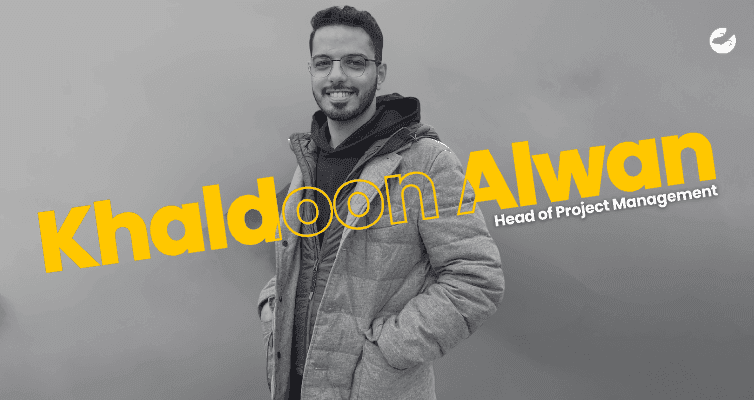
At Lizard Global, that steady force is Khaldoon Alwan, Head of Project Management, who has spent nearly eight years shaping how work truly gets done across complex, cross-functional software projects. His story offers a rare, grounded look at what the Head of Scrum role actually means beyond frameworks, ceremonies, and buzzwords.
Understanding the Role of a Head of Scrum
The title “Head of Scrum” often gets misunderstood. It’s not about enforcing rules or running endless meetings. At its core, the role is about flow. How work moves. Where it gets stuck. Why teams feel friction even when the process looks perfect on paper.
A Head of Scrum focuses on the system rather than individual tasks. That means understanding how development, design, QA, stakeholders, and clients all interact, and making sure those interactions remain productive, fair, and transparent.
For Khaldoon, this mindset comes naturally. He describes himself as thoughtful, reflective, steady, pragmatic, and analytical, qualities that show up every day in how he approaches Agile delivery. His focus isn’t on how Scrum is “supposed” to work, but on how it actually works in real projects with real people.
From Project Manager to Head of Scrum at Lizard Global
Before joining Lizard Global, Khaldoon worked as a project manager at a data solutions company in Kuala Lumpur. His world revolved around a single product, a narrow scope, and a defined service offering. It was structured, predictable, and limited.
Everything changed in 2018 when Terence Ridder approached him to help build the project management department at Lizard Global.
What stood out immediately was the opportunity to work across the full software development lifecycle. Instead of being confined to one product, he would be involved in custom software solutions across industries, technologies, and business models. It meant learning fast, experimenting often, and adapting constantly.
“What really attracted me was the idea of building custom software solutions and having the freedom to learn, experiment, and work across the full SDLC. In my previous role, I was focused on a single product for a very specific service. This role, on the other hand, promised growth across many different areas within the tech world, creatively and professionally. Looking back almost 8 years later, that promise definitely turned out to be true.”
Almost eight years later, that promise of growth has more than delivered. The Head of Scrum role at Lizard Global evolved alongside the company itself, shaped by increasingly complex projects and a growing, cross-departmental team.
How Passion Translates Into Better Scrum Leadership
A good Head of Scrum doesn’t just understand Agile theory. They care deeply about how people experience their work.
Khaldoon’s passion lies in clarity and fairness. He’s driven by a desire to understand how systems truly function, especially when things feel messy or inefficient. That curiosity shows up when he breaks large, complex projects into manageable pieces, identifies bottlenecks, and turns abstract problems into practical actions.
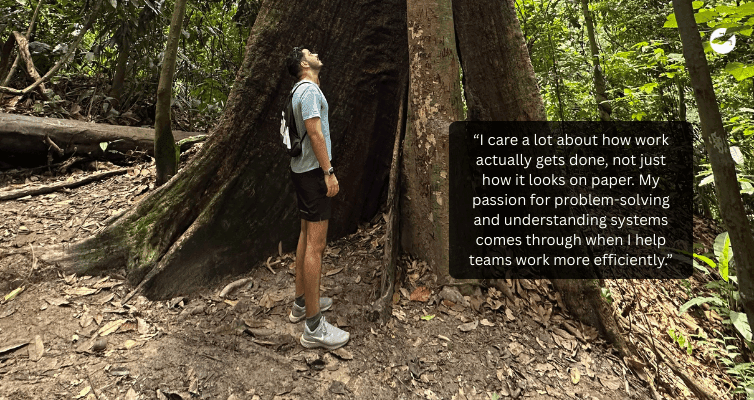
“I care a lot about how work actually gets done, not just how it looks on paper. My passion for problem-solving and understanding systems comes through when I help teams work more efficiently. I enjoy breaking down complex projects into manageable pieces, spotting where bottlenecks or friction appear, and finding practical ways to move things forward.”
This is where Scrum leadership becomes human. Mentoring team members, supporting their growth, and helping teams work better together isn’t an add-on. It’s central to the role. When people feel supported and understood, productivity becomes a natural outcome rather than a forced metric.
A Day in the Life of a Head of Scrum
There’s no such thing as a “typical” day when you’re overseeing multiple Agile teams.
A Sprint phase dictates the rhythm. The beginning and end of sprints bring more meetings, planning, and reviews. The middle focuses on execution, client communication, backlog refinement, and removing obstacles before they escalate.
Khaldoon usually starts by scanning all active projects, organizing priorities for the day or week ahead. Stand-ups with different teams follow, not just to listen, but to spot patterns and issues early. One-on-one sessions with team members are a key part of the day, ensuring support is timely rather than reactive.
Afternoons often involve refinement sessions, sprint reporting, or improving internal processes. The work isn’t repetitive, but it is intentional, and that consistency is what keeps projects moving forward without unnecessary friction.
Why the Head of Scrum Touches Every Department
The Scrum department at Lizard Global acts as a connective tissue across the organization.
Custom software developmentis inherently cross-functional. Design delays affect development. Development blockers impact Quality Assurance (QA). Misalignment in one area can ripple across the entire system. The Head of Scrum ensures that flow remains uninterrupted.
“My role is mainly about supporting everyone involved and making sure that flow isn’t interrupted, and that applies to working closely with all departments.”
This means working closely with every department, aligning priorities, resolving dependencies, and making sure collaboration stays constructive. It’s less about control and more about orchestration.

In practice, this is where the value of an experienced Head of Scrum becomes visible. Problems are addressed before they become crises. Teams stay aligned even under pressure. Clients experience continuity rather than confusion.
What Makes a Great Scrum Master, According to a Head of Scrum
From Khaldoon’s perspective, the best Scrum Masters share a few fundamental traits.
Strong problem-solving skills are essential. So is the ability to step back and see the bigger picture rather than getting lost in surface-level issues. Root cause analysis matters more than quick fixes.
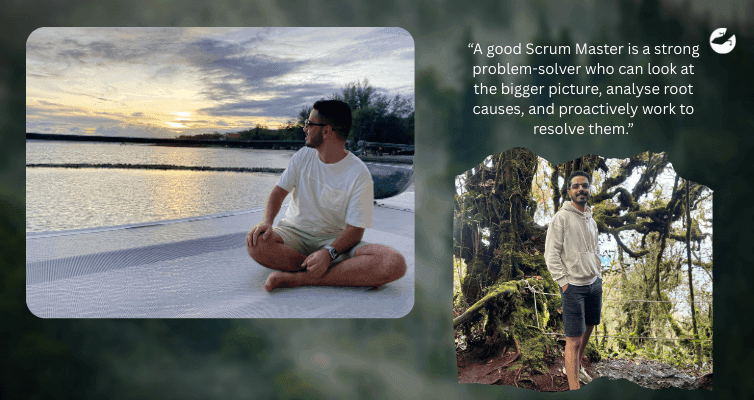
Proactivity is the defining factor. A good Scrum Master anticipates challenges and addresses them early instead of reacting once delivery is already at risk. This mindset scales naturally into the Head of Scrum role, where foresight becomes a strategic advantage.
Moments That Build Team Culture
Not every memorable moment happens in sprint reviews or delivery milestones.
One of Khaldoon’s favorite memories comes from a company trip where teams were tasked with building boats and racing to retrieve a flag from shore. It was chaotic, competitive, collaborative, and imperfect. His team lost, debated whose fault it was, and laughed through the entire experience.
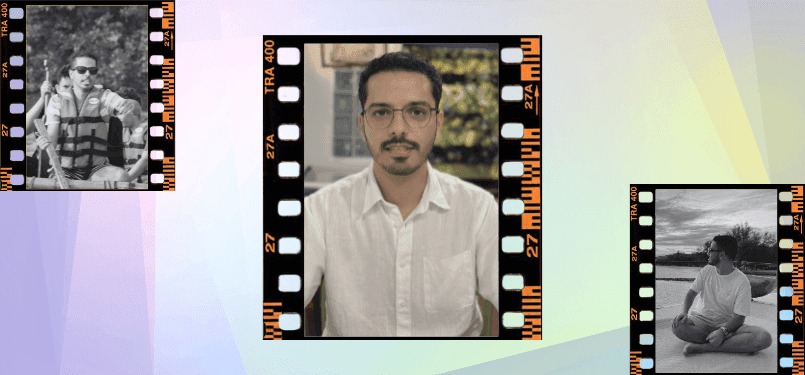
“It was a lot of fun seeing everyone collaborate, compete, and problem-solve together. Our team ended up losing, and arguing about who caused it, which somehow made it even more memorable. I even have a photo that perfectly captures why it was such a fun moment.”
Those moments matter. They reveal how people solve problems together when the stakes are low, and they strengthen trust when the stakes are high. Culture, after all, shows up most clearly outside formal processes.

Looking Ahead: The Future of Scrum Leadership at Lizard Global
Looking five years ahead, Khaldoon hopes to see Lizard Global continue pushing the boundaries of custom software development. The goal isn’t growth for its own sake, but deeper partnerships with clients and collaborators who genuinely care about what they build.
“I hope we continue to stay at the forefront of software development and build more partnerships with like-minded individuals and companies who genuinely enjoy what they do.”
The vision is clear: creating thoughtful, creative solutions to complex problems while making everyday work easier for the people involved. In that future, the Head of Scrum remains central, not as a gatekeeper, but as a guide.
Why Lizard Global Invests in Strong Scrum Leadership
For clients, the value of a Head of Scrum isn’t theoretical. It shows up in smoother delivery, clearer communication, and fewer surprises.
At Lizard Global, Scrum leadership supports every phase of a project, from discovery and planning to development, scaling, and long-term optimization. Clients benefit from structured flexibility, transparent processes, and teams that are empowered to do their best work.
Whether you’re building a new digital product, modernizing legacy systems, or scaling an existing platform, Lizard Global brings experienced Scrum leadership that turns complexity into clarity. With strong project management, Agile expertise, and a people-first mindset, the team doesn’t just deliver software, it delivers confidence, continuity, and results.

If you’re looking for a partner who understands not just how software should be built, but how it actually gets built, Lizard Global is ready to help.
Behind every smooth sprint and successful delivery is someone quietly keeping the system honest. Step into the world of a Head of Scrum and see how thoughtful leadership, clarity, and people-first Agile practices shape better software outcomes at Lizard Global.
Some roles in software development are loud. Others are quietly powerful.
The Head of Scrum belongs firmly in the second category. You rarely see the impact in flashy features or bold announcements, yet when this role is done right, everything else seems to move smoother. Deadlines feel more realistic. Teams communicate better. Clients feel heard rather than managed.
At Lizard Global, that steady force is Khaldoon Alwan, Head of Project Management, who has spent nearly eight years shaping how work truly gets done across complex, cross-functional software projects. His story offers a rare, grounded look at what the Head of Scrum role actually means beyond frameworks, ceremonies, and buzzwords.
Understanding the Role of a Head of Scrum
The title “Head of Scrum” often gets misunderstood. It’s not about enforcing rules or running endless meetings. At its core, the role is about flow. How work moves. Where it gets stuck. Why teams feel friction even when the process looks perfect on paper.
A Head of Scrum focuses on the system rather than individual tasks. That means understanding how development, design, QA, stakeholders, and clients all interact, and making sure those interactions remain productive, fair, and transparent.
For Khaldoon, this mindset comes naturally. He describes himself as thoughtful, reflective, steady, pragmatic, and analytical, qualities that show up every day in how he approaches Agile delivery. His focus isn’t on how Scrum is “supposed” to work, but on how it actually works in real projects with real people.
From Project Manager to Head of Scrum at Lizard Global
Before joining Lizard Global, Khaldoon worked as a project manager at a data solutions company in Kuala Lumpur. His world revolved around a single product, a narrow scope, and a defined service offering. It was structured, predictable, and limited.
Everything changed in 2018 when Terence Ridder approached him to help build the project management department at Lizard Global.
What stood out immediately was the opportunity to work across the full software development lifecycle. Instead of being confined to one product, he would be involved in custom software solutions across industries, technologies, and business models. It meant learning fast, experimenting often, and adapting constantly.
“What really attracted me was the idea of building custom software solutions and having the freedom to learn, experiment, and work across the full SDLC. In my previous role, I was focused on a single product for a very specific service. This role, on the other hand, promised growth across many different areas within the tech world, creatively and professionally. Looking back almost 8 years later, that promise definitely turned out to be true.”
Almost eight years later, that promise of growth has more than delivered. The Head of Scrum role at Lizard Global evolved alongside the company itself, shaped by increasingly complex projects and a growing, cross-departmental team.
How Passion Translates Into Better Scrum Leadership
A good Head of Scrum doesn’t just understand Agile theory. They care deeply about how people experience their work.
Khaldoon’s passion lies in clarity and fairness. He’s driven by a desire to understand how systems truly function, especially when things feel messy or inefficient. That curiosity shows up when he breaks large, complex projects into manageable pieces, identifies bottlenecks, and turns abstract problems into practical actions.
“I care a lot about how work actually gets done, not just how it looks on paper. My passion for problem-solving and understanding systems comes through when I help teams work more efficiently. I enjoy breaking down complex projects into manageable pieces, spotting where bottlenecks or friction appear, and finding practical ways to move things forward.”
This is where Scrum leadership becomes human. Mentoring team members, supporting their growth, and helping teams work better together isn’t an add-on. It’s central to the role. When people feel supported and understood, productivity becomes a natural outcome rather than a forced metric.
A Day in the Life of a Head of Scrum
There’s no such thing as a “typical” day when you’re overseeing multiple Agile teams.
A Sprint phase dictates the rhythm. The beginning and end of sprints bring more meetings, planning, and reviews. The middle focuses on execution, client communication, backlog refinement, and removing obstacles before they escalate.
Khaldoon usually starts by scanning all active projects, organizing priorities for the day or week ahead. Stand-ups with different teams follow, not just to listen, but to spot patterns and issues early. One-on-one sessions with team members are a key part of the day, ensuring support is timely rather than reactive.
Afternoons often involve refinement sessions, sprint reporting, or improving internal processes. The work isn’t repetitive, but it is intentional, and that consistency is what keeps projects moving forward without unnecessary friction.
Why the Head of Scrum Touches Every Department
The Scrum department at Lizard Global acts as a connective tissue across the organization.
Custom software developmentis inherently cross-functional. Design delays affect development. Development blockers impact Quality Assurance (QA). Misalignment in one area can ripple across the entire system. The Head of Scrum ensures that flow remains uninterrupted.
“My role is mainly about supporting everyone involved and making sure that flow isn’t interrupted, and that applies to working closely with all departments.”
This means working closely with every department, aligning priorities, resolving dependencies, and making sure collaboration stays constructive. It’s less about control and more about orchestration.
In practice, this is where the value of an experienced Head of Scrum becomes visible. Problems are addressed before they become crises. Teams stay aligned even under pressure. Clients experience continuity rather than confusion.
What Makes a Great Scrum Master, According to a Head of Scrum
From Khaldoon’s perspective, the best Scrum Masters share a few fundamental traits.
Strong problem-solving skills are essential. So is the ability to step back and see the bigger picture rather than getting lost in surface-level issues. Root cause analysis matters more than quick fixes.
Proactivity is the defining factor. A good Scrum Master anticipates challenges and addresses them early instead of reacting once delivery is already at risk. This mindset scales naturally into the Head of Scrum role, where foresight becomes a strategic advantage.
Moments That Build Team Culture
Not every memorable moment happens in sprint reviews or delivery milestones.
One of Khaldoon’s favorite memories comes from a company trip where teams were tasked with building boats and racing to retrieve a flag from shore. It was chaotic, competitive, collaborative, and imperfect. His team lost, debated whose fault it was, and laughed through the entire experience.
“It was a lot of fun seeing everyone collaborate, compete, and problem-solve together. Our team ended up losing, and arguing about who caused it, which somehow made it even more memorable. I even have a photo that perfectly captures why it was such a fun moment.”
Those moments matter. They reveal how people solve problems together when the stakes are low, and they strengthen trust when the stakes are high. Culture, after all, shows up most clearly outside formal processes.
Looking Ahead: The Future of Scrum Leadership at Lizard Global
Looking five years ahead, Khaldoon hopes to see Lizard Global continue pushing the boundaries of custom software development. The goal isn’t growth for its own sake, but deeper partnerships with clients and collaborators who genuinely care about what they build.
“I hope we continue to stay at the forefront of software development and build more partnerships with like-minded individuals and companies who genuinely enjoy what they do.”
The vision is clear: creating thoughtful, creative solutions to complex problems while making everyday work easier for the people involved. In that future, the Head of Scrum remains central, not as a gatekeeper, but as a guide.
Why Lizard Global Invests in Strong Scrum Leadership
For clients, the value of a Head of Scrum isn’t theoretical. It shows up in smoother delivery, clearer communication, and fewer surprises.
At Lizard Global, Scrum leadership supports every phase of a project, from discovery and planning to development, scaling, and long-term optimization. Clients benefit from structured flexibility, transparent processes, and teams that are empowered to do their best work.
Whether you’re building a new digital product, modernizing legacy systems, or scaling an existing platform, Lizard Global brings experienced Scrum leadership that turns complexity into clarity. With strong project management, Agile expertise, and a people-first mindset, the team doesn’t just deliver software, it delivers confidence, continuity, and results.
If you’re looking for a partner who understands not just how software should be built, but how it actually gets built, Lizard Global is ready to help.
FAQs

What is the role of a Head of Scrum?
How is a Head of Scrum different from a Project Manager?
Why is a Head of Scrum important in custom software development?
What skills make a great Head of Scrum?
How does Scrum leadership improve project outcomes?
How does Lizard Global apply Scrum across teams?
Who benefits most from strong Scrum leadership?
similar reads