Sustainable Software Engineering: Reducing Cloud Costs While Meeting ESG Targets

27 Feb 2026
by Team Lizard Global
Editor: Nadiy, Senior Content Writer
27 Feb 2026
by Team Lizard Global
Editor: Nadiy, Senior Content Writer
Sustainable Software Engineering: Reducing Cloud Costs While Meeting ESG Targets
Table of contents
Contact us
We will get back to you in the next 48 hours.

Sustainable software engineering is no longer optional. As cloud costs rise and ESG targets tighten, enterprises must rethink how they design, develop, and scale digital products. This blog explores how businesses can reduce infrastructure waste, optimize performance, and align with environmental goals—without sacrificing growth. Through real-world portfolio examples across fintech, e-commerce, HR, and education platforms, we demonstrate how smart architecture, UI/UX design services, CRM integration services, and growth analytics consulting contribute to both cost efficiency and sustainability. Whether you’re seeking a digital transformation partner or evaluating a full-stack digital solutions agency, this guide outlines actionable strategies that balance profitability with responsibility.
key takeaways
Cloud costs are climbing, ESG expectations are tightening, and digital platforms are becoming more complex by the day. Yet many organizations still treat sustainability and software performance as separate conversations.
In reality, they are deeply connected. Every inefficient query, oversized cloud instance, or poorly designed user flow increases both operational expenditure and environmental impact. Sustainable software engineering bridges that gap.
By optimizing architecture, refining UX/UI product design, and implementing smarter data strategies, businesses can reduce infrastructure waste while strengthening their ESG position.
The question is no longer whether sustainability belongs in digital strategy—it’s how quickly you can embed it into your engineering decisions.
Why Sustainable Software Engineering Is a Business Imperative
Sustainability in software is no longer just a branding exercise. Instead, it has become a financial and operational necessity. Cloud infrastructure costs continue to rise, while investors and regulators demand transparent ESG reporting. As a result, businesses must rethink how they design and scale digital platforms.
Sustainable software engineering focuses on efficiency. It reduces unnecessary data transfers, optimizes backend processes, and ensures systems scale intelligently rather than wastefully. Consequently, companies lower their carbon footprint while directly improving profitability.
Moreover, enterprises increasingly seek a digital transformation partner that understands both technological scalability and environmental responsibility. A modern custom software development company must now design systems that meet performance benchmarks and ESG commitments simultaneously.
The Hidden Link Between Cloud Costs and Carbon Emissions
Every inefficient query, redundant microservice, or oversized cloud instance contributes to two problems: higher operational expenses and higher energy consumption. Cloud waste is not abstract—it is measurable.
For example, over-provisioned servers often run at low utilization levels. Although this may appear safe from a performance standpoint, it dramatically increases costs. More importantly, it increases energy usage in data centers.
By adopting sustainable engineering principles—such as right-sizing infrastructure, implementing autoscaling, and using serverless architectures—organizations significantly reduce both financial waste and environmental impact.
As a full-stack digital solutions agency, we have seen how re-architecting platforms for performance optimization can reduce infrastructure overhead by double-digit percentages. This directly supports ESG reporting by demonstrating measurable reductions in resource usage.
Portfolio Example: Optimizing E-Commerce for Efficiency and Scale
Consider the development of Drinkies, built in collaboration with Heineken Malaysia. The platform supports on-demand ordering, GPS tracking, secure payments, and loyalty features.
At first glance, it appears to be purely an e-commerce innovation. However, performance optimization played a critical role. Efficient order routing, optimized payment processing, and smart notification handling reduced unnecessary server requests. As a result, the system minimized peak-load strain and avoided excessive infrastructure scaling.
Similarly, for Brunott CRM System, CRM integration services centralized customer data. By eliminating fragmented systems and duplicate processes, the solution reduced manual work and redundant database calls. Centralized architecture not only improved user experience but also reduced backend inefficiencies.
Through careful web app development services and mobile app development agency expertise (including iOS app development and Android app development), platforms can scale intelligently without inflating cloud consumption.
Sustainable UX/UI Design Reduces Backend Load
Sustainability begins at the interface level. Poor UX/UI product design causes users to repeat actions, refresh pages unnecessarily, or abandon processes midway. Each inefficient action generates additional backend activity.
For instance, in the development of RiA Platform, the system reduced risk analysis time from six hours to ninety minutes. That improvement was not only operational—it reduced system processing cycles and data handling repetition.

Likewise, in Lumira Circle, progressive content delivery ensured users accessed only necessary data at specific milestones. Instead of loading heavy modules upfront, the platform delivered optimized, bite-sized learning experiences.
UI/UX design services, therefore, directly impact cloud efficiency. Clean navigation, progressive loading strategies, and intelligent caching reduce server strain. Consequently, sustainable UX is not just about aesthetics—it is about architecture.
FinTech and ESG: Efficiency Through Secure Architecture
FinTech platforms handle large volumes of transactional data. Without optimization, they can quickly become infrastructure-heavy.
Take GWAP and Contract Chain as examples. Secure online transfers, blockchain validation, and transaction monitoring require high reliability. However, sustainable engineering ensured that processing workflows were streamlined and secure without unnecessary redundancy.

By implementing modular systems and optimized APIs, these platforms minimized computational waste while maintaining compliance. Hybrid app development and progressive web app development approaches further reduced the need for separate codebases, lowering long-term maintenance costs.
Therefore, digital consultancy services must now evaluate architecture not only for compliance and scalability but also for environmental efficiency.
Data-Driven Sustainability: Growth Analytics and ESG Reporting
Sustainable engineering must be measurable. Growth analytics consulting enables companies to track performance metrics that correlate with infrastructure usage. For example, in the HR platform GrowTribe, data science modules analyzed engagement and performance tracking efficiently. By consolidating analytics pipelines, the system avoided duplicated queries across modules.
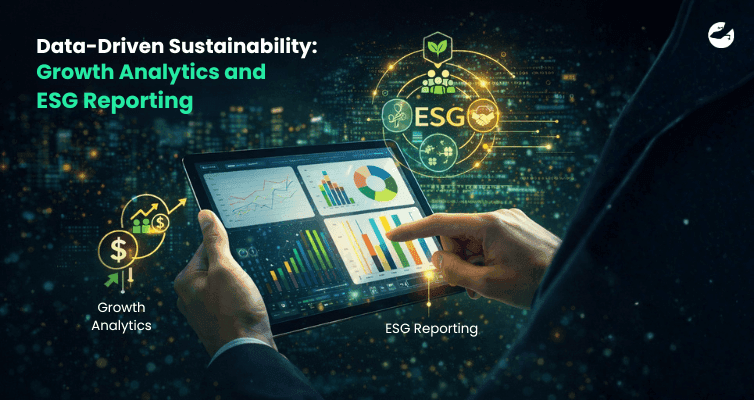
Similarly, Bricklinq leveraged real-time portfolio valuation without overwhelming infrastructure resources. Intelligent data structuring ensured scalability while preserving responsiveness.
Through CRM integration services and analytics dashboards, enterprises can map system efficiency to ESG KPIs. This alignment enables transparent sustainability reporting—an increasingly critical requirement for investors and regulatory bodies.
Mobile Strategy: Native vs Hybrid and Cloud Efficiency
Enterprises often debate between iOS app development, Android app development, and hybrid app development. From a sustainability perspective, hybrid solutions can reduce duplicated development and maintenance overhead.
However, native development sometimes offers superior performance optimization. A skilled mobile app development agency evaluates both cost and energy efficiency before deciding.
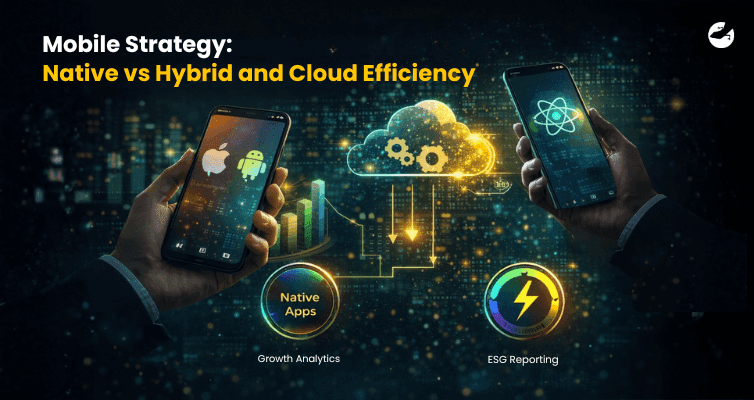
For platforms like Drinkies, mobile optimization reduced data-heavy interactions and improved caching mechanisms. That meant fewer repeated API calls and lower server stress.
Strategic progressive web app development can also reduce app store dependency while maintaining performance standards. The key is architectural foresight—choosing solutions that scale without waste.
Sustainable Digital Transformation Requires Strategic Partnership
Sustainability cannot be retrofitted easily. Instead, it must be embedded from the discovery phase onward. That is why selecting the right custom software development company matters.
A capable digital transformation partner evaluates business models, system architecture, and operational workflows before writing a single line of code. Moreover, a full-stack digital solutions agency integrates UI/UX design services, backend architecture, analytics, and CRM integration services into a unified strategy.
Across industries—whether fintech, HR, education, or e-commerce—the consistent pattern is clear: efficient architecture reduces cloud waste, lowers costs, and strengthens ESG positioning. In short, sustainable software engineering is not about doing less. It is about building smarter.
Ready to Build Smarter and Greener?
Partner with a digital consultancy services team that understands scalability, sustainability, and long-term value creation. Whether you need web app development services, mobile app development agency expertise, or full-stack digital solutions, now is the time to engineer responsibly.

Let’s reduce your cloud costs and strengthen your ESG performance, start today.
Sustainable software engineering is no longer optional. As cloud costs rise and ESG targets tighten, enterprises must rethink how they design, develop, and scale digital products. This blog explores how businesses can reduce infrastructure waste, optimize performance, and align with environmental goals—without sacrificing growth. Through real-world portfolio examples across fintech, e-commerce, HR, and education platforms, we demonstrate how smart architecture, UI/UX design services, CRM integration services, and growth analytics consulting contribute to both cost efficiency and sustainability. Whether you’re seeking a digital transformation partner or evaluating a full-stack digital solutions agency, this guide outlines actionable strategies that balance profitability with responsibility.
Cloud costs are climbing, ESG expectations are tightening, and digital platforms are becoming more complex by the day. Yet many organizations still treat sustainability and software performance as separate conversations.
In reality, they are deeply connected. Every inefficient query, oversized cloud instance, or poorly designed user flow increases both operational expenditure and environmental impact. Sustainable software engineering bridges that gap.
By optimizing architecture, refining UX/UI product design, and implementing smarter data strategies, businesses can reduce infrastructure waste while strengthening their ESG position.
The question is no longer whether sustainability belongs in digital strategy—it’s how quickly you can embed it into your engineering decisions.
Why Sustainable Software Engineering Is a Business Imperative
Sustainability in software is no longer just a branding exercise. Instead, it has become a financial and operational necessity. Cloud infrastructure costs continue to rise, while investors and regulators demand transparent ESG reporting. As a result, businesses must rethink how they design and scale digital platforms.
Sustainable software engineering focuses on efficiency. It reduces unnecessary data transfers, optimizes backend processes, and ensures systems scale intelligently rather than wastefully. Consequently, companies lower their carbon footprint while directly improving profitability.
Moreover, enterprises increasingly seek a digital transformation partner that understands both technological scalability and environmental responsibility. A modern custom software development company must now design systems that meet performance benchmarks and ESG commitments simultaneously.
The Hidden Link Between Cloud Costs and Carbon Emissions
Every inefficient query, redundant microservice, or oversized cloud instance contributes to two problems: higher operational expenses and higher energy consumption. Cloud waste is not abstract—it is measurable.
For example, over-provisioned servers often run at low utilization levels. Although this may appear safe from a performance standpoint, it dramatically increases costs. More importantly, it increases energy usage in data centers.
By adopting sustainable engineering principles—such as right-sizing infrastructure, implementing autoscaling, and using serverless architectures—organizations significantly reduce both financial waste and environmental impact.
As a full-stack digital solutions agency, we have seen how re-architecting platforms for performance optimization can reduce infrastructure overhead by double-digit percentages. This directly supports ESG reporting by demonstrating measurable reductions in resource usage.
Portfolio Example: Optimizing E-Commerce for Efficiency and Scale
Consider the development of Drinkies, built in collaboration with Heineken Malaysia. The platform supports on-demand ordering, GPS tracking, secure payments, and loyalty features.
At first glance, it appears to be purely an e-commerce innovation. However, performance optimization played a critical role. Efficient order routing, optimized payment processing, and smart notification handling reduced unnecessary server requests. As a result, the system minimized peak-load strain and avoided excessive infrastructure scaling.
Similarly, for Brunott CRM System, CRM integration services centralized customer data. By eliminating fragmented systems and duplicate processes, the solution reduced manual work and redundant database calls. Centralized architecture not only improved user experience but also reduced backend inefficiencies.
Through careful web app development services and mobile app development agency expertise (including iOS app development and Android app development), platforms can scale intelligently without inflating cloud consumption.
Sustainable UX/UI Design Reduces Backend Load
Sustainability begins at the interface level. Poor UX/UI product design causes users to repeat actions, refresh pages unnecessarily, or abandon processes midway. Each inefficient action generates additional backend activity.
For instance, in the development of RiA Platform, the system reduced risk analysis time from six hours to ninety minutes. That improvement was not only operational—it reduced system processing cycles and data handling repetition.
Likewise, in Lumira Circle, progressive content delivery ensured users accessed only necessary data at specific milestones. Instead of loading heavy modules upfront, the platform delivered optimized, bite-sized learning experiences.
UI/UX design services, therefore, directly impact cloud efficiency. Clean navigation, progressive loading strategies, and intelligent caching reduce server strain. Consequently, sustainable UX is not just about aesthetics—it is about architecture.
FinTech and ESG: Efficiency Through Secure Architecture
FinTech platforms handle large volumes of transactional data. Without optimization, they can quickly become infrastructure-heavy.
Take GWAP and Contract Chain as examples. Secure online transfers, blockchain validation, and transaction monitoring require high reliability. However, sustainable engineering ensured that processing workflows were streamlined and secure without unnecessary redundancy.
By implementing modular systems and optimized APIs, these platforms minimized computational waste while maintaining compliance. Hybrid app development and progressive web app development approaches further reduced the need for separate codebases, lowering long-term maintenance costs.
Therefore, digital consultancy services must now evaluate architecture not only for compliance and scalability but also for environmental efficiency.
Data-Driven Sustainability: Growth Analytics and ESG Reporting
Sustainable engineering must be measurable. Growth analytics consulting enables companies to track performance metrics that correlate with infrastructure usage. For example, in the HR platform GrowTribe, data science modules analyzed engagement and performance tracking efficiently. By consolidating analytics pipelines, the system avoided duplicated queries across modules.
Similarly, Bricklinq leveraged real-time portfolio valuation without overwhelming infrastructure resources. Intelligent data structuring ensured scalability while preserving responsiveness.
Through CRM integration services and analytics dashboards, enterprises can map system efficiency to ESG KPIs. This alignment enables transparent sustainability reporting—an increasingly critical requirement for investors and regulatory bodies.
Mobile Strategy: Native vs Hybrid and Cloud Efficiency
Enterprises often debate between iOS app development, Android app development, and hybrid app development. From a sustainability perspective, hybrid solutions can reduce duplicated development and maintenance overhead.
However, native development sometimes offers superior performance optimization. A skilled mobile app development agency evaluates both cost and energy efficiency before deciding.
For platforms like Drinkies, mobile optimization reduced data-heavy interactions and improved caching mechanisms. That meant fewer repeated API calls and lower server stress.
Strategic progressive web app development can also reduce app store dependency while maintaining performance standards. The key is architectural foresight—choosing solutions that scale without waste.
Sustainable Digital Transformation Requires Strategic Partnership
Sustainability cannot be retrofitted easily. Instead, it must be embedded from the discovery phase onward. That is why selecting the right custom software development company matters.
A capable digital transformation partner evaluates business models, system architecture, and operational workflows before writing a single line of code. Moreover, a full-stack digital solutions agency integrates UI/UX design services, backend architecture, analytics, and CRM integration services into a unified strategy.
Across industries—whether fintech, HR, education, or e-commerce—the consistent pattern is clear: efficient architecture reduces cloud waste, lowers costs, and strengthens ESG positioning. In short, sustainable software engineering is not about doing less. It is about building smarter.
Ready to Build Smarter and Greener?
Partner with a digital consultancy services team that understands scalability, sustainability, and long-term value creation. Whether you need web app development services, mobile app development agency expertise, or full-stack digital solutions, now is the time to engineer responsibly.
Let’s reduce your cloud costs and strengthen your ESG performance, start today.
FAQs

What is sustainable software engineering?
How does sustainable development reduce cloud costs?
Can UI/UX design impact ESG performance?
Is hybrid app development more sustainable than native?
How do analytics support ESG reporting?
Why is CRM integration important for sustainability?
What should businesses look for in a digital transformation partner?
similar reads

Case Studies & Interviews
Client Review: Building A Custom Engagement App For MRT Corp
20 August 2026

Case Studies & Interviews
Lereng Tanah: Developing a Direct Booking Platform Malaysian Boutique Villa
29 January 2026

Case Studies & Interviews
Tactlink: How a Malaysian Entrepreneur Turned Networking Chaos into a Digital Community
22 January 2026
Stuck between a great idea and the right team to build it?Let's talk.
We work with corporate innovation teams and ambitious scale-ups across the Netherlands, Singapore, and Australia, and wherever great software needs to be built. Drop us a message and we'll get back to you within one business day.


Markus Monnikendam
Global Commercial Director
hello@lizard.global