The Cost of Data Privacy Failures on Enterprise Brand Trust and Market Value

23 Feb 2026
by Nadiy, Senior Content Writer
23 Feb 2026
by Nadiy, Senior Content Writer
The Cost of Data Privacy Failures on Enterprise Brand Trust and Market Value
Table of contents
Contact us
We will get back to you in the next 48 hours.

Data privacy failures don’t just trigger fines — they quietly erode trust, disrupt operations, and put long-term enterprise value at risk. This article breaks down the real business cost of getting data privacy wrong, and why mature governance is now a competitive advantage.
key takeaways
A data privacy failure rarely starts as a headline. It usually begins with overlooked permission, a legacy system no one wants to touch, a third-party integration that “just works”. Until it doesn’t. By this time customers, regulators, or investors notice.
The damage has already moved beyond systems and spreadsheets. Trust is shaken. Brand credibility is questioned. Market value reacts fast and not always rationally.
For enterprise organizations, data privacy failures are no longer isolated security events. They are business-critical incidents with long-term consequences. Increasingly, they expose not just gaps in security, but gaps in strategy, governance, and digital maturity.
Understanding Data Privacy Failures in the Enterprise Context
When people hear “data privacy failure”, they often think of massive cyberattacks where systems are compromised and a vast amount of data has been leaked. But the truth is, the most damaging incidents seen are far more mundane.
They often include misuse where there is a collection of excessive data without clearly stated consent, legacy systems that can’t enforce modern privacy policies, or third-party exposure where vendors mishandle customer data.

Complexity is a risk multiplier in an enterprise environment. Multiple business units, global operations, even years of accumulated data make it harder to see where sensitive data lives, giving way to the inability to protect it.
Ever wondered why Big Data matters for your business? Read our blog: What is Big Data? And Why Does it Matter for Your Business?
The Immediate Financial Impact of Data Privacy Failures
When it comes to the financial impact of data privacy failures, regulatory fines are just the tip of the iceberg. While the cost enterprises bear hits fast, the time they spend cleaning up the mess lingers. Regulatory bodies impose penalties that reflect not only the severity of the incident but also the organisation’s overall governance maturity.
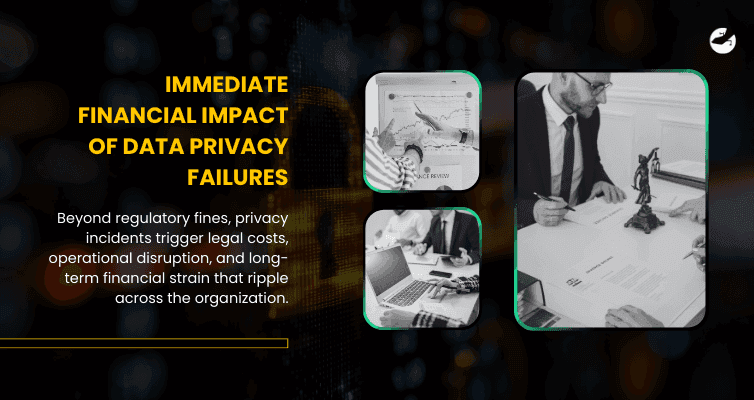
Beyond the penalties and legal costs, the operational impact on enterprises can be just as disruptive. With incident response pulling cross-functional teams into crisis mode forcing them to divert their attention from their strategic priorities. With this comes internal and external audits that are initiated to access compliance gaps often causing systems to be temporarily restricted and/or taken offline.
Do you know why Software Security is crucial for your business? Find out here.
Brand Trust Erosion: The Hidden Cost Enterprises Underestimate
An enterprises’ brand trust is one of the most fragile assets it holds. Customers share their data trusting that an organization has the ability to protect it and use it responsibly. When data privacy failure occurs this implicit agreement breaks. Causing customers to begin questioning the credibility of the organisation and just how seriously they value the privacy of their customers.

Rebuilding the trust, though not impossible, is a very slow and uneven process. Customers tend to remember the transparency in the organisation’s communication, how quickly it acted, if the accountability was taken seriously.
If an enterprise responds vaguely or defensively the damage worsens. On the other hand, those that acknowledge it and demonstrate strong improvement plans are at a better position of regaining credibility.
Want to find out how much it costs to build your dream app or web app?


The Impact of Data Privacy Failure on Market Value and Investor Confidence
The market value of an organisation is increasingly influenced by perceptions of risk and governance. Data privacy failures signal more than a security lapse. They raise concerns about leadership oversight, operational discipline, and long-term resilience.
For publicly traded enterprises, this can translate into immediate stock price volatility, followed by longer-term valuation adjustments as analysts reassess risk profiles.

This does not mean private enterprises are safe. Weak governance, unclear data ownership or a history of incidents can reduce negotiating power and delay strategic opportunities. Privacy failure becomes a direct hurdle to growth.
Data Privacy and Customer Experience: An Overlooked Connection
As touched on earlier in the blog, a customer’s perspective on data privacy is not one that is to be taken lightly. For them it is experienced through a clear consent mechanism, transparent communication, and confidence in the system that is promised.
Even a slight threat will negatively impact their entire digital experience, what more a data privacy failure. Users will always be hesitant in fully engaging with the platform, they’d drastically reduce the data they share or worse case scenario, they completely abandon a platform altogether.
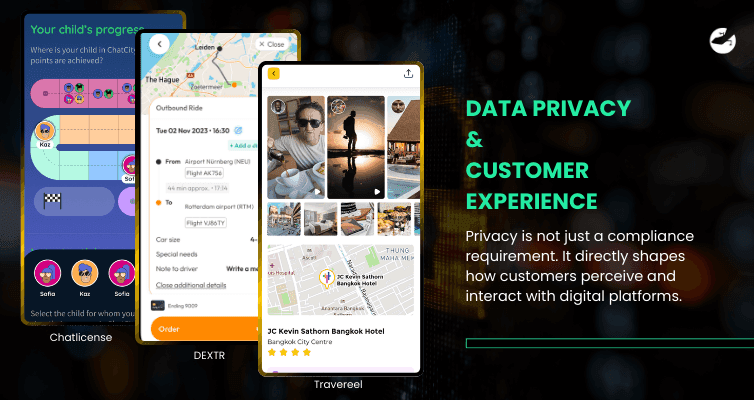
Enterprises need to understand this connection and ensure that their data privacy is an integral part of their user experience. From what we’ve seen over the years, privacy considerations must be embedded into digital products from the very beginning. Not only does this create interactions that feel trustworthy but this trust in return supports adoption, engagement, and long-term customer loyalty.
Regulatory Pressure and Compliance Complexity in 2026
The regulatory landscape around data protection like the GDPR, PDPA, CCPA, APAC frameworks is constantly evolving, introducing new interpretations, obligations, and enforcement. This can prove to be a challenge not just in the volume of regulation but the lack of uniformity in how these rules are applied across jurisdictions.
Enterprises are tasked with navigating the various requirements, enforcement practices and expectations, even more so ones that operate across multiple regions. Compliance is no longer an afterthought nor is it about meeting one standard. It is about managing the everchanging, and fragmented set of obligations.
From our experience, it’s important for enterprises to align legal interpretation with technical implementation early as this puts them in a position that enables them to adapt as regulations change. Failure to do so will lead to cycles of constant adjustment and responding to issues only after they surface.
Third-Party Risk: When Your Partners Damage Your Brand
With cloud platforms, SaaS tools, and external partners deeply embedded in daily operations, modern enterprises rarely operate in isolation. While these partnerships allow for speed and flexibility, it extends the enterprise data surface far beyond its internal systems. Every single integration introduces a new dependency, making it harder to maintain full visibility and control over sensitive information.
Even though contracts define responsibility, customers and regulators will always hold the organisation accountable when things go sideways. This is simply because in their eyes, it was the organization that collected their data, therefore they are accountable for it.
Here at Lizard Global, when we’re integrating third-party platforms or infrastructures we treat it as part of the architecture rather than an operational detail. Meaning that we always ensure that there are technical safeguards in place that limit the data that's exposed, continuously monitor how external systems interact with sensitive data, and govern models that define accountability across the entire system. This allows our clients to be better equipped to protect the trust of their customers, and at the same time benefit from external partnerships.
Learn how you can ensure top-notch security working with third-party vendors here.
Turning Privacy into a Competitive Advantage
By designing systems that minimize unnecessary data collection and enforcing clear cache controls, enterprises reduce exposure while increasing transparency. This is a hallmark of an enterprise that excels in data privacy, as they approach it as a strategic capability rather than a defensive necessity.
This level of maturity allows for faster decision-making, smoother audits, and stronger relationships with customers and partners. Simply because there is clear alignment between legal, tech and business teams around data governance.
We’ve seen that enterprises that practice this differentiate themselves by being ahead in the privacy pane, not just through compliance and also trust. In markets that are highly competitive, this trust becomes a solid advantage, supporting both their band strength and market value.
Lizard Global Helps Enterprises Protect Trust and Market Value
We’re not just all talk, we’ve the experience to back our claims. With over 13+ years of experience working with organizations of all sizes, we share the tried and tested methods that work. We’ve helped our clients design and build digital platforms that embed privacy into their architecture from the start, no compromises there.
By combining strategic thinking and hands-on execution, we help enterprises reduce risk while enabling sustainable growth. We understand that when done right, data privacy protects more than information, it safeguards brand trust, strengthens market position, and gives organisations the confidence to scale.

Ready to build a platform your users can trust that is secure, compliant, and built to scale? Send us a WhatsApp today to start the ball rolling.
Data privacy failures don’t just trigger fines — they quietly erode trust, disrupt operations, and put long-term enterprise value at risk. This article breaks down the real business cost of getting data privacy wrong, and why mature governance is now a competitive advantage.
A data privacy failure rarely starts as a headline. It usually begins with overlooked permission, a legacy system no one wants to touch, a third-party integration that “just works”. Until it doesn’t. By this time customers, regulators, or investors notice.
The damage has already moved beyond systems and spreadsheets. Trust is shaken. Brand credibility is questioned. Market value reacts fast and not always rationally.
For enterprise organizations, data privacy failures are no longer isolated security events. They are business-critical incidents with long-term consequences. Increasingly, they expose not just gaps in security, but gaps in strategy, governance, and digital maturity.
Understanding Data Privacy Failures in the Enterprise Context
When people hear “data privacy failure”, they often think of massive cyberattacks where systems are compromised and a vast amount of data has been leaked. But the truth is, the most damaging incidents seen are far more mundane.
They often include misuse where there is a collection of excessive data without clearly stated consent, legacy systems that can’t enforce modern privacy policies, or third-party exposure where vendors mishandle customer data.
Complexity is a risk multiplier in an enterprise environment. Multiple business units, global operations, even years of accumulated data make it harder to see where sensitive data lives, giving way to the inability to protect it.
Ever wondered why Big Data matters for your business? Read our blog: What is Big Data? And Why Does it Matter for Your Business?
The Immediate Financial Impact of Data Privacy Failures
When it comes to the financial impact of data privacy failures, regulatory fines are just the tip of the iceberg. While the cost enterprises bear hits fast, the time they spend cleaning up the mess lingers. Regulatory bodies impose penalties that reflect not only the severity of the incident but also the organisation’s overall governance maturity.
Beyond the penalties and legal costs, the operational impact on enterprises can be just as disruptive. With incident response pulling cross-functional teams into crisis mode forcing them to divert their attention from their strategic priorities. With this comes internal and external audits that are initiated to access compliance gaps often causing systems to be temporarily restricted and/or taken offline.
Do you know why Software Security is crucial for your business? Find out here.
Brand Trust Erosion: The Hidden Cost Enterprises Underestimate
An enterprises’ brand trust is one of the most fragile assets it holds. Customers share their data trusting that an organization has the ability to protect it and use it responsibly. When data privacy failure occurs this implicit agreement breaks. Causing customers to begin questioning the credibility of the organisation and just how seriously they value the privacy of their customers.
Rebuilding the trust, though not impossible, is a very slow and uneven process. Customers tend to remember the transparency in the organisation’s communication, how quickly it acted, if the accountability was taken seriously.
If an enterprise responds vaguely or defensively the damage worsens. On the other hand, those that acknowledge it and demonstrate strong improvement plans are at a better position of regaining credibility.
Want to find out how much it costs to build your dream app or web app?
The Impact of Data Privacy Failure on Market Value and Investor Confidence
The market value of an organisation is increasingly influenced by perceptions of risk and governance. Data privacy failures signal more than a security lapse. They raise concerns about leadership oversight, operational discipline, and long-term resilience.
For publicly traded enterprises, this can translate into immediate stock price volatility, followed by longer-term valuation adjustments as analysts reassess risk profiles.
This does not mean private enterprises are safe. Weak governance, unclear data ownership or a history of incidents can reduce negotiating power and delay strategic opportunities. Privacy failure becomes a direct hurdle to growth.
Data Privacy and Customer Experience: An Overlooked Connection
As touched on earlier in the blog, a customer’s perspective on data privacy is not one that is to be taken lightly. For them it is experienced through a clear consent mechanism, transparent communication, and confidence in the system that is promised.
Even a slight threat will negatively impact their entire digital experience, what more a data privacy failure. Users will always be hesitant in fully engaging with the platform, they’d drastically reduce the data they share or worse case scenario, they completely abandon a platform altogether.
Enterprises need to understand this connection and ensure that their data privacy is an integral part of their user experience. From what we’ve seen over the years, privacy considerations must be embedded into digital products from the very beginning. Not only does this create interactions that feel trustworthy but this trust in return supports adoption, engagement, and long-term customer loyalty.
Regulatory Pressure and Compliance Complexity in 2026
The regulatory landscape around data protection like the GDPR, PDPA, CCPA, APAC frameworks is constantly evolving, introducing new interpretations, obligations, and enforcement. This can prove to be a challenge not just in the volume of regulation but the lack of uniformity in how these rules are applied across jurisdictions.
Enterprises are tasked with navigating the various requirements, enforcement practices and expectations, even more so ones that operate across multiple regions. Compliance is no longer an afterthought nor is it about meeting one standard. It is about managing the everchanging, and fragmented set of obligations.
From our experience, it’s important for enterprises to align legal interpretation with technical implementation early as this puts them in a position that enables them to adapt as regulations change. Failure to do so will lead to cycles of constant adjustment and responding to issues only after they surface.
Third-Party Risk: When Your Partners Damage Your Brand
With cloud platforms, SaaS tools, and external partners deeply embedded in daily operations, modern enterprises rarely operate in isolation. While these partnerships allow for speed and flexibility, it extends the enterprise data surface far beyond its internal systems. Every single integration introduces a new dependency, making it harder to maintain full visibility and control over sensitive information.
Even though contracts define responsibility, customers and regulators will always hold the organisation accountable when things go sideways. This is simply because in their eyes, it was the organization that collected their data, therefore they are accountable for it.
Here at Lizard Global, when we’re integrating third-party platforms or infrastructures we treat it as part of the architecture rather than an operational detail. Meaning that we always ensure that there are technical safeguards in place that limit the data that's exposed, continuously monitor how external systems interact with sensitive data, and govern models that define accountability across the entire system. This allows our clients to be better equipped to protect the trust of their customers, and at the same time benefit from external partnerships.
Learn how you can ensure top-notch security working with third-party vendors here.
Turning Privacy into a Competitive Advantage
By designing systems that minimize unnecessary data collection and enforcing clear cache controls, enterprises reduce exposure while increasing transparency. This is a hallmark of an enterprise that excels in data privacy, as they approach it as a strategic capability rather than a defensive necessity.
This level of maturity allows for faster decision-making, smoother audits, and stronger relationships with customers and partners. Simply because there is clear alignment between legal, tech and business teams around data governance.
We’ve seen that enterprises that practice this differentiate themselves by being ahead in the privacy pane, not just through compliance and also trust. In markets that are highly competitive, this trust becomes a solid advantage, supporting both their band strength and market value.
Lizard Global Helps Enterprises Protect Trust and Market Value
We’re not just all talk, we’ve the experience to back our claims. With over 13+ years of experience working with organizations of all sizes, we share the tried and tested methods that work. We’ve helped our clients design and build digital platforms that embed privacy into their architecture from the start, no compromises there.
By combining strategic thinking and hands-on execution, we help enterprises reduce risk while enabling sustainable growth. We understand that when done right, data privacy protects more than information, it safeguards brand trust, strengthens market position, and gives organisations the confidence to scale.
Ready to build a platform your users can trust that is secure, compliant, and built to scale? Send us a WhatsApp today to start the ball rolling.
FAQs

What is considered a data privacy failure in an enterprise context?
Why do data privacy failures damage brand trust so quickly?
How do data privacy incidents impact enterprise market value?
Are regulatory fines the biggest risk of data privacy failures?
Why is third-party risk such a major factor in data privacy failures?
How does data privacy affect customer experience?
Can strong data privacy practices become a competitive advantage?
similar reads

Case Studies & Interviews
Client Review: Building A Custom Engagement App For MRT Corp
20 August 2026

Case Studies & Interviews
Lereng Tanah: Developing a Direct Booking Platform Malaysian Boutique Villa
29 January 2026

Case Studies & Interviews
Tactlink: How a Malaysian Entrepreneur Turned Networking Chaos into a Digital Community
22 January 2026
Stuck between a great idea and the right team to build it?Let's talk.
We work with corporate innovation teams and ambitious scale-ups across the Netherlands, Singapore, and Australia, and wherever great software needs to be built. Drop us a message and we'll get back to you within one business day.


Markus Monnikendam
Global Commercial Director
hello@lizard.global