Enterprise Workflow Reengineering with AI Agents and Intelligent Automation

29 Apr 2026
by Nadiy, Senior Content Writer
29 Apr 2026
by Nadiy, Senior Content Writer
Enterprise Workflow Reengineering with AI Agents and Intelligent Automation
Table of contents
Contact us
We will get back to you in the next 48 hours.
Enterprise workflow reengineering is entering a new era, powered by Agentic AI for Enterprise and intelligent automation. Organizations are no longer just optimizing processes—they are redesigning them entirely using autonomous AI agents that can reason, act, and continuously improve outcomes. This shift enables businesses to move faster, reduce operational costs, and unlock new levels of productivity. In this blog, we explore how agentic workflows, enterprise AI orchestration, and AI digital labor are reshaping modern enterprises. We also examine the role of governance, human oversight, and scalable technology architecture in making this transformation successful. Finally, we highlight how forward-thinking partners like Lizard Global help organizations design, build, and scale these intelligent systems effectively.
key takeaways
Enterprise workflows have traditionally been rigid, rule-based, and heavily dependent on human intervention. While automation has existed for years, most legacy systems still rely on predefined logic that cannot adapt to changing business conditions. As a result, inefficiencies persist, and scaling becomes increasingly complex.
However, the rise of Autonomous AI Agents is changing this reality. These systems can analyze data, make decisions, and execute tasks without constant human input. As businesses face growing pressure to innovate, workflow reengineering is no longer a luxury—it is a necessity. Companies that fail to adapt risk falling behind more agile competitors.
Moreover, digital transformation is no longer just about technology adoption. It is about fundamentally redesigning how work gets done. This is where a digital transformation partner with deep expertise in enterprise systems becomes critical. By aligning business goals with advanced AI capabilities, organizations can unlock meaningful and measurable change.
Understanding Agentic AI for Enterprise
Agentic AI for Enterprise represents a shift from passive AI systems to proactive, decision-making entities. Unlike traditional models that require explicit instructions, agentic systems operate with a degree of autonomy, enabling them to plan, execute, and optimize workflows dynamically.
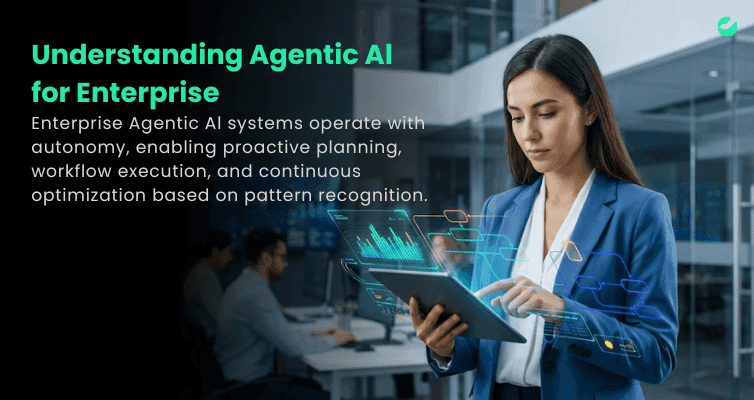
For example, in a customer support environment, an AI agent can handle inquiries, escalate complex issues, and even suggest process improvements based on patterns it identifies. This creates a continuous feedback loop where the system becomes more efficient over time, similar to how Narrates AI automates complex content processes.
At the same time, organizations must understand the distinction between Deterministic vs. Agentic AI. Deterministic systems follow fixed rules, while agentic systems adapt and learn. Both have their place, but enterprises that leverage agentic capabilities gain a significant competitive advantage in flexibility and responsiveness.
Want to find out how much it costs to build your dream app or web app?


Building Scalable Agentic Workflows Across the Enterprise
Agentic Workflows are not just about automating individual tasks. Instead, they connect multiple processes into cohesive, intelligent systems that can operate across departments. This requires a robust foundation of Enterprise AI Orchestration, where different agents collaborate seamlessly.
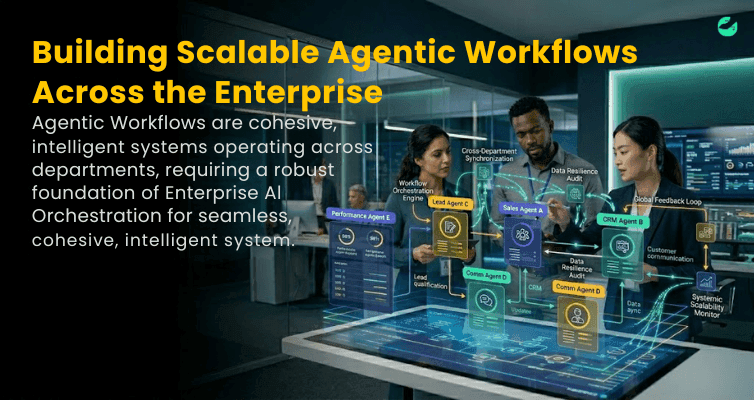
For instance, a sales workflow could involve AI agents handling lead qualification, CRM updates, customer communication, and performance tracking. When orchestrated correctly, these agents work together to deliver outcomes faster and with greater accuracy than traditional systems.
However, scalability requires more than just technology. It demands thoughtful architecture, strong integration capabilities, and a clear understanding of business processes. This is where a full-stack digital solutions agency can add significant value by designing systems that are both scalable and resilient.
AI Digital Labor: Redefining the Workforce
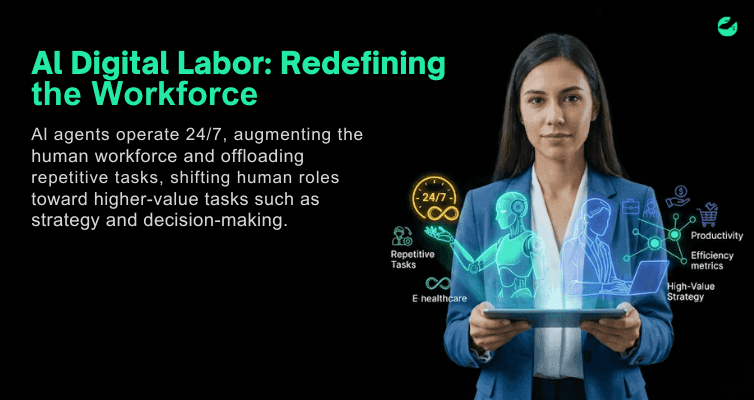
AI Digital Labor is fundamentally reshaping how organizations think about productivity. Instead of relying solely on human employees, businesses can now augment their workforce with AI agents that operate 24/7 without fatigue.
This does not mean replacing humans. Instead, it shifts their role toward higher-value tasks such as strategy, creativity, and decision-making. By offloading repetitive work to AI, organizations can unlock new levels of efficiency while improving employee satisfaction.
Furthermore, industries such as finance, healthcare, and e-commerce are already seeing significant benefits. From automated compliance checks to intelligent inventory management, AI digital labor is proving to be a powerful driver of innovation. When combined with web app development services and mobile app development agency capabilities, these solutions can be seamlessly integrated into existing ecosystems.
Governance, Compliance, and Trust in AI Systems
As AI systems become more autonomous, governance becomes increasingly important. Organizations must implement AI Guardrails to ensure that agents operate within defined boundaries and adhere to regulatory requirements, much like the security and ISO compliance standards required for enterprise-grade software.
In addition, Human-in-the-Loop (HITL) models provide a layer of oversight, allowing humans to intervene when necessary. This is particularly important in high-stakes environments such as healthcare or financial services, where errors can have serious consequences.
Another critical component is AI Observability & Audit Logs. These tools provide transparency into how decisions are made, enabling organizations to monitor performance and ensure accountability. Together, these elements form the foundation of Agentic Governance & Compliance, which is essential for building trust in AI systems.
Designing Intelligent Systems with a User-First Approach
While technology is a key enabler, user experience remains a critical factor in the success of AI-driven systems. Poorly designed interfaces can hinder adoption, even if the underlying technology is powerful.
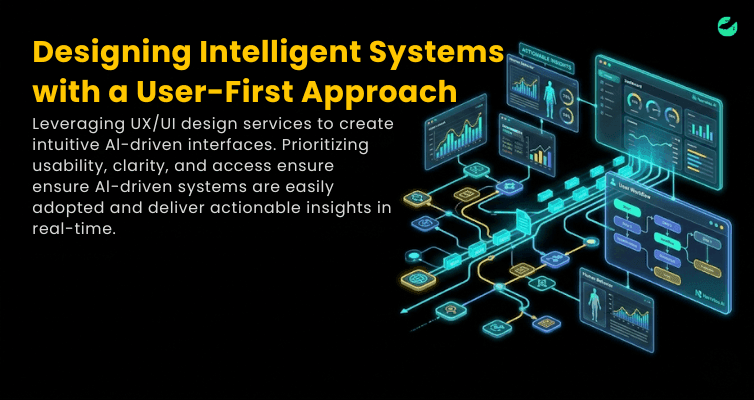
This is why UI/UX design services play a crucial role in enterprise workflow reengineering. By focusing on usability, clarity, and accessibility, organizations can ensure that both employees and customers benefit from AI-driven solutions.
Moreover, integrating UX/UI product design with AI capabilities allows for more intuitive interactions. For example, dashboards powered by growth analytics consulting can provide actionable insights in real time, enabling users to make informed decisions. This combination of design and technology is essential for driving long-term success.
The Role of Custom Development in Enterprise AI Transformation
Every enterprise has unique needs, which means off-the-shelf solutions often fall short. This is where a custom software development company becomes invaluable. By building tailored solutions, organizations can ensure that their AI systems align perfectly with their business objectives.
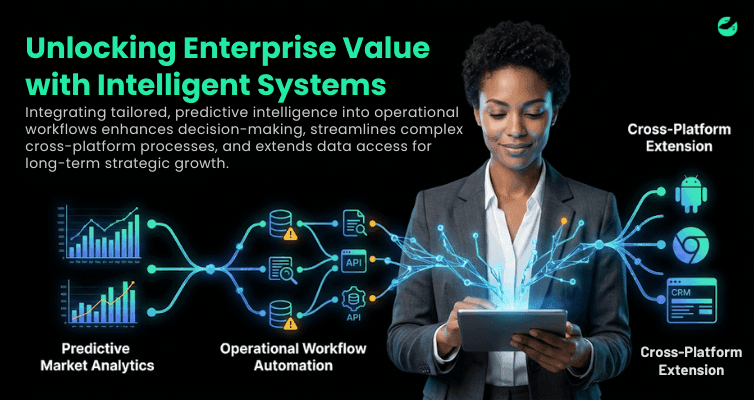
Custom development also enables deeper integration with existing systems, such as CRM integration services and internal databases. This creates a unified ecosystem where data flows seamlessly across different platforms, enhancing efficiency and decision-making.
Additionally, capabilities such as iOS app development, Android app development, hybrid app development, and progressive web app development allow organizations to extend AI-powered workflows to mobile environments. This ensures that employees and customers can access intelligent systems anytime, anywhere.
Why Lizard Global Leads in Enterprise AI and Workflow Reengineering
Successfully implementing agentic workflows requires more than just technical expertise. It demands a holistic approach that combines strategy, design, development, and continuous optimization. This is where Lizard Global stands out as a leading design thinking partner.
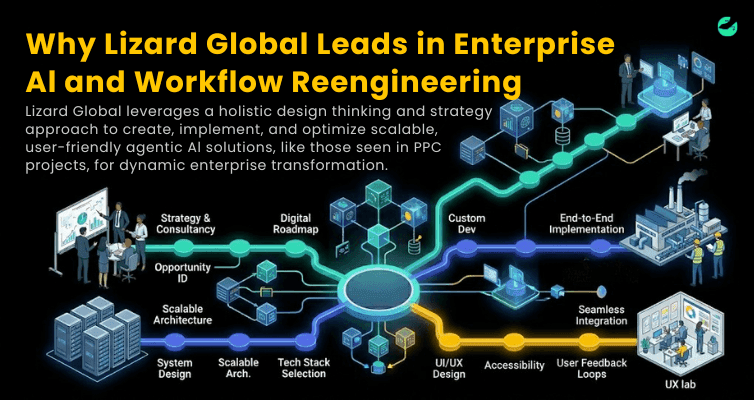
With a strong foundation in digital consultancy services, Lizard Global helps organizations identify opportunities for AI-driven transformation. From there, they design scalable architectures, develop custom solutions, and ensure seamless integration across systems, as seen in complex projects like Pipeline Pre-commissioning (PPC).
Moreover, their expertise in UI/UX design, web app development, and mobile app development ensures that solutions are not only functional but also user-friendly. By combining technical excellence with a deep understanding of business needs, Lizard Global positions itself as a trusted partner for enterprises looking to lead in the age of AI.
The Future of Enterprise AI: From Automation to Autonomy
Looking ahead, the evolution of enterprise AI will continue to accelerate. Organizations will move from basic automation to fully autonomous systems that can manage entire workflows with minimal human intervention.
This shift will unlock new possibilities, from predictive decision-making to self-optimizing operations. However, it will also require a strong focus on governance, ethics, and transparency to ensure responsible AI adoption.
Ultimately, the organizations that succeed will be those that embrace change and invest in the right partnerships. By leveraging Agentic AI for Enterprise and intelligent automation, businesses can not only improve efficiency but also redefine what is possible in the digital age.
Transform Your Enterprise with AI-Driven Workflows
Ready to reengineer your workflows and unlock the full potential of AI?
Partner with Lizard Global to design and implement scalable, intelligent systems tailored to your business. Whether you need enterprise AI orchestration, custom software, or end-to-end digital transformation, our experts are here to help.
Get in touch todayand start building the future of your enterprise.
Enterprise workflow reengineering is entering a new era, powered by Agentic AI for Enterprise and intelligent automation. Organizations are no longer just optimizing processes—they are redesigning them entirely using autonomous AI agents that can reason, act, and continuously improve outcomes. This shift enables businesses to move faster, reduce operational costs, and unlock new levels of productivity. In this blog, we explore how agentic workflows, enterprise AI orchestration, and AI digital labor are reshaping modern enterprises. We also examine the role of governance, human oversight, and scalable technology architecture in making this transformation successful. Finally, we highlight how forward-thinking partners like Lizard Global help organizations design, build, and scale these intelligent systems effectively.
Enterprise workflows have traditionally been rigid, rule-based, and heavily dependent on human intervention. While automation has existed for years, most legacy systems still rely on predefined logic that cannot adapt to changing business conditions. As a result, inefficiencies persist, and scaling becomes increasingly complex.
However, the rise of Autonomous AI Agents is changing this reality. These systems can analyze data, make decisions, and execute tasks without constant human input. As businesses face growing pressure to innovate, workflow reengineering is no longer a luxury—it is a necessity. Companies that fail to adapt risk falling behind more agile competitors.
Moreover, digital transformation is no longer just about technology adoption. It is about fundamentally redesigning how work gets done. This is where a digital transformation partner with deep expertise in enterprise systems becomes critical. By aligning business goals with advanced AI capabilities, organizations can unlock meaningful and measurable change.
Understanding Agentic AI for Enterprise
Agentic AI for Enterprise represents a shift from passive AI systems to proactive, decision-making entities. Unlike traditional models that require explicit instructions, agentic systems operate with a degree of autonomy, enabling them to plan, execute, and optimize workflows dynamically.
For example, in a customer support environment, an AI agent can handle inquiries, escalate complex issues, and even suggest process improvements based on patterns it identifies. This creates a continuous feedback loop where the system becomes more efficient over time, similar to how Narrates AI automates complex content processes.
At the same time, organizations must understand the distinction between Deterministic vs. Agentic AI. Deterministic systems follow fixed rules, while agentic systems adapt and learn. Both have their place, but enterprises that leverage agentic capabilities gain a significant competitive advantage in flexibility and responsiveness.
Want to find out how much it costs to build your dream app or web app?
Building Scalable Agentic Workflows Across the Enterprise
Agentic Workflows are not just about automating individual tasks. Instead, they connect multiple processes into cohesive, intelligent systems that can operate across departments. This requires a robust foundation of Enterprise AI Orchestration, where different agents collaborate seamlessly.
For instance, a sales workflow could involve AI agents handling lead qualification, CRM updates, customer communication, and performance tracking. When orchestrated correctly, these agents work together to deliver outcomes faster and with greater accuracy than traditional systems.
However, scalability requires more than just technology. It demands thoughtful architecture, strong integration capabilities, and a clear understanding of business processes. This is where a full-stack digital solutions agency can add significant value by designing systems that are both scalable and resilient.
AI Digital Labor: Redefining the Workforce
AI Digital Labor is fundamentally reshaping how organizations think about productivity. Instead of relying solely on human employees, businesses can now augment their workforce with AI agents that operate 24/7 without fatigue.
This does not mean replacing humans. Instead, it shifts their role toward higher-value tasks such as strategy, creativity, and decision-making. By offloading repetitive work to AI, organizations can unlock new levels of efficiency while improving employee satisfaction.
Furthermore, industries such as finance, healthcare, and e-commerce are already seeing significant benefits. From automated compliance checks to intelligent inventory management, AI digital labor is proving to be a powerful driver of innovation. When combined with web app development services and mobile app development agency capabilities, these solutions can be seamlessly integrated into existing ecosystems.
Governance, Compliance, and Trust in AI Systems
As AI systems become more autonomous, governance becomes increasingly important. Organizations must implement AI Guardrails to ensure that agents operate within defined boundaries and adhere to regulatory requirements, much like the security and ISO compliance standards required for enterprise-grade software.
In addition, Human-in-the-Loop (HITL) models provide a layer of oversight, allowing humans to intervene when necessary. This is particularly important in high-stakes environments such as healthcare or financial services, where errors can have serious consequences.
Another critical component is AI Observability & Audit Logs. These tools provide transparency into how decisions are made, enabling organizations to monitor performance and ensure accountability. Together, these elements form the foundation of Agentic Governance & Compliance, which is essential for building trust in AI systems.
Designing Intelligent Systems with a User-First Approach
While technology is a key enabler, user experience remains a critical factor in the success of AI-driven systems. Poorly designed interfaces can hinder adoption, even if the underlying technology is powerful.
This is why UI/UX design services play a crucial role in enterprise workflow reengineering. By focusing on usability, clarity, and accessibility, organizations can ensure that both employees and customers benefit from AI-driven solutions.
Moreover, integrating UX/UI product design with AI capabilities allows for more intuitive interactions. For example, dashboards powered by growth analytics consulting can provide actionable insights in real time, enabling users to make informed decisions. This combination of design and technology is essential for driving long-term success.
The Role of Custom Development in Enterprise AI Transformation
Every enterprise has unique needs, which means off-the-shelf solutions often fall short. This is where a custom software development company becomes invaluable. By building tailored solutions, organizations can ensure that their AI systems align perfectly with their business objectives.
Custom development also enables deeper integration with existing systems, such as CRM integration services and internal databases. This creates a unified ecosystem where data flows seamlessly across different platforms, enhancing efficiency and decision-making.
Additionally, capabilities such as iOS app development, Android app development, hybrid app development, and progressive web app development allow organizations to extend AI-powered workflows to mobile environments. This ensures that employees and customers can access intelligent systems anytime, anywhere.
Why Lizard Global Leads in Enterprise AI and Workflow Reengineering
Successfully implementing agentic workflows requires more than just technical expertise. It demands a holistic approach that combines strategy, design, development, and continuous optimization. This is where Lizard Global stands out as a leading design thinking partner.
With a strong foundation in digital consultancy services, Lizard Global helps organizations identify opportunities for AI-driven transformation. From there, they design scalable architectures, develop custom solutions, and ensure seamless integration across systems, as seen in complex projects like Pipeline Pre-commissioning (PPC).
Moreover, their expertise in UI/UX design, web app development, and mobile app development ensures that solutions are not only functional but also user-friendly. By combining technical excellence with a deep understanding of business needs, Lizard Global positions itself as a trusted partner for enterprises looking to lead in the age of AI.
The Future of Enterprise AI: From Automation to Autonomy
Looking ahead, the evolution of enterprise AI will continue to accelerate. Organizations will move from basic automation to fully autonomous systems that can manage entire workflows with minimal human intervention.
This shift will unlock new possibilities, from predictive decision-making to self-optimizing operations. However, it will also require a strong focus on governance, ethics, and transparency to ensure responsible AI adoption.
Ultimately, the organizations that succeed will be those that embrace change and invest in the right partnerships. By leveraging Agentic AI for Enterprise and intelligent automation, businesses can not only improve efficiency but also redefine what is possible in the digital age.
Transform Your Enterprise with AI-Driven Workflows
Ready to reengineer your workflows and unlock the full potential of AI?
Partner with Lizard Global to design and implement scalable, intelligent systems tailored to your business. Whether you need enterprise AI orchestration, custom software, or end-to-end digital transformation, our experts are here to help.
Get in touch todayand start building the future of your enterprise.
FAQs

What is enterprise workflow reengineering with AI agents?
How do agentic workflows differ from traditional automation?
What is enterprise AI orchestration?
Why is governance important in AI-driven workflows?
Can AI digital labor replace human employees?
What role does UX design play in AI systems?
Why should enterprises choose a custom development approach?


Stuck between a great idea and the right team to build it?Let's talk.
We work with corporate innovation teams and ambitious scale-ups across the Netherlands, Singapore, and Australia, and wherever great software needs to be built. Drop us a message and we'll get back to you within one business day.


Markus Monnikendam
Global Commercial Director
hello@lizard.global