Software Modernization: When Legacy Systems Block Business Growth
18 Mar 2026
by Team Lizard Global
Editor: Nadiy, Senior Content Writer
18 Mar 2026
by Team Lizard Global
Editor: Nadiy, Senior Content Writer
Software Modernization: When Legacy Systems Block Business Growth
Table of contents
Clear Signs Your Legacy Software Is Blocking Growth
Software Modernization as a Strategic Growth Lever
Modernization Approaches: Rewrite, Refactor, or Replatform?
UI/UX Modernization: The Overlooked Competitive Advantage
Data, CRM Integration, and Growth Analytics: Modernization Beyond Code
Enterprise Security, Compliance, and Scalability Considerations
From Maintenance Mode to Innovation Mode
Choosing the Right Digital Transformation Partner
Ready to Turn Legacy Systems into Growth Engines?
Contact us
We will get back to you in the next 48 hours.
Legacy software often feels stable and reliable. However, as markets shift and customer expectations rise, outdated systems quietly become growth barriers. They restrict integrations, limit data visibility, increase security risks, and slow product innovation. For enterprise organizations and scale-ups, software modernization is no longer optional. It is a strategic move that enables scalability, automation, and long-term resilience. In this article, we explore when legacy systems block business growth, how to recognize modernization triggers, and how a structured approach can reduce risk. We also share insights from real-world projects that demonstrate how the right digital transformation partner can turn aging infrastructure into scalable, future-ready digital platforms.
key takeaways
At first glance, legacy systems seem harmless. They still function. Teams know how to use them. Processes are built around them. However, over time, these systems quietly accumulate technical debt that slows innovation and increases operational risk.
For enterprise companies and scale-ups, this becomes especially dangerous. When competitors launch new digital services faster, integrate AI capabilities, or personalize customer journeys in real time, legacy infrastructure struggles to keep up. As a result, product roadmaps slow down, IT budgets increase, and internal teams spend more time maintaining systems than building new value.
Moreover, legacy systems often rely on outdated architectures that lack API flexibility. Consequently, integrating with modern SaaS platforms, CRM tools, or analytics solutions becomes complex and expensive. Instead of enabling growth, technology becomes a bottleneck.
This is precisely where a strategic custom software development company steps in. Modernization is not about rewriting everything. It is about identifying what limits business performance and redesigning systems to support long-term scalability.
Clear Signs Your Legacy Software Is Blocking Growth
Many leadership teams hesitate to modernize because their systems “still work.” However, growth stagnation rarely happens overnight. It emerges gradually. Therefore, recognizing early warning signs is critical.
1. Slow Feature Deployment
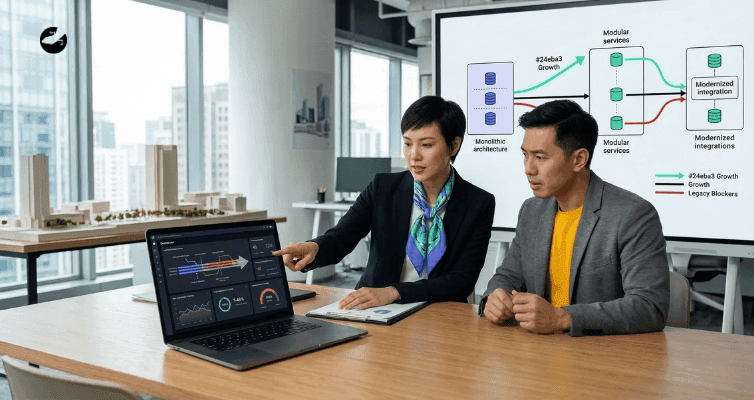
If releasing a new feature takes months instead of weeks, your architecture likely lacks modularity. Monolithic systems slow down innovation because every change affects the entire ecosystem.
2. Integration Challenges
When connecting to third-party tools requires heavy customization or manual processes, your business loses agility. Modern platforms depend on API-first design. Legacy systems often do not support that flexibility.
3. Rising Maintenance Costs
If more than 60 percent of your IT budget goes to maintaining old infrastructure, growth initiatives suffer. Instead of investing in innovation, you are paying to keep outdated systems alive.
4. Poor User Experience
Outdated interfaces damage brand perception. Enterprise clients and end-users expect intuitive digital experiences. Without strong UI/UX design services, even powerful backend systems fail to deliver value.
For instance, in several digital transformation projects featured on Lizard Global’s portfolio, companies initially approached modernization due to user dissatisfaction rather than system crashes. The real issue was experience, not stability. Once redesigned with structured UX/UI product design, adoption rates increased significantly.
Software Modernization as a Strategic Growth Lever
Modernization is often perceived as an IT initiative. In reality, it is a growth strategy. When executed correctly, software modernization enables:
- Faster product releases
- Better data insights
- Improved scalability
- Enhanced cybersecurity
- Seamless cross-platform experiences
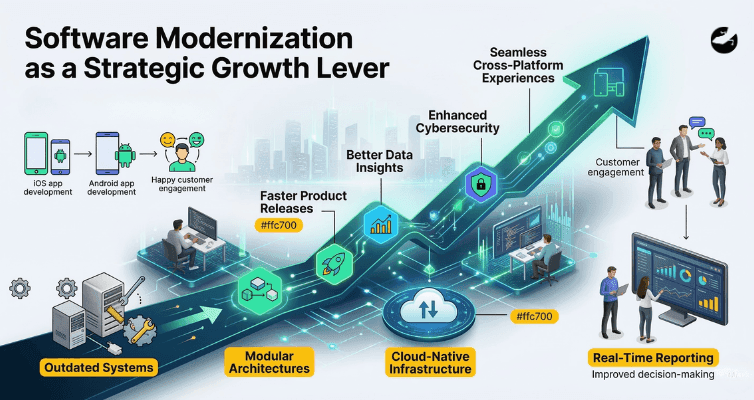
Instead of patching outdated systems, forward-thinking organizations adopt modular architectures, cloud-native infrastructure, and API-driven ecosystems. As a result, they can launch new digital products rapidly without disrupting existing operations.
For example, organizations that transitioned from legacy internal tools to scalable web platforms through structured web app development services unlocked automation and real-time reporting. These changes directly improved decision-making and operational efficiency.
Likewise, companies investing in scalable mobile app development agency expertise often transform internal processes into customer-facing digital platforms. Whether through iOS app development, Android app development, or hybrid app development, modernization extends beyond infrastructure. It reshapes customer engagement.
Modernization Approaches: Rewrite, Refactor, or Replatform?
Not all modernization strategies are equal. Choosing the wrong approach increases risk. Therefore, decision-makers must evaluate business goals before selecting a path forward.
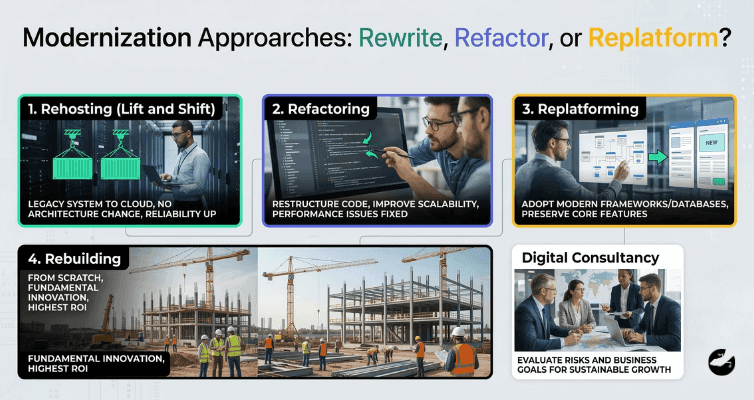
1. Rehosting (Lift and Shift)
This involves moving legacy systems to the cloud without changing architecture. It improves infrastructure reliability but does not solve structural limitations.
2. Refactoring
Here, developers restructure existing code to improve scalability and maintainability. This works when the core system still aligns with business needs but suffers from performance issues.
3. Replatforming
Organizations adopt modern frameworks and databases while preserving certain core functionalities. This balances speed and transformation.
4. Rebuilding
When systems fundamentally limit innovation, rebuilding from scratch becomes necessary. Although riskier upfront, it often delivers the highest long-term ROI.
A seasoned digital consultancy services provider helps evaluate these options based on technical feasibility and commercial impact. The goal is not transformation for the sake of change. The goal is sustainable growth.
UI/UX Modernization: The Overlooked Competitive Advantage
Technology upgrades alone do not guarantee success. User experience determines adoption. Many legacy platforms were built with functionality in mind, not usability. Over time, interfaces become cluttered, workflows complex, and performance inconsistent. Consequently, employees resist internal systems, and customers abandon digital platforms.
Modernization must include structured UX/UI product design and research. Through workshops, testing, and iterative validation, companies can rebuild digital interfaces around real user needs.
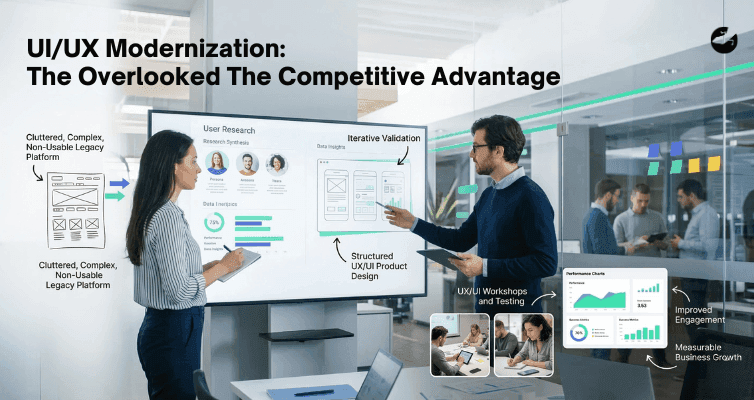
In several case examples from Lizard Global’s works portfolio, redesigning digital platforms resulted in measurable improvements. Engagement increased. Conversion rates improved. Operational errors decreased. The backend infrastructure remained robust, but the experience layer transformed performance outcomes.
Furthermore, modern design systems enable scalable consistency across platforms, including progressive web app development and mobile applications. This ensures a unified brand experience.
Data, CRM Integration, and Growth Analytics: Modernization Beyond Code
Legacy systems often trap data in silos. As a result, leadership lacks real-time insights. Modernization enables centralized data architecture and seamless CRM integration services. With unified data pipelines, organizations gain visibility into customer behavior, operational performance, and product adoption.
Additionally, incorporating growth analytics consulting during modernization ensures that systems capture meaningful metrics from day one. Instead of retrofitting dashboards later, analytics becomes embedded within the architecture.
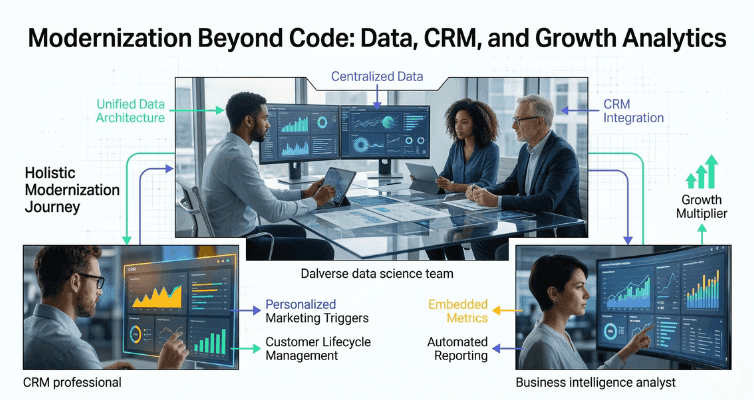
For example, businesses that modernized internal platforms while integrating CRM systems gained automated reporting, personalized marketing triggers, and improved customer lifecycle management. These changes directly influenced revenue growth.
This is where a full-stack digital solutions agency adds value. Modernization spans backend infrastructure, frontend experience, analytics, and strategic positioning. It requires holistic thinking.
Enterprise Security, Compliance, and Scalability Considerations
Security risks increase significantly with outdated systems. Unsupported software, limited encryption protocols, and patch management gaps expose organizations to cyber threats.
Modern cloud-native architectures, containerization, and CI/CD pipelines improve security posture. However, modernization must follow compliance standards like GDPR or PDPA relevant to industry and geography.
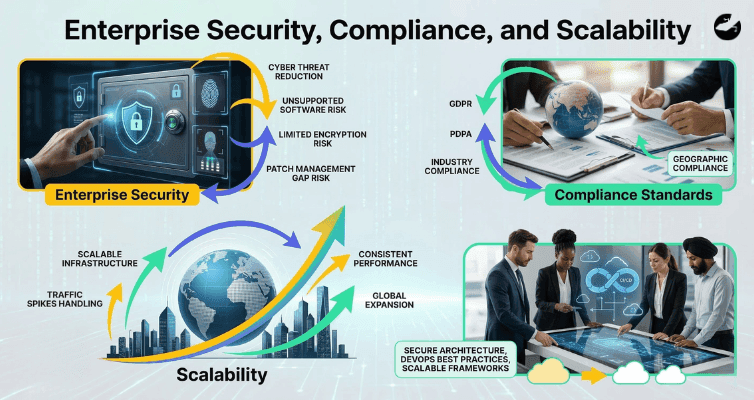
Additionally, scalability matters. Legacy systems often struggle with traffic spikes, especially when organizations expand globally. Migrating to scalable infrastructure ensures consistent performance under growth pressure.
As a trusted digital transformation partner, Lizard Global approaches modernization through secure architecture, DevOps best practices, and scalable frameworks. This ensures resilience without sacrificing agility.
From Maintenance Mode to Innovation Mode
Organizations stuck in maintenance mode cannot compete effectively. When IT teams spend most of their time fixing issues, innovation stalls. Modernization shifts focus from reactive maintenance to proactive innovation. Teams gain time to experiment with AI, automation, and advanced personalization. Product roadmaps accelerate.
For instance, companies transitioning from outdated internal management tools to scalable digital ecosystems unlocked faster feature deployment cycles. Agile workflows replaced rigid release schedules. Cross-functional collaboration improved.
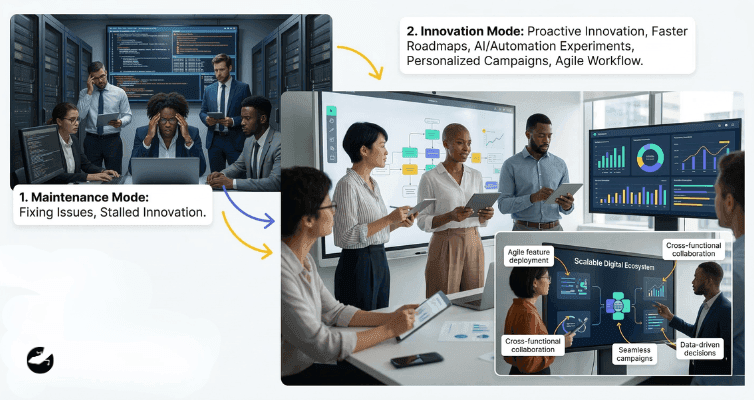
Moreover, integrating digital marketing strategy services with modernized platforms enables seamless campaign deployment and data-driven decision-making. Technology and growth strategies finally align.
Choosing the Right Digital Transformation Partner
Modernization projects fail when organizations underestimate complexity. Therefore, selecting the right partner becomes critical. A qualified custom software development company does more than write code. It conducts technical audits, aligns stakeholders, validates assumptions, and designs scalable architectures.
Similarly, a forward-thinking mobile app development agency ensures that modernization extends across platforms. Web and mobile ecosystems must operate seamlessly.
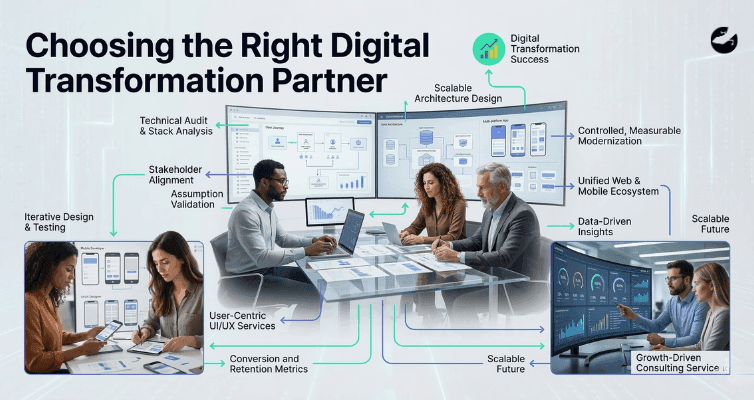
Lizard Global positions itself as a strategic digital transformation partner, combining web app development services, UI/UX design services, and consultancy expertise. Through structured discovery workshops and iterative development, modernization becomes controlled and measurable rather than disruptive.
The difference lies in execution discipline and strategic clarity.
Ready to Turn Legacy Systems into Growth Engines?
If your legacy software is slowing innovation, increasing operational costs, or limiting scalability, now is the time to act. Partner with a strategic digital transformation partner that understands enterprise complexity.

At Lizard Global, we combine digital consultancy services, full-stack engineering, and human-centered design to deliver scalable, secure, and future-ready platforms.
Let’s transform your legacy systems into competitive advantages. Book amodernization strategy session today and unlock your next phase of growth.
FAQs
When should enterprises prioritize software modernization?
How do we calculate ROI for a legacy system upgrade?
What is the safest approach to modernizing mission-critical systems?
Can modernization improve customer acquisition and retention?
How long does enterprise software modernization typically take?
Should we rebuild or refactor our legacy system?
How do we minimize disruption during modernization?
similar reads

Case Studies & Interviews
Lereng Tanah: Developing a Direct Booking Platform Malaysian Boutique Villa
29 January 2026

Case Studies & Interviews
Tactlink: How a Malaysian Entrepreneur Turned Networking Chaos into a Digital Community
22 January 2026

Software Development
Best Practices for Developing Secure and Scalable eCommerce Platforms
10 June 2025
Stuck between a great idea and the right team to build it?Let's talk.
We work with corporate innovation teams and ambitious scale-ups across the Netherlands, Singapore, and Australia, and wherever great software needs to be built. Drop us a message and we'll get back to you within one business day.


Markus Monnikendam
Global Commercial Director
hello@lizard.global