Choosing the Right Tech Stack for Enterprise Products: Cost, Risk & Longevity

01 Apr 2026
by Nadiy, Senior Content Writer
01 Apr 2026
by Nadiy, Senior Content Writer
Choosing the Right Tech Stack for Enterprise Products: Cost, Risk & Longevity
Table of contents
Contact us
We will get back to you in the next 48 hours.
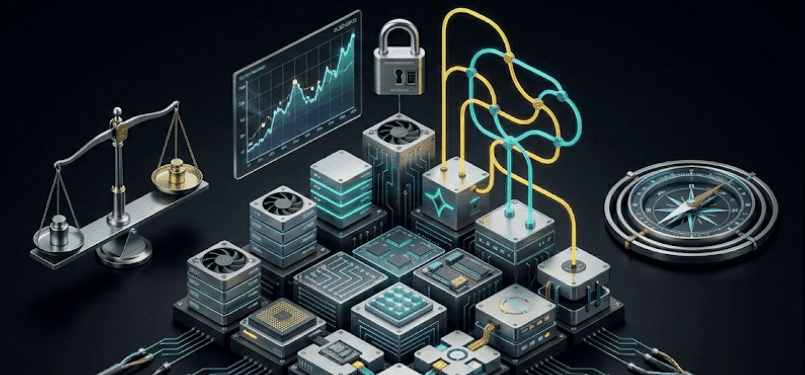
Selecting the right technology stack is one of the most critical decisions in enterprise product development. It directly influences scalability, long-term maintenance costs, development speed, and overall product success. This guide explores how enterprises can evaluate tech stacks through the lenses of cost, risk, and longevity, while aligning with business goals and market demands. Drawing from real-world experience as a custom software development company and digital transformation partner, this blog provides actionable insights, practical frameworks, and examples inspired by projects delivered by Lizard Global. Whether you're building a mobile app, web platform, or enterprise system, this guide helps you make informed, future-proof decisions.
key takeaways
Choosing the right technology stack is one of the most critical decisions for any enterprise product. It’s more than just picking programming languages or frameworks, it’s about shaping the future of your platform, controlling costs, managing risk, and ensuring long-term scalability.
The decisions you make today will determine how quickly your product evolves, how easily it integrates with other systems, and how resilient it remains in a fast-changing market.
With the right strategy and guidance from a full-stack digital solutions agency like Lizard Global, enterprises can confidently select a tech stack that balances performance, longevity, and business impact.
1. Why Tech Stack Decisions Define Enterprise Success
Too often, businesses focus on speed or cost alone. While these factors matter, they rarely tell the full story. A cheaper or faster solution might look appealing initially, but it can introduce limitations that become expensive to fix later. As a result, companies end up rewriting entire systems, losing both time and momentum.
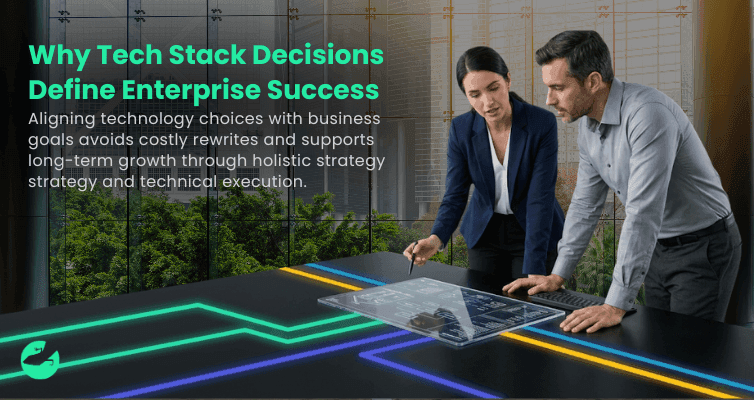
From our experience delivering web app development services and enterprise platforms, the most successful projects start with clarity. They align business goals, user needs, and technical feasibility early on. This alignment ensures that the chosen stack supports both immediate delivery and long-term growth.
Moreover, working with a digital consultancy services provider helps organizations bridge the gap between business strategy and technical execution. This ensures that decisions are not made in silos but instead reflect a holistic understanding of the product ecosystem.
2. Understanding the True Cost of a Tech Stack
When evaluating a tech stack, cost goes far beyond initial development expenses. In fact, development cost is often just a fraction of the total cost of ownership (TCO). Maintenance, scalability, infrastructure, and team expertise all contribute to the long-term financial impact.
For example, choosing a niche or outdated technology might reduce upfront costs. However, it can significantly increase hiring costs and slow down development later. On the other hand, modern and widely adopted technologies may require higher initial investment but offer better long-term efficiency.
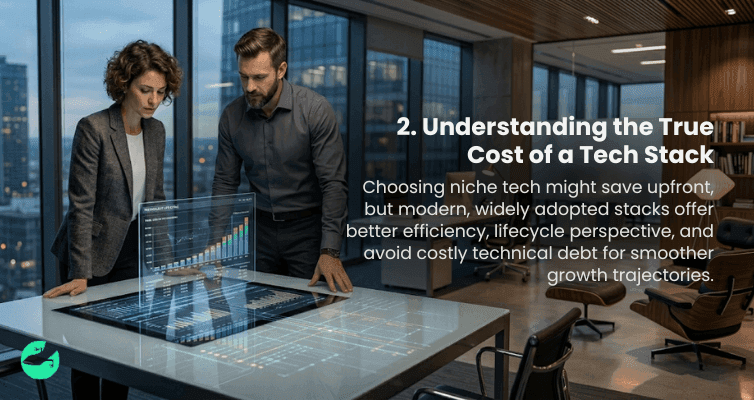
In several projects showcased on Lizard Global’s works portfolio, such as the digital transformation for Elfi & Iggi, scalable architectures were prioritized over quick wins. This allowed businesses to expand their platforms without costly rebuilds. By investing early in the right stack, they avoided technical debt and ensured smoother growth trajectories.
Additionally, factors like CRM integration services, analytics tools, and third-party dependencies must be considered. These integrations can either streamline operations or create bottlenecks, depending on how well they align with your chosen technologies.
Ultimately, a reliable custom software development company evaluates cost from a lifecycle perspective, helping you balance immediate budgets with future scalability.
3. Managing Risk Through Strategic Technology Choices
Risk is an unavoidable part of enterprise product development. However, the right tech stack can significantly reduce uncertainties and protect your investment. The key lies in identifying potential risks early and making informed decisions based on them.
One of the most common risks is technology obsolescence. Choosing tools that lack long-term support or community backing can leave your product vulnerable. This is especially critical for enterprise systems that need to operate reliably for years.
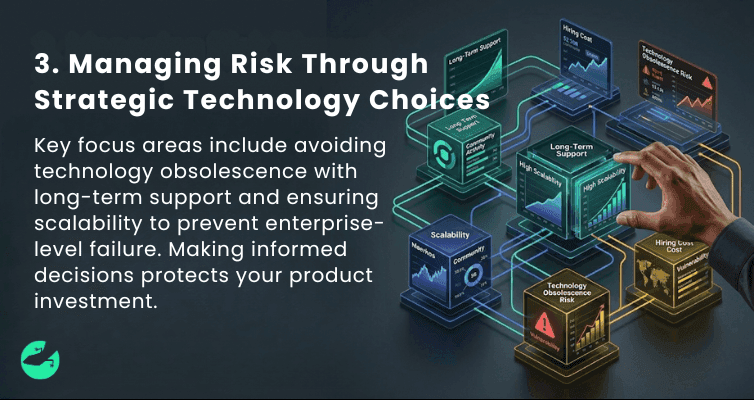
Another risk involves scalability limitations. A stack that works for an MVP might fail under enterprise-level demand. That’s why forward-thinking organizations prioritize scalability from the beginning rather than retrofitting it later.
At Lizard Global, discovery workshops play a crucial role in mitigating these risks. Through structured sessions, businesses gain clarity on technical feasibility, user expectations, and market requirements. This approach ensures that every decision is validated before development begins.
Furthermore, adopting modern approaches such as progressive web app development or hybrid app development can reduce risk by offering flexibility across platforms. These solutions enable faster iteration while maintaining performance and user experience.
4. The Lizard Global Tech Stack Is Built for Scale
At Lizard Global, we lean into a high-performance, modern stack designed specifically for enterprise reliability and scalability:
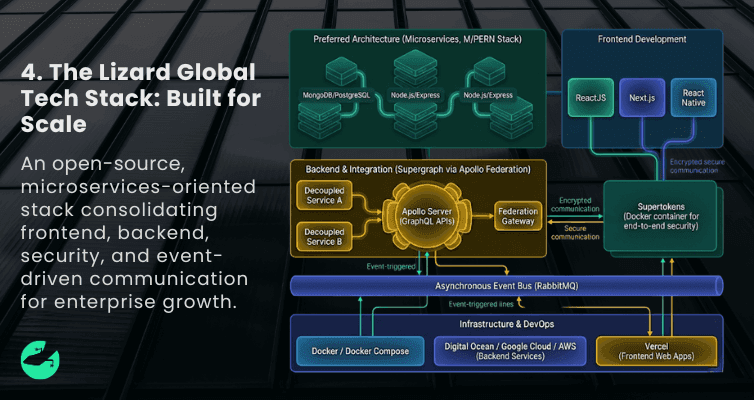
- Preferred Architecture: We leverage a Microservices Architecture built on the M/PERN stack (MongoDB/PostgreSQL, Express, React, Node.js). This approach, utilized in complex projects like Skoon, allows us to break large applications into smaller, self-contained modules that can be independently deployed and scaled.
- Frontend Development: We use Next.js for web applications and React Native for mobile applications. This ensures a unified development experience and high-performance user interfaces, a strategy we successfully implemented for the Travereel social travel platform.
- Backend & Integration: Our services are built on Apollo Server exposing GraphQL APIs. We use Apollo Federation to consolidate schemas into a unified "Supergraph," allowing seamless integration across different services, much like the infrastructure supporting the Hitachi Air Partners Rewards system.
- Authentication & Security: We implement Supertokens as our dedicated authentication service, often deployed via Docker containers for each project to ensure end-to-end security.
- Communication & Events: To keep decoupled services in sync, we utilize RabbitMQ as an asynchronous event bus. This ensures data consistency in real-time environments, such as the Heineken Drinkies delivery platform.
- Infrastructure & DevOps: We host backend services primarily on Digital Ocean, Google Cloud Platform, or AWS using Docker and Docker Compose for containerization. Frontend web apps are typically deployed via Vercel to maintain the application lifecycle effectively.
5. Longevity: Building for the Next 5–10 Years
Enterprise products are long-term investments. Therefore, your tech stack must support not just current requirements but also future growth and innovation. Longevity is about choosing technologies that evolve with your business rather than hold it back.
One important factor is community and ecosystem support. Technologies with active communities receive regular updates, security patches, and improvements. This ensures that your product remains stable and secure over time.
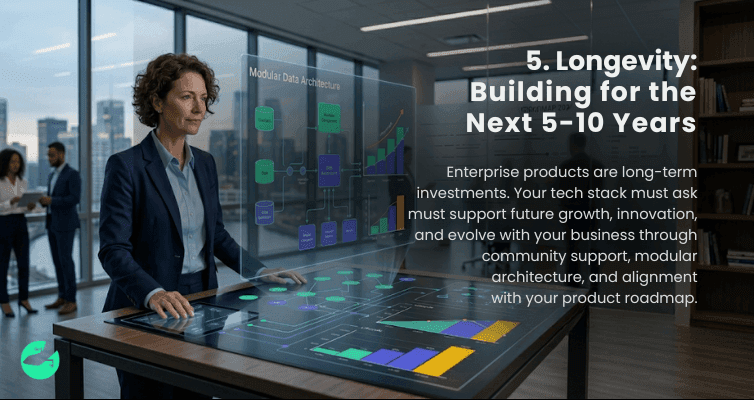
Another factor is modularity. A well-architected system allows you to replace or upgrade components without disrupting the entire platform. This flexibility is essential for adapting to changing business needs or market trends.
Through our UI/UX design services and technical implementations, we’ve seen how forward-thinking architecture enhances product longevity. For example, platforms designed with scalable front-end frameworks and robust back-end systems, like the Skoon energy marketplace, can seamlessly integrate new features without major overhauls.
Additionally, aligning your stack with your product roadmap ensures that technology supports your vision. This is where a digital transformation partner becomes invaluable, guiding you through evolving technologies while keeping your business goals at the center.
6. Aligning Tech Stack with Product and User Experience
Technology should never be chosen in isolation. Instead, it must align with the product experience you aim to deliver. After all, the end goal is not just functionality but usability, performance, and engagement.
For instance, if your product relies heavily on real-time interactions, your stack must support low latency and high responsiveness. Similarly, enterprise applications with complex workflows require robust back-end systems and intuitive front-end interfaces.
This is where UX/UI product design plays a critical role. A well-designed interface can only perform as well as the technology behind it. Therefore, design and development must go hand in hand from the start.
In projects delivered by Lizard Global, such as the Travereel social travel app, design sprints and workshops are used to define user journeys before development begins. This ensures that the chosen technologies support, not hinder, the intended experience.
Additionally, mobile-first strategies often require expertise in iOS app development and Android app development. Choosing between native and cross-platform solutions depends on performance requirements, budget, and timeline.
Ultimately, aligning your stack with user expectations ensures higher adoption rates and better long-term success.
7. Build vs. Buy vs. Scale: Making the Right Call
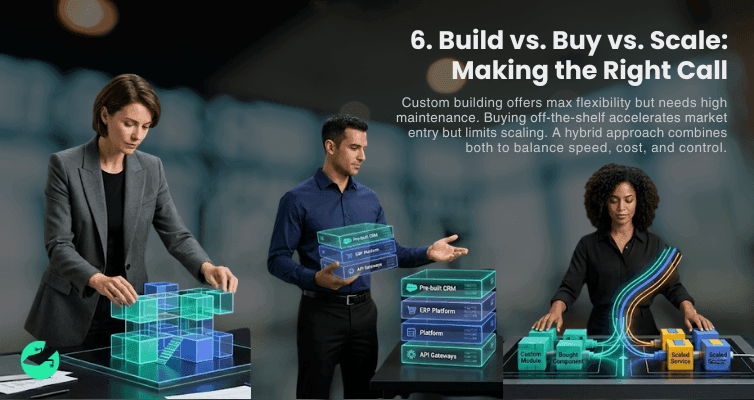
One of the biggest decisions enterprises face is whether to build custom solutions, buy existing platforms, or scale hybrid approaches. Each option comes with its own trade-offs in terms of cost, flexibility, and control.
Building a custom solution offers maximum flexibility. It allows you to tailor every aspect of the product to your specific needs. However, it requires significant investment and ongoing maintenance.
Buying or using off-the-shelf solutions can accelerate time-to-market. However, these solutions often come with limitations that may restrict scalability or customization. Over time, these constraints can hinder growth.
A hybrid approach, combining custom development with existing tools, is often the most effective strategy. It balances speed and flexibility while minimizing risk, as seen in our work with Heineken Drinkies.
As a mobile app development agency and enterprise partner, Lizard Global frequently helps clients navigate these decisions. By evaluating business goals, technical requirements, and market conditions, we identify the most suitable approach for each project.
8. The Role of Workshops and Discovery in Tech Stack Decisions
Skipping the discovery phase is one of the most common mistakes in enterprise development. Without proper validation, businesses risk making decisions based on assumptions rather than data.
Workshops provide a structured environment to explore ideas, validate concepts, and align stakeholders. They help identify potential challenges and opportunities before significant resources are invested.
Lizard Global’s digital solution strategy workshops focus on delivering actionable outcomes. Instead of just discussing ideas, they produce validated roadmaps that guide development. This reduces uncertainty and ensures that every decision is backed by insights.
Moreover, these sessions bring together business leaders, designers, and developers. This collaboration ensures that the chosen tech stack aligns with both strategic goals and technical feasibility.
By investing in discovery, organizations can significantly reduce risk while improving efficiency and outcomes.
9. Choosing the Right Partner for Long-Term Success
Even the best tech stack can fail without the right execution. That’s why choosing the right partner is just as important as choosing the right technology. A reliable partner brings more than technical expertise. They offer strategic guidance, industry insights, and a proven process for delivering scalable solutions. This ensures that your product evolves alongside your business.
As a full-stack digital solutions agency, Lizard Global combines strategy, design, and development to deliver end-to-end solutions. From initial workshops to post-launch support, every stage is aligned with long-term success.
Additionally, services like growth analytics consulting and digital marketing strategy services ensure that your product not only functions well but also performs in the market.
Ultimately, the right partner acts as an extension of your team, helping you navigate complexity and achieve your goals.
Turn Your Tech Decisions Into a Competitive Advantage
Choosing the right tech stack doesn’t have to be overwhelming. With the right strategy and expert guidance, you can build a scalable, future-proof product that drives real business impact.
At Lizard Global, we help enterprises validate ideas, design exceptional user experiences, and develop robust digital products. Whether you're starting from scratch or optimizing an existing platform, our team is here to guide you every step of the way.
Ready to make smarter tech decisions? Let’s turn your vision into a scalable, high-performing product. Reach out today and start with a tailored strategy session.
Selecting the right technology stack is one of the most critical decisions in enterprise product development. It directly influences scalability, long-term maintenance costs, development speed, and overall product success. This guide explores how enterprises can evaluate tech stacks through the lenses of cost, risk, and longevity, while aligning with business goals and market demands. Drawing from real-world experience as a custom software development company and digital transformation partner, this blog provides actionable insights, practical frameworks, and examples inspired by projects delivered by Lizard Global. Whether you're building a mobile app, web platform, or enterprise system, this guide helps you make informed, future-proof decisions.
Choosing the right technology stack is one of the most critical decisions for any enterprise product. It’s more than just picking programming languages or frameworks, it’s about shaping the future of your platform, controlling costs, managing risk, and ensuring long-term scalability.
The decisions you make today will determine how quickly your product evolves, how easily it integrates with other systems, and how resilient it remains in a fast-changing market.
With the right strategy and guidance from a full-stack digital solutions agency like Lizard Global, enterprises can confidently select a tech stack that balances performance, longevity, and business impact.
1. Why Tech Stack Decisions Define Enterprise Success
Too often, businesses focus on speed or cost alone. While these factors matter, they rarely tell the full story. A cheaper or faster solution might look appealing initially, but it can introduce limitations that become expensive to fix later. As a result, companies end up rewriting entire systems, losing both time and momentum.
From our experience delivering web app development services and enterprise platforms, the most successful projects start with clarity. They align business goals, user needs, and technical feasibility early on. This alignment ensures that the chosen stack supports both immediate delivery and long-term growth.
Moreover, working with a digital consultancy services provider helps organizations bridge the gap between business strategy and technical execution. This ensures that decisions are not made in silos but instead reflect a holistic understanding of the product ecosystem.
2. Understanding the True Cost of a Tech Stack
When evaluating a tech stack, cost goes far beyond initial development expenses. In fact, development cost is often just a fraction of the total cost of ownership (TCO). Maintenance, scalability, infrastructure, and team expertise all contribute to the long-term financial impact.
For example, choosing a niche or outdated technology might reduce upfront costs. However, it can significantly increase hiring costs and slow down development later. On the other hand, modern and widely adopted technologies may require higher initial investment but offer better long-term efficiency.
In several projects showcased on Lizard Global’s works portfolio, such as the digital transformation for Elfi & Iggi, scalable architectures were prioritized over quick wins. This allowed businesses to expand their platforms without costly rebuilds. By investing early in the right stack, they avoided technical debt and ensured smoother growth trajectories.
Additionally, factors like CRM integration services, analytics tools, and third-party dependencies must be considered. These integrations can either streamline operations or create bottlenecks, depending on how well they align with your chosen technologies.
Ultimately, a reliable custom software development company evaluates cost from a lifecycle perspective, helping you balance immediate budgets with future scalability.
3. Managing Risk Through Strategic Technology Choices
Risk is an unavoidable part of enterprise product development. However, the right tech stack can significantly reduce uncertainties and protect your investment. The key lies in identifying potential risks early and making informed decisions based on them.
One of the most common risks is technology obsolescence. Choosing tools that lack long-term support or community backing can leave your product vulnerable. This is especially critical for enterprise systems that need to operate reliably for years.
Another risk involves scalability limitations. A stack that works for an MVP might fail under enterprise-level demand. That’s why forward-thinking organizations prioritize scalability from the beginning rather than retrofitting it later.
At Lizard Global, discovery workshops play a crucial role in mitigating these risks. Through structured sessions, businesses gain clarity on technical feasibility, user expectations, and market requirements. This approach ensures that every decision is validated before development begins.
Furthermore, adopting modern approaches such as progressive web app development or hybrid app development can reduce risk by offering flexibility across platforms. These solutions enable faster iteration while maintaining performance and user experience.
4. The Lizard Global Tech Stack Is Built for Scale
At Lizard Global, we lean into a high-performance, modern stack designed specifically for enterprise reliability and scalability:
- Preferred Architecture: We leverage a Microservices Architecture built on the M/PERN stack (MongoDB/PostgreSQL, Express, React, Node.js). This approach, utilized in complex projects like Skoon, allows us to break large applications into smaller, self-contained modules that can be independently deployed and scaled.
- Frontend Development: We use Next.js for web applications and React Native for mobile applications. This ensures a unified development experience and high-performance user interfaces, a strategy we successfully implemented for the Travereel social travel platform.
- Backend & Integration: Our services are built on Apollo Server exposing GraphQL APIs. We use Apollo Federation to consolidate schemas into a unified "Supergraph," allowing seamless integration across different services, much like the infrastructure supporting the Hitachi Air Partners Rewards system.
- Authentication & Security: We implement Supertokens as our dedicated authentication service, often deployed via Docker containers for each project to ensure end-to-end security.
- Communication & Events: To keep decoupled services in sync, we utilize RabbitMQ as an asynchronous event bus. This ensures data consistency in real-time environments, such as the Heineken Drinkies delivery platform.
- Infrastructure & DevOps: We host backend services primarily on Digital Ocean, Google Cloud Platform, or AWS using Docker and Docker Compose for containerization. Frontend web apps are typically deployed via Vercel to maintain the application lifecycle effectively.
5. Longevity: Building for the Next 5–10 Years
Enterprise products are long-term investments. Therefore, your tech stack must support not just current requirements but also future growth and innovation. Longevity is about choosing technologies that evolve with your business rather than hold it back.
One important factor is community and ecosystem support. Technologies with active communities receive regular updates, security patches, and improvements. This ensures that your product remains stable and secure over time.
Another factor is modularity. A well-architected system allows you to replace or upgrade components without disrupting the entire platform. This flexibility is essential for adapting to changing business needs or market trends.
Through our UI/UX design services and technical implementations, we’ve seen how forward-thinking architecture enhances product longevity. For example, platforms designed with scalable front-end frameworks and robust back-end systems, like the Skoon energy marketplace, can seamlessly integrate new features without major overhauls.
Additionally, aligning your stack with your product roadmap ensures that technology supports your vision. This is where a digital transformation partner becomes invaluable, guiding you through evolving technologies while keeping your business goals at the center.
6. Aligning Tech Stack with Product and User Experience
Technology should never be chosen in isolation. Instead, it must align with the product experience you aim to deliver. After all, the end goal is not just functionality but usability, performance, and engagement.
For instance, if your product relies heavily on real-time interactions, your stack must support low latency and high responsiveness. Similarly, enterprise applications with complex workflows require robust back-end systems and intuitive front-end interfaces.
This is where UX/UI product design plays a critical role. A well-designed interface can only perform as well as the technology behind it. Therefore, design and development must go hand in hand from the start.
In projects delivered by Lizard Global, such as the Travereel social travel app, design sprints and workshops are used to define user journeys before development begins. This ensures that the chosen technologies support, not hinder, the intended experience.
Additionally, mobile-first strategies often require expertise in iOS app development and Android app development. Choosing between native and cross-platform solutions depends on performance requirements, budget, and timeline.
Ultimately, aligning your stack with user expectations ensures higher adoption rates and better long-term success.
7. Build vs. Buy vs. Scale: Making the Right Call
One of the biggest decisions enterprises face is whether to build custom solutions, buy existing platforms, or scale hybrid approaches. Each option comes with its own trade-offs in terms of cost, flexibility, and control.
Building a custom solution offers maximum flexibility. It allows you to tailor every aspect of the product to your specific needs. However, it requires significant investment and ongoing maintenance.
Buying or using off-the-shelf solutions can accelerate time-to-market. However, these solutions often come with limitations that may restrict scalability or customization. Over time, these constraints can hinder growth.
A hybrid approach, combining custom development with existing tools, is often the most effective strategy. It balances speed and flexibility while minimizing risk, as seen in our work with Heineken Drinkies.
As a mobile app development agency and enterprise partner, Lizard Global frequently helps clients navigate these decisions. By evaluating business goals, technical requirements, and market conditions, we identify the most suitable approach for each project.
8. The Role of Workshops and Discovery in Tech Stack Decisions
Skipping the discovery phase is one of the most common mistakes in enterprise development. Without proper validation, businesses risk making decisions based on assumptions rather than data.
Workshops provide a structured environment to explore ideas, validate concepts, and align stakeholders. They help identify potential challenges and opportunities before significant resources are invested.
Lizard Global’s digital solution strategy workshops focus on delivering actionable outcomes. Instead of just discussing ideas, they produce validated roadmaps that guide development. This reduces uncertainty and ensures that every decision is backed by insights.
Moreover, these sessions bring together business leaders, designers, and developers. This collaboration ensures that the chosen tech stack aligns with both strategic goals and technical feasibility.
By investing in discovery, organizations can significantly reduce risk while improving efficiency and outcomes.
9. Choosing the Right Partner for Long-Term Success
Even the best tech stack can fail without the right execution. That’s why choosing the right partner is just as important as choosing the right technology. A reliable partner brings more than technical expertise. They offer strategic guidance, industry insights, and a proven process for delivering scalable solutions. This ensures that your product evolves alongside your business.
As a full-stack digital solutions agency, Lizard Global combines strategy, design, and development to deliver end-to-end solutions. From initial workshops to post-launch support, every stage is aligned with long-term success.
Additionally, services like growth analytics consulting and digital marketing strategy services ensure that your product not only functions well but also performs in the market.
Ultimately, the right partner acts as an extension of your team, helping you navigate complexity and achieve your goals.
Turn Your Tech Decisions Into a Competitive Advantage
Choosing the right tech stack doesn’t have to be overwhelming. With the right strategy and expert guidance, you can build a scalable, future-proof product that drives real business impact.
At Lizard Global, we help enterprises validate ideas, design exceptional user experiences, and develop robust digital products. Whether you're starting from scratch or optimizing an existing platform, our team is here to guide you every step of the way.
Ready to make smarter tech decisions? Let’s turn your vision into a scalable, high-performing product. Reach out today and start with a tailored strategy session.
FAQs
How do I choose the best tech stack for enterprise applications?
What are the biggest risks when selecting a tech stack?
Is custom development better than off-the-shelf solutions?
How does tech stack impact long-term costs?
Should enterprises prioritize web or mobile-first development?
How important is UI/UX in tech stack decisions?
Why work with a digital transformation partner?
similar reads

Case Studies & Interviews
Client Review: Building A Custom Engagement App For MRT Corp
20 August 2026

Case Studies & Interviews
Lereng Tanah: Developing a Direct Booking Platform Malaysian Boutique Villa
29 January 2026

Case Studies & Interviews
Tactlink: How a Malaysian Entrepreneur Turned Networking Chaos into a Digital Community
22 January 2026
Stuck between a great idea and the right team to build it?Let's talk.
We work with corporate innovation teams and ambitious scale-ups across the Netherlands, Singapore, and Australia, and wherever great software needs to be built. Drop us a message and we'll get back to you within one business day.


Markus Monnikendam
Global Commercial Director
hello@lizard.global