Solving the #1 Cause of AI Agent Quality Failure
03 Jun 2026
by Team Lizard Global
Editor: Nadiy, Senior Content Writer
03 Jun 2026
by Team Lizard Global
Editor: Nadiy, Senior Content Writer
Solving the #1 Cause of AI Agent Quality Failure
Table of contents
Contact us
We will get back to you in the next 48 hours.
As enterprises transition from basic automation to advanced autonomous AI ecosystems, deployment hurdles are shifting from basic capability to systemic reliability. This blog post explores the critical challenge facing modern AI implementations: why highly advanced AI models frequently fail to meet production-level quality standards. By analyzing the structural friction between deterministic rule-based systems and unpredictable agentic behavior, we outline actionable engineering strategies to overcome these obstacles. Readers will discover how structured development methodologies, comprehensive multi-platform software engineering, and continuous data-driven refinement transform volatile AI models into highly dependable corporate digital workers.
key takeaways
Organizations worldwide are eagerly transitioning from basic automated scripts to highly capable Autonomous AI Agents. The promise of these systems is immense, offering the ability to reason, adapt, and execute multi-step processes without constant manual oversight. However, engineering teams frequently encounter a frustrating barrier: a system that performs beautifully during isolated testing begins to hallucinate, loop, or fail entirely when deployed into real-world production environments.
This dramatic drop in reliability highlights a fundamental tension in enterprise application development. Traditional enterprise systems rely on predictable, input-to-output consistency, where identical actions must always yield identical results. Conversely, advanced machine learning systems are inherently non-deterministic, generating responses based on statistical probabilities rather than fixed rules. When an organization deploys Agentic AI for Enterprise workflows without establishing structural control mechanisms, this probabilistic nature introduces unpredictability, turning an innovative asset into an operational liability.
Furthermore, scale significantly compounds these consistency challenges. In an isolated testing environment, an engineer can easily spot and correct an erroneous response. In contrast, live production environments require systems to process thousands of multi-step interactions simultaneously across diverse data ecosystems. Without robust, enterprise-grade architecture, small model variances cascade into major operational failures, resulting in corrupted database entries, broken API integrations, and compromised user experiences.
Unpacking Deterministic vs. Agentic AI Architectures
To build a reliable digital infrastructure, technical leaders must thoroughly understand the functional divide between Deterministic vs. Agentic AI patterns. Deterministic systems operate on clear, conditional logic structures. While this approach guarantees absolute predictability and strict compliance, it lacks the flexibility required to process unstructured data, interpret ambiguous customer inquiries, or adapt to shifting operational conditions.
By contrast, an autonomous framework utilizes advanced reasoning models to evaluate complex situations, choose appropriate tools, and dynamically map out execution paths. This flexibility allows businesses to automate sophisticated processes that previously required human judgment. The core engineering challenge lies in safely integrating this flexible reasoning into an infrastructure that demands absolute dependability.
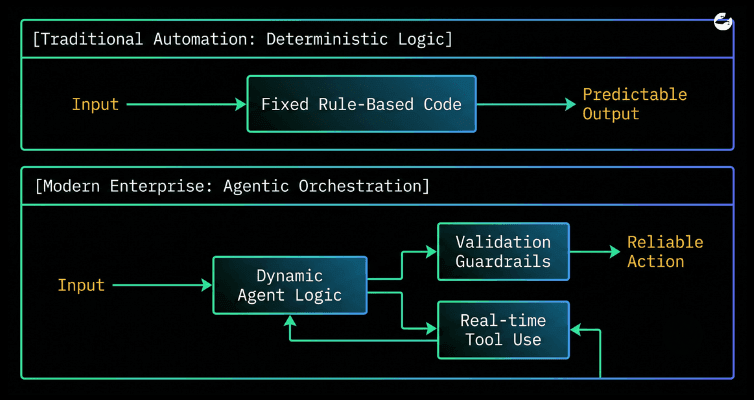
Overcoming this challenge requires moving beyond raw API integration. True transformation involves utilizing sophisticated Enterprise AI Orchestration to wrap flexible machine learning models in deterministic software constraints. This approach ensures that while the system can intelligently interpret data and determine the best course of action, it operates within strict operational boundaries. Developing this architecture requires a deep blending of artificial intelligence expertise with foundational custom software development company capabilities.
Designing High-Performance Agentic Workflows with Strict System Controls
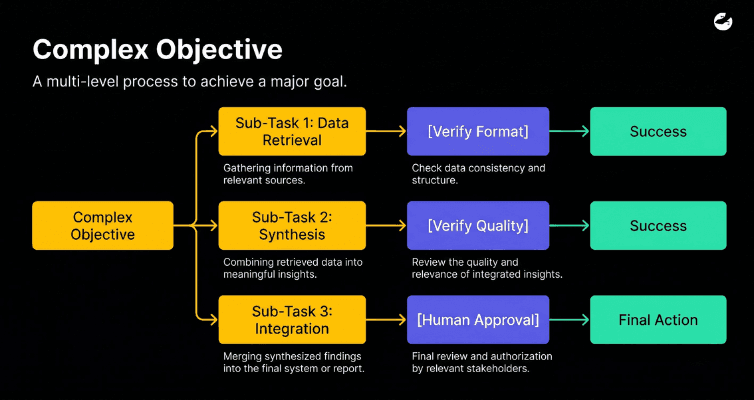
Resolving quality variations requires a shift in focus from the underlying model to the overarching system design. Instead of relying solely on prompt engineering or waiting for the next generation of foundational models, engineering teams must build robust Agentic Workflows. These frameworks break down complex, open-ended objectives into structured, verifiable sub-tasks, ensuring each stage of the process can be independently measured and validated.
A resilient workflow structure relies on a multi-layered validation architecture. As an agent moves through an execution path, its intermediate outputs must pass through specialized validation layers before triggering subsequent actions. For example, if a financial assistant agent generates a data payload for an enterprise ERP platform, a deterministic data validation layer checks the output format against schema requirements before execution. If the validation fails, the system automatically routes the payload back to the agent for self-correction or alerts a supervisor, preventing inaccurate data from corrupting core systems.
Implementing these structural safeguards requires a highly strategic development approach. As a comprehensive digital transformation partner, Lizard Global excels at designing and embedding these technical guardrails into existing legacy frameworks. We help enterprises build systems where models handle complex contextual interpretation, while strict, engineered validation loops maintain process integrity and ensure dependable outputs.
Maximizing Human-in-the-Loop Integration for Governance and Compliance
A truly dependable autonomous system does not eliminate human oversight; rather, it elevates it. For high-stakes enterprise applications—such as automated medical triage, contractual analysis, or large-scale financial rebalancing—maintaining comprehensive oversight is a regulatory and operational necessity. Organizations must implement strict Agentic Governance & Compliance protocols to ensure automated activities remain completely aligned with corporate standards.
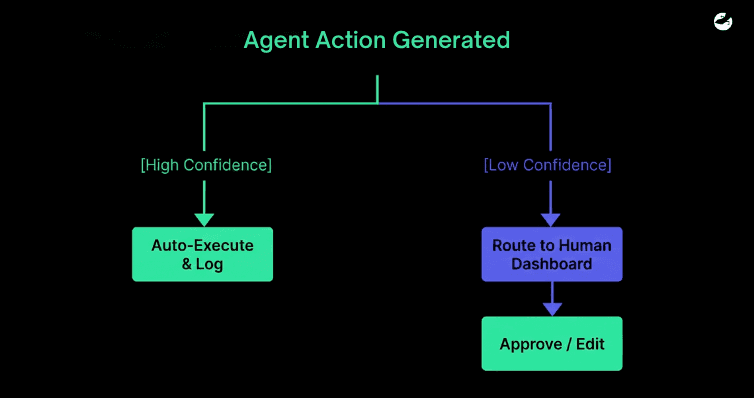
Integrating a strategic Human-in-the-Loop (HITL) framework provides an essential safety net for complex automated processes. Rather than requiring manual approval for every routine task, a well-engineered system uses clear confidence thresholds to determine when to involve a human supervisor. When an agent handles a standard task with high statistical confidence, it executes the action autonomously. If it encounters an ambiguous, low-confidence scenario or a high-value transaction, it automatically flags the task for human review.
To support this collaborative workflow, backend architectures must incorporate robust AI Observability & Audit Logs. These systems must meticulously record every step of an agent’s reasoning process, including retrieved context, internal evaluations, external tool invocations, and final outputs. This granular visibility simplifies troubleshooting and ensures clear accountability for regulatory compliance.
Through our specialized digital consultancy services, we work closely with enterprise leadership teams to design these operational frameworks. We ensure your automated systems feature clear escalation paths, robust tracking, and comprehensive compliance controls.
Elevating Agent Performance with Advanced UI/UX Design Services
An autonomous agent's operational value depends heavily on how effectively users can interact with, monitor, and guide it. Even the most sophisticated reasoning model can fail if it is obscured by a confusing, non-intuitive user interface. To manage an active digital workforce effectively, human operators require clear, highly functional control interfaces that provide complete operational visibility at a glance.
This need makes specialized UI/UX design services essential for modern enterprise software development. Designing for autonomous systems goes beyond traditional static layouts; it requires building dynamic, real-time dashboards that clearly visualize non-deterministic processes. Operators must be able to view an agent's current task list, examine its underlying reasoning, check its operational confidence scores, and intervene seamlessly when necessary.
Effective UX/UI product design simplifies highly technical backend operations into intuitive, actionable workspaces. By clearly highlighting system exceptions, visualizing data flows, and providing straightforward manual override controls, design teams transform potentially confusing technical setups into accessible, high-performance tools. This focused design approach reduces operator fatigue, accelerates human intervention times, and significantly improves overall system reliability.
Building Multi-Platform Ecosystems for Modern AI Digital Labor
To drive true organizational efficiency, AI Digital Labor must be accessible across an enterprise's entire operational footprint. Corporate professionals rarely work exclusively from a single desktop interface; they manage workflows across mobile devices, tablets, and web terminals. Consequently, a truly effective autonomous system must be backed by a cohesive, multi-platform development strategy that delivers consistent functionality across all environments.
Achieving this seamless cross-platform integration requires deep, specialized engineering expertise across multiple technical disciplines. Building a comprehensive solution demands:
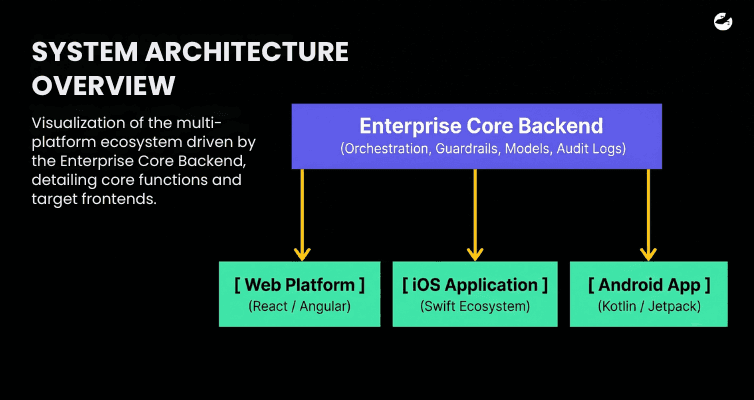
Reliable web app development services to deliver feature-rich, high-performance desktop control centers. A top-tier mobile app development agency to build responsive, field-ready mobile administration portals. Deep proficiency in native ecosystems, including dedicated iOS app development and Android app development. Advanced cross-platform capabilities, spanning hybrid app development and progressive web web app development services to maximize organizational reach.
As a full-service full-stack digital solutions agency, Lizard Global provides the comprehensive end-to-end expertise required to build these complex multi-platform ecosystems. From configuring robust CRM integration services to establishing detailed growth analytics consulting, we ensure your autonomous systems operate smoothly, securely, and uniformly across your entire digital environment.
Strategic Evolution: Future-Proofing Enterprise Orchestration
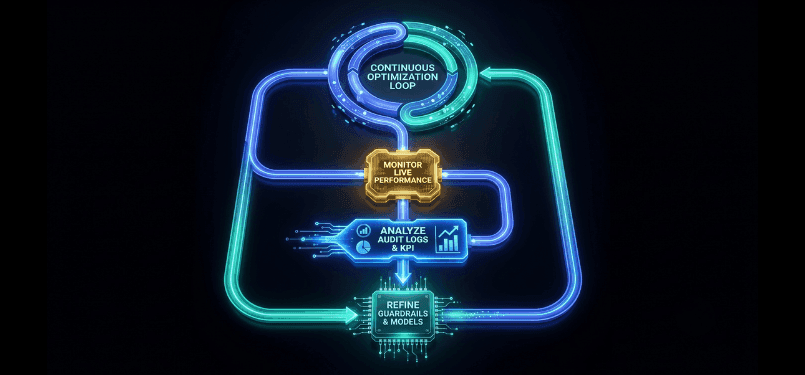
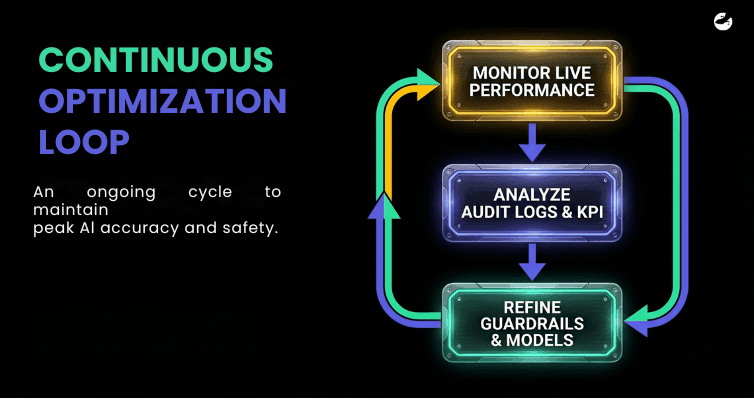
Deploying an autonomous agent is not a single, one-off project; it represents the start of a continuous journey of operational refinement. Because business requirements change, regulatory standards shift, and data ecosystems evolve, an enterprise's automation infrastructure must be built to adapt. Maintaining long-term accuracy and performance requires a commitment to continuous evaluation, regular architectural updates, and iterative performance tuning.
A successful long-term AI strategy relies heavily on data-driven optimization. By consistently analyzing system audit logs, tracking human intervention rates, and reviewing edge-case failures, organizations can systematically identify operational bottlenecks. This ongoing monitoring allows engineering teams to refine validation rules, update prompt strategies, and adjust system boundaries, ensuring the software becomes more accurate and efficient over time.
Partnering with an experienced development team is essential to navigating this ongoing optimization process successfully. Lizard Global provides the continuous support, technical insight, and engineering expertise needed to keep your systems at peak performance. We help you transform volatile, unpredictable models into highly reliable, scalable, and secure digital workforces that drive sustainable operational growth.
Future-Proof Your Business With Lizard Global
Ready to transform unpredictable AI models into an exceptionally reliable, high-performing digital workforce? Building dependable, enterprise-grade autonomous agents requires much more than just connecting to a basic API—it demands strict architectural guardrails, highly structured operational workflows, and intuitive user interfaces designed for seamless human oversight.
As an established, full-service full-stack digital solutions agency, Lizard Global combines advanced software engineering, specialized UI/UX design services, and comprehensive digital consultancy services to turn complex, non-deterministic technologies into stable, scalable corporate assets. Whether you need to build robust web control centers, launch secure iOS app development and Android app development initiatives, or integrate advanced Enterprise AI Orchestration into your existing corporate architecture, our team has the expertise to deliver.
ContactLizard Global today to schedule an in-depth consultation with our technical strategy experts and accelerate your organization's digital transformation journey!
As enterprises transition from basic automation to advanced autonomous AI ecosystems, deployment hurdles are shifting from basic capability to systemic reliability. This blog post explores the critical challenge facing modern AI implementations: why highly advanced AI models frequently fail to meet production-level quality standards. By analyzing the structural friction between deterministic rule-based systems and unpredictable agentic behavior, we outline actionable engineering strategies to overcome these obstacles. Readers will discover how structured development methodologies, comprehensive multi-platform software engineering, and continuous data-driven refinement transform volatile AI models into highly dependable corporate digital workers.
Organizations worldwide are eagerly transitioning from basic automated scripts to highly capable Autonomous AI Agents. The promise of these systems is immense, offering the ability to reason, adapt, and execute multi-step processes without constant manual oversight. However, engineering teams frequently encounter a frustrating barrier: a system that performs beautifully during isolated testing begins to hallucinate, loop, or fail entirely when deployed into real-world production environments.
This dramatic drop in reliability highlights a fundamental tension in enterprise application development. Traditional enterprise systems rely on predictable, input-to-output consistency, where identical actions must always yield identical results. Conversely, advanced machine learning systems are inherently non-deterministic, generating responses based on statistical probabilities rather than fixed rules. When an organization deploys Agentic AI for Enterprise workflows without establishing structural control mechanisms, this probabilistic nature introduces unpredictability, turning an innovative asset into an operational liability.
Furthermore, scale significantly compounds these consistency challenges. In an isolated testing environment, an engineer can easily spot and correct an erroneous response. In contrast, live production environments require systems to process thousands of multi-step interactions simultaneously across diverse data ecosystems. Without robust, enterprise-grade architecture, small model variances cascade into major operational failures, resulting in corrupted database entries, broken API integrations, and compromised user experiences.
Unpacking Deterministic vs. Agentic AI Architectures
To build a reliable digital infrastructure, technical leaders must thoroughly understand the functional divide between Deterministic vs. Agentic AI patterns. Deterministic systems operate on clear, conditional logic structures. While this approach guarantees absolute predictability and strict compliance, it lacks the flexibility required to process unstructured data, interpret ambiguous customer inquiries, or adapt to shifting operational conditions.
By contrast, an autonomous framework utilizes advanced reasoning models to evaluate complex situations, choose appropriate tools, and dynamically map out execution paths. This flexibility allows businesses to automate sophisticated processes that previously required human judgment. The core engineering challenge lies in safely integrating this flexible reasoning into an infrastructure that demands absolute dependability.
Overcoming this challenge requires moving beyond raw API integration. True transformation involves utilizing sophisticated Enterprise AI Orchestration to wrap flexible machine learning models in deterministic software constraints. This approach ensures that while the system can intelligently interpret data and determine the best course of action, it operates within strict operational boundaries. Developing this architecture requires a deep blending of artificial intelligence expertise with foundational custom software development company capabilities.
Designing High-Performance Agentic Workflows with Strict System Controls
Resolving quality variations requires a shift in focus from the underlying model to the overarching system design. Instead of relying solely on prompt engineering or waiting for the next generation of foundational models, engineering teams must build robust Agentic Workflows. These frameworks break down complex, open-ended objectives into structured, verifiable sub-tasks, ensuring each stage of the process can be independently measured and validated.
A resilient workflow structure relies on a multi-layered validation architecture. As an agent moves through an execution path, its intermediate outputs must pass through specialized validation layers before triggering subsequent actions. For example, if a financial assistant agent generates a data payload for an enterprise ERP platform, a deterministic data validation layer checks the output format against schema requirements before execution. If the validation fails, the system automatically routes the payload back to the agent for self-correction or alerts a supervisor, preventing inaccurate data from corrupting core systems.
Implementing these structural safeguards requires a highly strategic development approach. As a comprehensive digital transformation partner, Lizard Global excels at designing and embedding these technical guardrails into existing legacy frameworks. We help enterprises build systems where models handle complex contextual interpretation, while strict, engineered validation loops maintain process integrity and ensure dependable outputs.
Maximizing Human-in-the-Loop Integration for Governance and Compliance
A truly dependable autonomous system does not eliminate human oversight; rather, it elevates it. For high-stakes enterprise applications—such as automated medical triage, contractual analysis, or large-scale financial rebalancing—maintaining comprehensive oversight is a regulatory and operational necessity. Organizations must implement strict Agentic Governance & Compliance protocols to ensure automated activities remain completely aligned with corporate standards.
Integrating a strategic Human-in-the-Loop (HITL) framework provides an essential safety net for complex automated processes. Rather than requiring manual approval for every routine task, a well-engineered system uses clear confidence thresholds to determine when to involve a human supervisor. When an agent handles a standard task with high statistical confidence, it executes the action autonomously. If it encounters an ambiguous, low-confidence scenario or a high-value transaction, it automatically flags the task for human review.
To support this collaborative workflow, backend architectures must incorporate robust AI Observability & Audit Logs. These systems must meticulously record every step of an agent’s reasoning process, including retrieved context, internal evaluations, external tool invocations, and final outputs. This granular visibility simplifies troubleshooting and ensures clear accountability for regulatory compliance.
Through our specialized digital consultancy services, we work closely with enterprise leadership teams to design these operational frameworks. We ensure your automated systems feature clear escalation paths, robust tracking, and comprehensive compliance controls.
Elevating Agent Performance with Advanced UI/UX Design Services
An autonomous agent's operational value depends heavily on how effectively users can interact with, monitor, and guide it. Even the most sophisticated reasoning model can fail if it is obscured by a confusing, non-intuitive user interface. To manage an active digital workforce effectively, human operators require clear, highly functional control interfaces that provide complete operational visibility at a glance.
This need makes specialized UI/UX design services essential for modern enterprise software development. Designing for autonomous systems goes beyond traditional static layouts; it requires building dynamic, real-time dashboards that clearly visualize non-deterministic processes. Operators must be able to view an agent's current task list, examine its underlying reasoning, check its operational confidence scores, and intervene seamlessly when necessary.
Effective UX/UI product design simplifies highly technical backend operations into intuitive, actionable workspaces. By clearly highlighting system exceptions, visualizing data flows, and providing straightforward manual override controls, design teams transform potentially confusing technical setups into accessible, high-performance tools. This focused design approach reduces operator fatigue, accelerates human intervention times, and significantly improves overall system reliability.
Building Multi-Platform Ecosystems for Modern AI Digital Labor
To drive true organizational efficiency, AI Digital Labor must be accessible across an enterprise's entire operational footprint. Corporate professionals rarely work exclusively from a single desktop interface; they manage workflows across mobile devices, tablets, and web terminals. Consequently, a truly effective autonomous system must be backed by a cohesive, multi-platform development strategy that delivers consistent functionality across all environments.
Achieving this seamless cross-platform integration requires deep, specialized engineering expertise across multiple technical disciplines. Building a comprehensive solution demands:
Reliable web app development services to deliver feature-rich, high-performance desktop control centers. A top-tier mobile app development agency to build responsive, field-ready mobile administration portals. Deep proficiency in native ecosystems, including dedicated iOS app development and Android app development. Advanced cross-platform capabilities, spanning hybrid app development and progressive web web app development services to maximize organizational reach.
As a full-service full-stack digital solutions agency, Lizard Global provides the comprehensive end-to-end expertise required to build these complex multi-platform ecosystems. From configuring robust CRM integration services to establishing detailed growth analytics consulting, we ensure your autonomous systems operate smoothly, securely, and uniformly across your entire digital environment.
Strategic Evolution: Future-Proofing Enterprise Orchestration
Deploying an autonomous agent is not a single, one-off project; it represents the start of a continuous journey of operational refinement. Because business requirements change, regulatory standards shift, and data ecosystems evolve, an enterprise's automation infrastructure must be built to adapt. Maintaining long-term accuracy and performance requires a commitment to continuous evaluation, regular architectural updates, and iterative performance tuning.
A successful long-term AI strategy relies heavily on data-driven optimization. By consistently analyzing system audit logs, tracking human intervention rates, and reviewing edge-case failures, organizations can systematically identify operational bottlenecks. This ongoing monitoring allows engineering teams to refine validation rules, update prompt strategies, and adjust system boundaries, ensuring the software becomes more accurate and efficient over time.
Partnering with an experienced development team is essential to navigating this ongoing optimization process successfully. Lizard Global provides the continuous support, technical insight, and engineering expertise needed to keep your systems at peak performance. We help you transform volatile, unpredictable models into highly reliable, scalable, and secure digital workforces that drive sustainable operational growth.
Future-Proof Your Business With Lizard Global
Ready to transform unpredictable AI models into an exceptionally reliable, high-performing digital workforce? Building dependable, enterprise-grade autonomous agents requires much more than just connecting to a basic API—it demands strict architectural guardrails, highly structured operational workflows, and intuitive user interfaces designed for seamless human oversight.
As an established, full-service full-stack digital solutions agency, Lizard Global combines advanced software engineering, specialized UI/UX design services, and comprehensive digital consultancy services to turn complex, non-deterministic technologies into stable, scalable corporate assets. Whether you need to build robust web control centers, launch secure iOS app development and Android app development initiatives, or integrate advanced Enterprise AI Orchestration into your existing corporate architecture, our team has the expertise to deliver.
ContactLizard Global today to schedule an in-depth consultation with our technical strategy experts and accelerate your organization's digital transformation journey!
FAQs

What is the primary cause of quality failure in enterprise AI agents?
How do agentic workflows differ from traditional software automation?
Why is Human-in-the-Loop (HITL) crucial for enterprise AI orchestration?
How do UI/UX design services impact the success of autonomous AI tools?
Why should enterprises consider cross-platform app development for AI tools?
What role do audit logs play in agentic governance and compliance?
How does a custom software development company future-proof AI applications?
similar reads

AI & Machine Learning
Connecting AI Agents to Your Real-World Business Systems
24 June 2026

Company Culture & Milestones
Lizard Global Thrilled to be Named Among Top Healthcare Software Development Companies in 2024 by Techreviewer.co
22 August 2024

AI & Machine Learning
What Are Self-Hosted AI Solutions?
5 September 2024
Stuck between a great idea and the right team to build it?Let's talk.
We work with corporate innovation teams and ambitious scale-ups across the Netherlands, Singapore, and Australia, and wherever great software needs to be built. Drop us a message and we'll get back to you within one business day.


Markus Monnikendam
Global Commercial Director
hello@lizard.global