From Manual Operations to Agentic AI Workflow Automation
01 Jun 2026
by Team Lizard Global
Editor: Nadiy, Senior Content Writer
01 Jun 2026
by Team Lizard Global
Editor: Nadiy, Senior Content Writer
From Manual Operations to Agentic AI Workflow Automation
Table of contents
Contact us
We will get back to you in the next 48 hours.

In today's fast-paced digital ecosystem, traditional automation is no longer enough to maintain a competitive edge. Modern organizations face a tidal wave of unstructured data, fragmented legacy systems, and complex, multi-step operations that exhaust human cognitive bandwidth. This blog post explores the shift from rigid, rule-based operations to dynamic, self-learning workflows. By examining the foundational differences between predictable systems and self-directing agents, it reveals how modern enterprises can deploy digital labor safely, scale intelligently, and bridge the gap between human oversight and automated execution. We also highlight how partnering with an experienced technical team can turn these advanced concepts into high-yielding, bespoke enterprise platforms.
key takeaways
Businesses today face increasing pressure to move faster, operate leaner, and deliver better customer experiences. Yet many organizations continue to rely on manual workflows, disconnected systems, and repetitive administrative processes that consume valuable resources.
While traditional automation has helped streamline certain tasks, it often falls short when businesses need systems that can reason, adapt, and coordinate across multiple functions. This limitation has created demand for a new generation of intelligent automation powered by Agentic AI for Enterprise.
Agentic AI Workflow Automation represents a significant shift in how organizations operate. Instead of merely automating predefined actions, AI systems can now analyze situations, make decisions, collaborate with other systems, and execute complex workflows with limited human intervention.
As a result, enterprises are beginning to rethink operational models, workforce structures, and digital transformation strategies. Organizations that embrace this shift early will likely gain substantial advantages in efficiency, scalability, and innovation.
The Operational Bottleneck: Why Manual Processes Stifle Enterprise Scale
For decades, enterprise growth relied on a simple formula: recruit more talent, build more departmental teams, and document increasingly rigorous standard operating procedures (SOPs). However, as modern market dynamics demand instant turnaround times and continuous data processing, this traditional model is fracturing under its own weight.
Teams find themselves trapped in an endless loop of copy-pasting data between disconnected platforms, reconciling conflicting spreadsheets, and chasing manual approvals. This heavy reliance on manual operations limits your business's ability to scale quickly, exposes you to human error, and leaves valuable employee cognitive capacity trapped in low-impact administrative tasks.
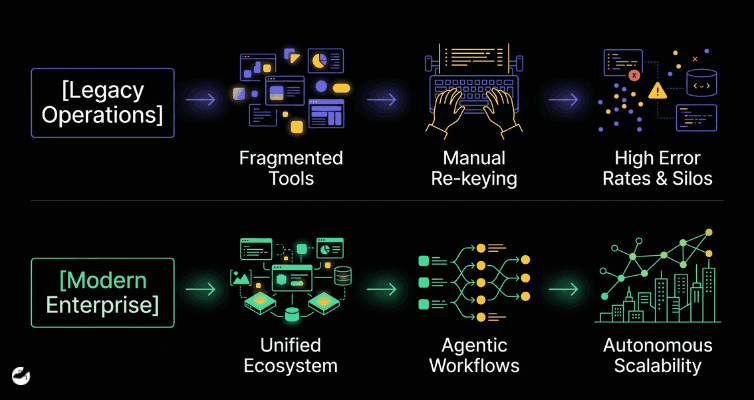
When an organization relies heavily on human hands to move information across silos, real-time agility becomes impossible. Employees lose hundreds of hours every year navigating fragmented legacy tools, causing delayed client onboarding, slow supply-chain adjustments, and missed sales opportunities. To break free from this operational paralysis, forward-thinking enterprises are moving beyond basic digitization. They are entirely redesigning how work gets done by partnering with a specialized custom software development company to replace fragile, manual tasks with intelligent systems that can adapt instantly to shifting demands. Learn how custom software, legacy system modernization, and strategic software development help organizations scale.
Defining the Shift: Moving to Agentic AI for Enterprise
The corporate landscape is moving beyond simple generative chatbots that merely summarize text or answer basic customer inquiries. Today, we are witnessing the rise of Agentic AI for Enterprise, a sophisticated paradigm shift that introduces self-directing software systems into core corporate environments. Unlike early AI iterations that required constant human prompting for every single micro-task, these advanced systems can analyze goals, break complex initiatives into smaller milestones, and autonomously interact with external software ecosystems to achieve measurable business results.
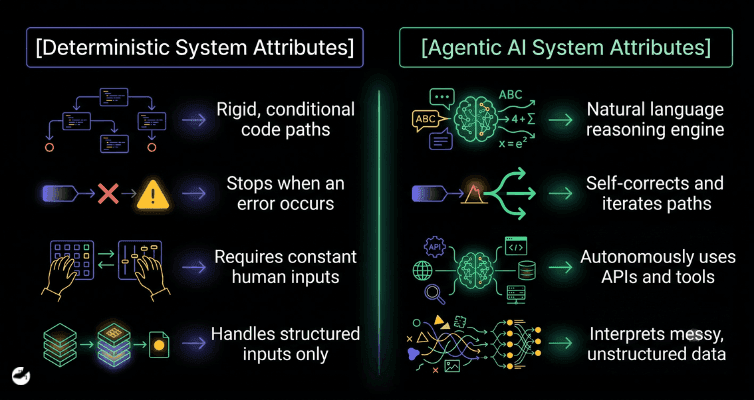
When comparing Deterministic vs. Agentic AI, the core difference lies in how they handle unexpected situations. A deterministic system relies on explicit, pre-written code pathways; if a vendor sends an invoice in an unexpected format, the automation breaks, throwing a system exception. Conversely, an autonomous agent uses deep reasoning to evaluate the unfamiliar layout, locate the missing fields, and query an external database to verify corporate records. This flexibility allows enterprises to automate open-ended, complex business logic that previously required constant human intervention. Organizations exploring AI integration, AI consultancy, and AI governance are increasingly adopting these approaches.
Demystifying the Architecture: How Autonomous AI Agents Work
To successfully integrate these intelligent entities into your daily business operations, you must understand the underlying technology that drives Autonomous AI Agents. These digital workers do not operate inside an isolated black box. Instead, they use a sophisticated architecture that combines massive language models, vector-based memory systems, and secure application programming interfaces (APIs). By constantly moving through cycles of perception, planning, and action, an agent assesses its operational environment, drafts an execution plan, and utilizes the appropriate digital tools to complete its assigned task.
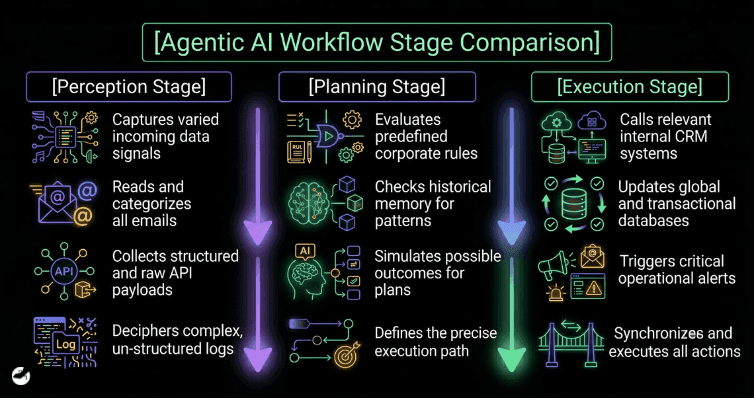
This operational capability expands significantly when individual agents connect to form collaborative Agentic Workflows. In this environment, different specialized agents work together like a well-coordinated human department. For instance, a procurement agent might spot a supply shortfall, coordinate with a vendor-negotiation agent to review pricing variables, and hand the final agreement over to a compliance agent for validation. Managing this complex interaction requires robust Enterprise AI Orchestration, ensuring that data flows smoothly and safely between different AI systems and your existing internal databases. This often requires API and microservices, data and architecture design, and modern cloud architecture strategies.
Deploying AI Digital Labor to Unshackle Human Capital
The modern workforce is experiencing an evolution characterized by the rise of AI Digital Labor. This shift does not mean replacing human talent; rather, it aims to augment human capabilities by offloading exhausting data-crunching routines to autonomous systems. By deploying digital workers to handle repetitive tasks, corporate teams can step away from data entry and transition into strategic oversight roles. This transformation boosts overall operational throughput while significantly improving employee engagement by allowing professionals to focus on high-level problem solving, creative design, and relationship building.
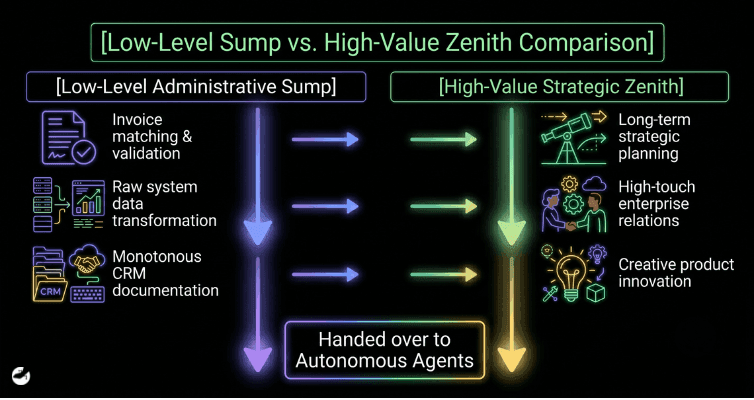
Successfully adopting digital labor requires a unified approach to your digital infrastructure. For example, a premier full-stack digital solutions agency can build custom middleware that connects your legacy internal infrastructure with cutting-edge agentic capabilities. Whether you need to integrate advanced systems with your internal platforms or deploy automated multi-channel communication tools, modern software engineering transforms unstructured enterprise data into organized, high-velocity assets. This optimization ensures your digital workers execute tasks with flawless precision. Successful implementations often leverage full-stack development, platform modernisation, and platform engineering initiatives.
Balancing Autonomy with Control: Governance, Guardrails, and Compliance
Giving software systems the freedom to make decisions requires rigorous corporate oversight. Without clear operational boundaries, autonomous systems run the risk of hallucinating data, misinterpreting internal compliance guidelines, or executing inefficient actions that waste API resources. This is why forward-thinking enterprises build strict AI Guardrails directly into their system architecture. These guardrails act as digital boundaries, restricting what the AI can do and ensuring that its autonomous decisions stay well within your company’s risk tolerance, internal security standards, and regulatory compliance rules.
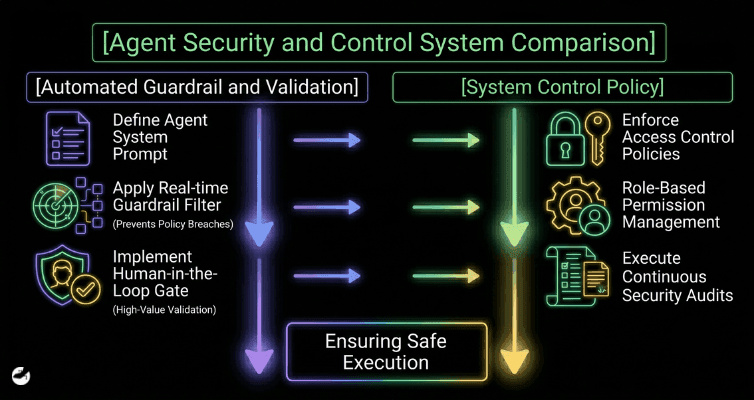
Maintaining absolute corporate oversight requires a robust Human-in-the-Loop (HITL) framework. In this setup, the autonomous agent manages the heavy lifting—such as gathering, cross-referencing, and structuring data—but passes high-stakes decisions to a human team member for final approval. This dual-layered strategy is crucial for comprehensive Agentic Governance & Compliance. By pairing your workflows with clear AI Observability & Audit Logs, your enterprise maintains a transparent, step-by-step history of every single decision, API call, and automated action, ensuring simple troubleshooting and seamless regulatory audits. Strong governance is supported through security and ISO compliance, privacy best practices, and AI-powered cybersecurity.
The Multi-Platform Reality: Web, Mobile, and Ecosystem Integration
To drive meaningful business impact, autonomous agents must interact easily with the software applications your teams and customers use every day. An isolated agent locked away in a siloed backend environment offers minimal value. True efficiency happens when these systems integrate directly into your web applications, internal dashboards, and custom mobile tools. Achieving this level of deep integration requires expert web app development services to build secure, highly responsive endpoints that allow your human staff and digital workers to collaborate in real time.
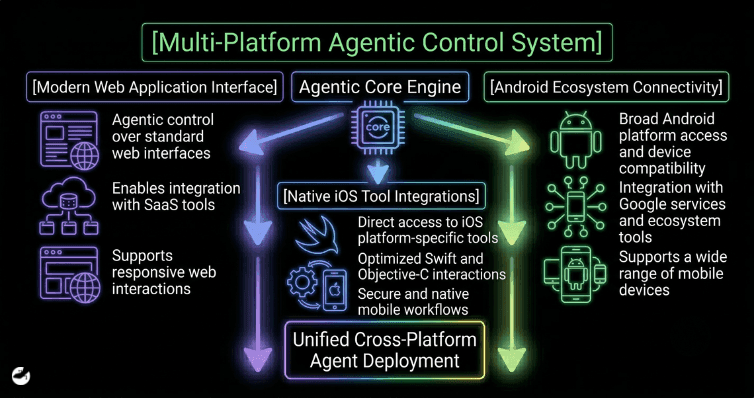
At the same time, because modern corporate ecosystems are increasingly mobile, extending these workflows to mobile devices is essential. Utilizing premium mobile app development agency capabilities allows your team to securely manage, monitor, and direct autonomous agents while on the move. Whether you need custom iOS app development for executive dashboards or scalable Android app development for field operations, keeping your team connected ensures that critical human-in-the-loop approvals happen without delay, keeping your automated pipelines moving around the clock. Related approaches can be seen in enterprise mobile development, mobile architecture, and modern web applications.
Maximizing the Experience: Designing Human-Agent Interfaces
The true success of an enterprise AI rollout depends heavily on how easily human employees can interact with these complex autonomous systems. If an internal tool features a confusing layout or demands overly complex text prompts, your team will quickly abandon it and return to their old manual methods. This is why investing in expert UI/UX design services is critical during your transformation journey. Designing intuitive interfaces that translate complex backend agent behaviors into clear visual cues allows your employees to naturally collaborate with their digital assistants.
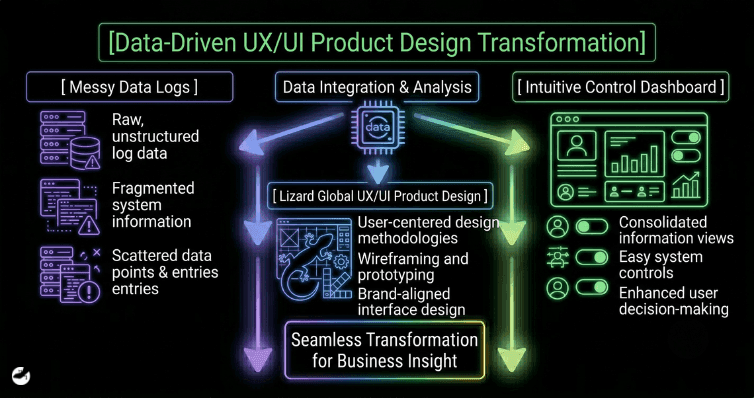
Enterprise dashboards must display agent actions, upcoming validation queues, and current confidence scores in a clean, easily digestible layout. By focusing on highly tailored UX/UI product design, your business can turn intimidating technical workflows into highly collaborative software spaces. When your design patterns clearly show what an agent is doing, why it is doing it, and where it needs human guidance, your organization will experience rapid employee adoption, fewer user errors, and an overall boost in operational efficiency. This approach aligns closely with UI/UX best practices, enterprise UX strategy, and B2B UX optimization.
Strategic Trajectory: Charting Your Transformation Journey
Moving away from outdated, manual procedures and adopting fully automated workflows requires a clear, step-by-step implementation strategy. The journey begins with a deep look at your current operations through professional digital consultancy services to pinpoint where your workflows are bottlenecked and identify which tasks are prime candidates for automation. Instead of trying to overhaul your entire business infrastructure overnight, successful organizations start with targeted pilot projects, proving the value of the technology before scaling it across the wider enterprise.
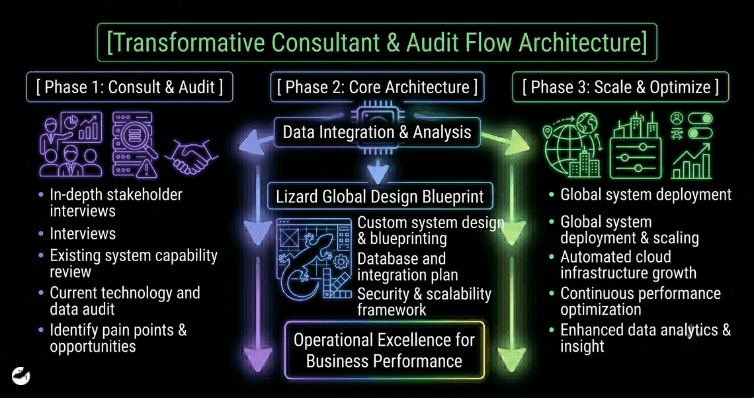
As your automated ecosystem grows, maintaining high efficiency requires continuous data tracking and iterative tuning. Partnering with a dedicated digital transformation partner gives you access to advanced growth analytics consulting and tailored CRM integration services. This ongoing optimization keeps your autonomous systems perfectly aligned with your changing business objectives. By continuously monitoring performance, upgrading underlying models, and refining your user experiences, your enterprise ensures that its digital workforce remains a powerful, long-term competitive advantage.
Technical Transformation Showcases
Automated Supply Chain Invoice Reconciliation
The Challenge: A global distributor faced severe operational bottlenecks, using an entry-level platform that required human teams to manually check over 15,000 monthly multi-page PDF invoices against physical bills of lading.
The Agentic Solution: We built a custom document-processing ecosystem powered by specialized autonomous agents. These agents read unstructured layouts, queried cross-border custom databases, and automatically resolved pricing mismatches using custom software, custom databases, and integrated APIs.
The Business Impact: Reduced end-to-end invoice processing times by 84%, completely eliminated manual data-entry errors, and allowed the accounting team to shift their focus to strategic financial planning. Similar efficiency gains can be achieved through performance optimization and platform modernization initiatives.
Intelligent Customer Onboarding Pipeline
The Challenge: A rapidly growing financial services provider struggled with long delays during customer onboarding due to scattered data across legacy CRMs and slow manual compliance checks.
The Agentic Solution: We designed an automated onboarding system featuring multi-agent orchestration. The system cross-checks user data against regulatory databases, automatically flags anomalies, and updates records across internal systems.
The Business Impact: Boosted total customer onboarding capacity by 300% while cutting compliance check turnaround times from days to minutes, significantly improving new client satisfaction scores through enhanced compliance, analytics, and workflow automation.
Future-Proof Your Enterprise with Lizard Global
Are manual workflows holding your team back from achieving true operational scale? At Lizard Global, we serve as your trusted, cross-functional digital transformation partner. We combine industry-leading custom software development company expertise with creative UI/UX design services to build the intelligent, autonomous systems your business needs to excel.
Our global team of over 55 software developers, experienced product designers, and strategic business consultants specializes in creating tailor-made enterprise software, advanced web applications, and high-performance mobile apps across 25+ industries. We help you cut through the noise of modern technology, designing custom architectures with built-in compliance frameworks that safely turn your data into a distinct competitive advantage.
Ready to build your digital workforce?
Book a Free Consultation with Our Enterprise AI Experts Today!In today's fast-paced digital ecosystem, traditional automation is no longer enough to maintain a competitive edge. Modern organizations face a tidal wave of unstructured data, fragmented legacy systems, and complex, multi-step operations that exhaust human cognitive bandwidth. This blog post explores the shift from rigid, rule-based operations to dynamic, self-learning workflows. By examining the foundational differences between predictable systems and self-directing agents, it reveals how modern enterprises can deploy digital labor safely, scale intelligently, and bridge the gap between human oversight and automated execution. We also highlight how partnering with an experienced technical team can turn these advanced concepts into high-yielding, bespoke enterprise platforms.
Businesses today face increasing pressure to move faster, operate leaner, and deliver better customer experiences. Yet many organizations continue to rely on manual workflows, disconnected systems, and repetitive administrative processes that consume valuable resources.
While traditional automation has helped streamline certain tasks, it often falls short when businesses need systems that can reason, adapt, and coordinate across multiple functions. This limitation has created demand for a new generation of intelligent automation powered by Agentic AI for Enterprise.
Agentic AI Workflow Automation represents a significant shift in how organizations operate. Instead of merely automating predefined actions, AI systems can now analyze situations, make decisions, collaborate with other systems, and execute complex workflows with limited human intervention.
As a result, enterprises are beginning to rethink operational models, workforce structures, and digital transformation strategies. Organizations that embrace this shift early will likely gain substantial advantages in efficiency, scalability, and innovation.
The Operational Bottleneck: Why Manual Processes Stifle Enterprise Scale
For decades, enterprise growth relied on a simple formula: recruit more talent, build more departmental teams, and document increasingly rigorous standard operating procedures (SOPs). However, as modern market dynamics demand instant turnaround times and continuous data processing, this traditional model is fracturing under its own weight.
Teams find themselves trapped in an endless loop of copy-pasting data between disconnected platforms, reconciling conflicting spreadsheets, and chasing manual approvals. This heavy reliance on manual operations limits your business's ability to scale quickly, exposes you to human error, and leaves valuable employee cognitive capacity trapped in low-impact administrative tasks.
When an organization relies heavily on human hands to move information across silos, real-time agility becomes impossible. Employees lose hundreds of hours every year navigating fragmented legacy tools, causing delayed client onboarding, slow supply-chain adjustments, and missed sales opportunities. To break free from this operational paralysis, forward-thinking enterprises are moving beyond basic digitization. They are entirely redesigning how work gets done by partnering with a specialized custom software development company to replace fragile, manual tasks with intelligent systems that can adapt instantly to shifting demands. Learn how custom software, legacy system modernization, and strategic software development help organizations scale.
Defining the Shift: Moving to Agentic AI for Enterprise
The corporate landscape is moving beyond simple generative chatbots that merely summarize text or answer basic customer inquiries. Today, we are witnessing the rise of Agentic AI for Enterprise, a sophisticated paradigm shift that introduces self-directing software systems into core corporate environments. Unlike early AI iterations that required constant human prompting for every single micro-task, these advanced systems can analyze goals, break complex initiatives into smaller milestones, and autonomously interact with external software ecosystems to achieve measurable business results.
When comparing Deterministic vs. Agentic AI, the core difference lies in how they handle unexpected situations. A deterministic system relies on explicit, pre-written code pathways; if a vendor sends an invoice in an unexpected format, the automation breaks, throwing a system exception. Conversely, an autonomous agent uses deep reasoning to evaluate the unfamiliar layout, locate the missing fields, and query an external database to verify corporate records. This flexibility allows enterprises to automate open-ended, complex business logic that previously required constant human intervention. Organizations exploring AI integration, AI consultancy, and AI governance are increasingly adopting these approaches.
Demystifying the Architecture: How Autonomous AI Agents Work
To successfully integrate these intelligent entities into your daily business operations, you must understand the underlying technology that drives Autonomous AI Agents. These digital workers do not operate inside an isolated black box. Instead, they use a sophisticated architecture that combines massive language models, vector-based memory systems, and secure application programming interfaces (APIs). By constantly moving through cycles of perception, planning, and action, an agent assesses its operational environment, drafts an execution plan, and utilizes the appropriate digital tools to complete its assigned task.
This operational capability expands significantly when individual agents connect to form collaborative Agentic Workflows. In this environment, different specialized agents work together like a well-coordinated human department. For instance, a procurement agent might spot a supply shortfall, coordinate with a vendor-negotiation agent to review pricing variables, and hand the final agreement over to a compliance agent for validation. Managing this complex interaction requires robust Enterprise AI Orchestration, ensuring that data flows smoothly and safely between different AI systems and your existing internal databases. This often requires API and microservices, data and architecture design, and modern cloud architecture strategies.
Deploying AI Digital Labor to Unshackle Human Capital
The modern workforce is experiencing an evolution characterized by the rise of AI Digital Labor. This shift does not mean replacing human talent; rather, it aims to augment human capabilities by offloading exhausting data-crunching routines to autonomous systems. By deploying digital workers to handle repetitive tasks, corporate teams can step away from data entry and transition into strategic oversight roles. This transformation boosts overall operational throughput while significantly improving employee engagement by allowing professionals to focus on high-level problem solving, creative design, and relationship building.
Successfully adopting digital labor requires a unified approach to your digital infrastructure. For example, a premier full-stack digital solutions agency can build custom middleware that connects your legacy internal infrastructure with cutting-edge agentic capabilities. Whether you need to integrate advanced systems with your internal platforms or deploy automated multi-channel communication tools, modern software engineering transforms unstructured enterprise data into organized, high-velocity assets. This optimization ensures your digital workers execute tasks with flawless precision. Successful implementations often leverage full-stack development, platform modernisation, and platform engineering initiatives.
Balancing Autonomy with Control: Governance, Guardrails, and Compliance
Giving software systems the freedom to make decisions requires rigorous corporate oversight. Without clear operational boundaries, autonomous systems run the risk of hallucinating data, misinterpreting internal compliance guidelines, or executing inefficient actions that waste API resources. This is why forward-thinking enterprises build strict AI Guardrails directly into their system architecture. These guardrails act as digital boundaries, restricting what the AI can do and ensuring that its autonomous decisions stay well within your company’s risk tolerance, internal security standards, and regulatory compliance rules.
Maintaining absolute corporate oversight requires a robust Human-in-the-Loop (HITL) framework. In this setup, the autonomous agent manages the heavy lifting—such as gathering, cross-referencing, and structuring data—but passes high-stakes decisions to a human team member for final approval. This dual-layered strategy is crucial for comprehensive Agentic Governance & Compliance. By pairing your workflows with clear AI Observability & Audit Logs, your enterprise maintains a transparent, step-by-step history of every single decision, API call, and automated action, ensuring simple troubleshooting and seamless regulatory audits. Strong governance is supported through security and ISO compliance, privacy best practices, and AI-powered cybersecurity.
The Multi-Platform Reality: Web, Mobile, and Ecosystem Integration
To drive meaningful business impact, autonomous agents must interact easily with the software applications your teams and customers use every day. An isolated agent locked away in a siloed backend environment offers minimal value. True efficiency happens when these systems integrate directly into your web applications, internal dashboards, and custom mobile tools. Achieving this level of deep integration requires expert web app development services to build secure, highly responsive endpoints that allow your human staff and digital workers to collaborate in real time.
At the same time, because modern corporate ecosystems are increasingly mobile, extending these workflows to mobile devices is essential. Utilizing premium mobile app development agency capabilities allows your team to securely manage, monitor, and direct autonomous agents while on the move. Whether you need custom iOS app development for executive dashboards or scalable Android app development for field operations, keeping your team connected ensures that critical human-in-the-loop approvals happen without delay, keeping your automated pipelines moving around the clock. Related approaches can be seen in enterprise mobile development, mobile architecture, and modern web applications.
Maximizing the Experience: Designing Human-Agent Interfaces
The true success of an enterprise AI rollout depends heavily on how easily human employees can interact with these complex autonomous systems. If an internal tool features a confusing layout or demands overly complex text prompts, your team will quickly abandon it and return to their old manual methods. This is why investing in expert UI/UX design services is critical during your transformation journey. Designing intuitive interfaces that translate complex backend agent behaviors into clear visual cues allows your employees to naturally collaborate with their digital assistants.
Enterprise dashboards must display agent actions, upcoming validation queues, and current confidence scores in a clean, easily digestible layout. By focusing on highly tailored UX/UI product design, your business can turn intimidating technical workflows into highly collaborative software spaces. When your design patterns clearly show what an agent is doing, why it is doing it, and where it needs human guidance, your organization will experience rapid employee adoption, fewer user errors, and an overall boost in operational efficiency. This approach aligns closely with UI/UX best practices, enterprise UX strategy, and B2B UX optimization.
Strategic Trajectory: Charting Your Transformation Journey
Moving away from outdated, manual procedures and adopting fully automated workflows requires a clear, step-by-step implementation strategy. The journey begins with a deep look at your current operations through professional digital consultancy services to pinpoint where your workflows are bottlenecked and identify which tasks are prime candidates for automation. Instead of trying to overhaul your entire business infrastructure overnight, successful organizations start with targeted pilot projects, proving the value of the technology before scaling it across the wider enterprise.
As your automated ecosystem grows, maintaining high efficiency requires continuous data tracking and iterative tuning. Partnering with a dedicated digital transformation partner gives you access to advanced growth analytics consulting and tailored CRM integration services. This ongoing optimization keeps your autonomous systems perfectly aligned with your changing business objectives. By continuously monitoring performance, upgrading underlying models, and refining your user experiences, your enterprise ensures that its digital workforce remains a powerful, long-term competitive advantage.
Technical Transformation Showcases
Automated Supply Chain Invoice Reconciliation
The Challenge: A global distributor faced severe operational bottlenecks, using an entry-level platform that required human teams to manually check over 15,000 monthly multi-page PDF invoices against physical bills of lading.
The Agentic Solution: We built a custom document-processing ecosystem powered by specialized autonomous agents. These agents read unstructured layouts, queried cross-border custom databases, and automatically resolved pricing mismatches using custom software, custom databases, and integrated APIs.
The Business Impact: Reduced end-to-end invoice processing times by 84%, completely eliminated manual data-entry errors, and allowed the accounting team to shift their focus to strategic financial planning. Similar efficiency gains can be achieved through performance optimization and platform modernization initiatives.
Intelligent Customer Onboarding Pipeline
The Challenge: A rapidly growing financial services provider struggled with long delays during customer onboarding due to scattered data across legacy CRMs and slow manual compliance checks.
The Agentic Solution: We designed an automated onboarding system featuring multi-agent orchestration. The system cross-checks user data against regulatory databases, automatically flags anomalies, and updates records across internal systems.
The Business Impact: Boosted total customer onboarding capacity by 300% while cutting compliance check turnaround times from days to minutes, significantly improving new client satisfaction scores through enhanced compliance, analytics, and workflow automation.
Future-Proof Your Enterprise with Lizard Global
Are manual workflows holding your team back from achieving true operational scale? At Lizard Global, we serve as your trusted, cross-functional digital transformation partner. We combine industry-leading custom software development company expertise with creative UI/UX design services to build the intelligent, autonomous systems your business needs to excel.
Our global team of over 55 software developers, experienced product designers, and strategic business consultants specializes in creating tailor-made enterprise software, advanced web applications, and high-performance mobile apps across 25+ industries. We help you cut through the noise of modern technology, designing custom architectures with built-in compliance frameworks that safely turn your data into a distinct competitive advantage.
Ready to build your digital workforce?
Book a Free Consultation with Our Enterprise AI Experts Today!FAQs

What is the difference between deterministic automation and Agentic AI for Enterprise?
How do you maintain security and compliance within automated Agentic Workflows?
What role does Human-in-the-Loop (HITL) play in automated digital labor?
Can autonomous AI capabilities integrate directly with our legacy enterprise systems?
How does expert UI/UX design improve the success of an enterprise AI rollout?
What business metrics should we track to measure the ROI of digital labor?
Why should we partner with Lizard Global for our custom software development needs?
similar reads

AI & Machine Learning
Agentic AI for Enterprise Transformation: Choosing the Right Delivery Partner
7 May 2026

Case Studies & Interviews
Integrating Autonomous AI Agents into Enterprise Mobile Applications An Architectural Blueprint
7 July 2026

Case Studies & Interviews
Zeno AI: Building a Privacy-First AI Mental Health Companion for Personal Growth
7 July 2026
Stuck between a great idea and the right team to build it?Let's talk.
We work with corporate innovation teams and ambitious scale-ups across the Netherlands, Singapore, and Australia, and wherever great software needs to be built. Drop us a message and we'll get back to you within one business day.


Markus Monnikendam
Global Commercial Director
hello@lizard.global